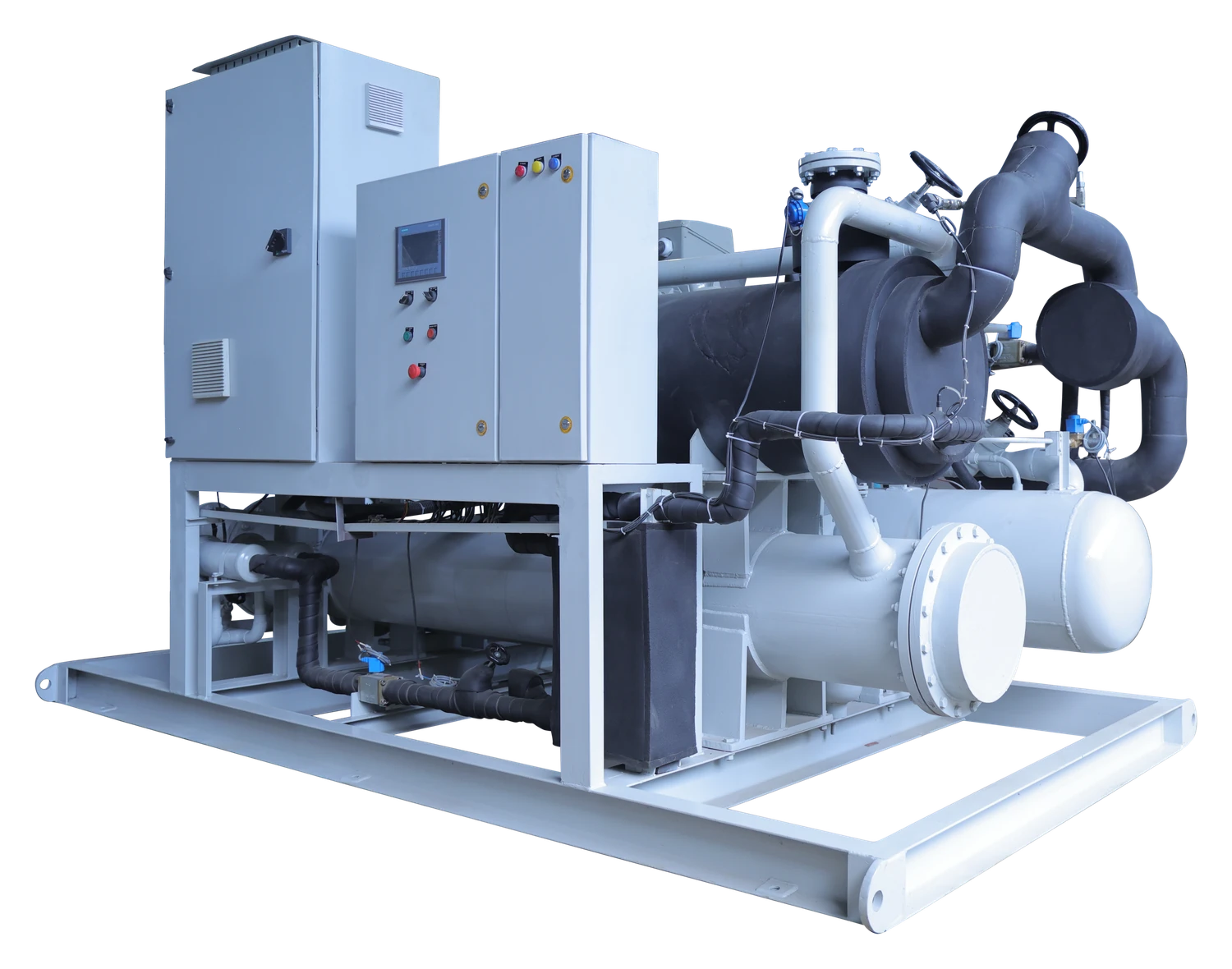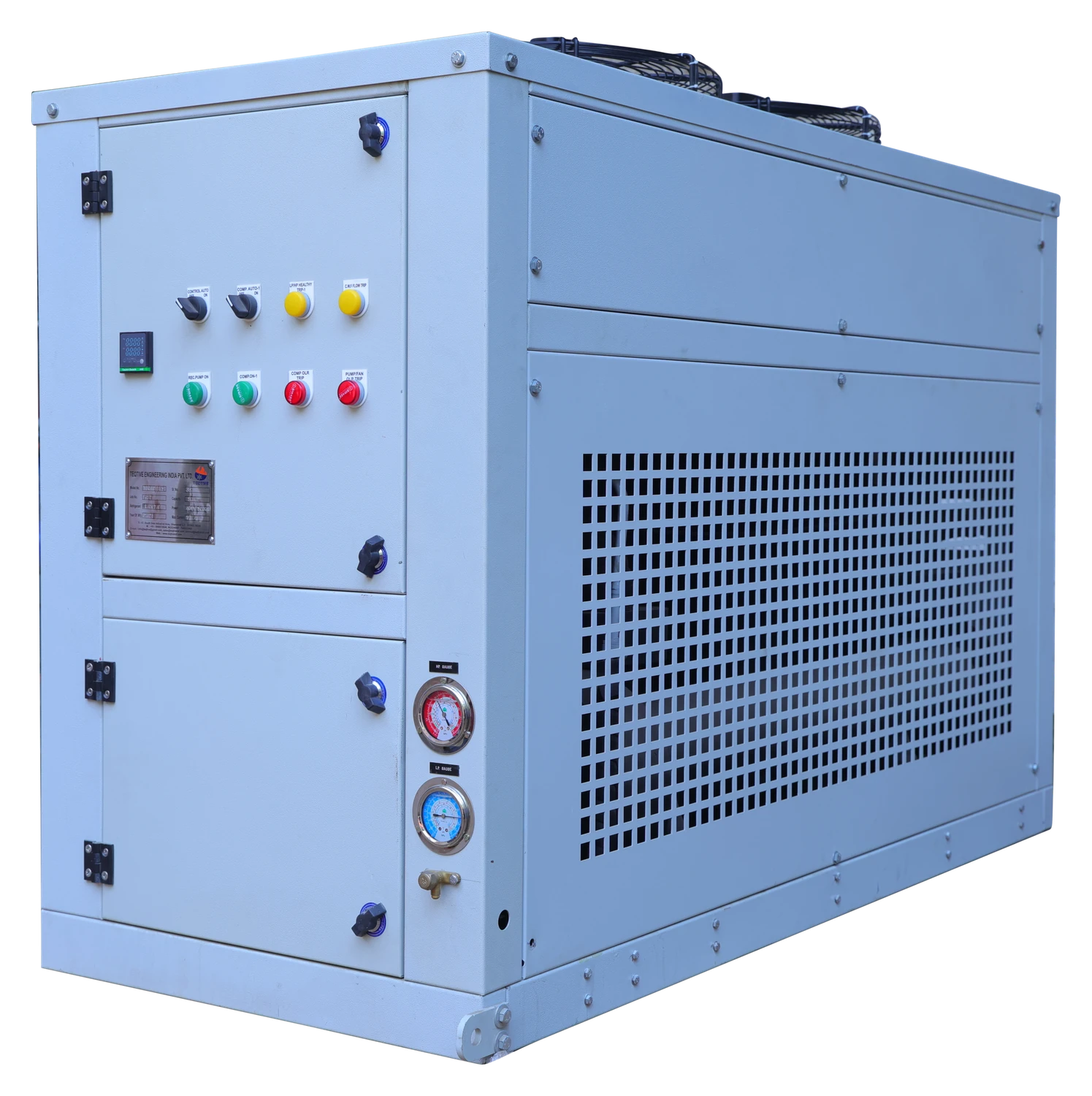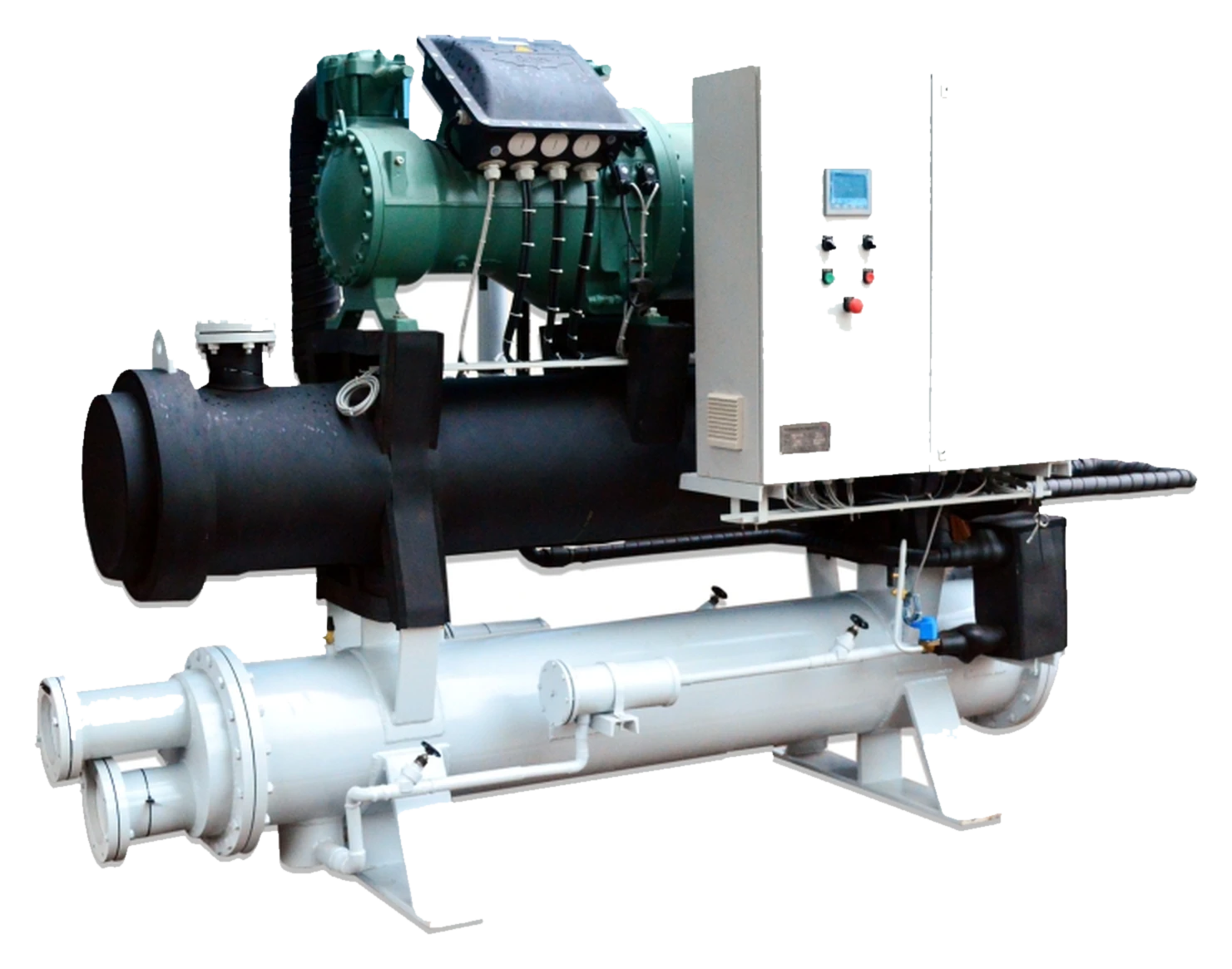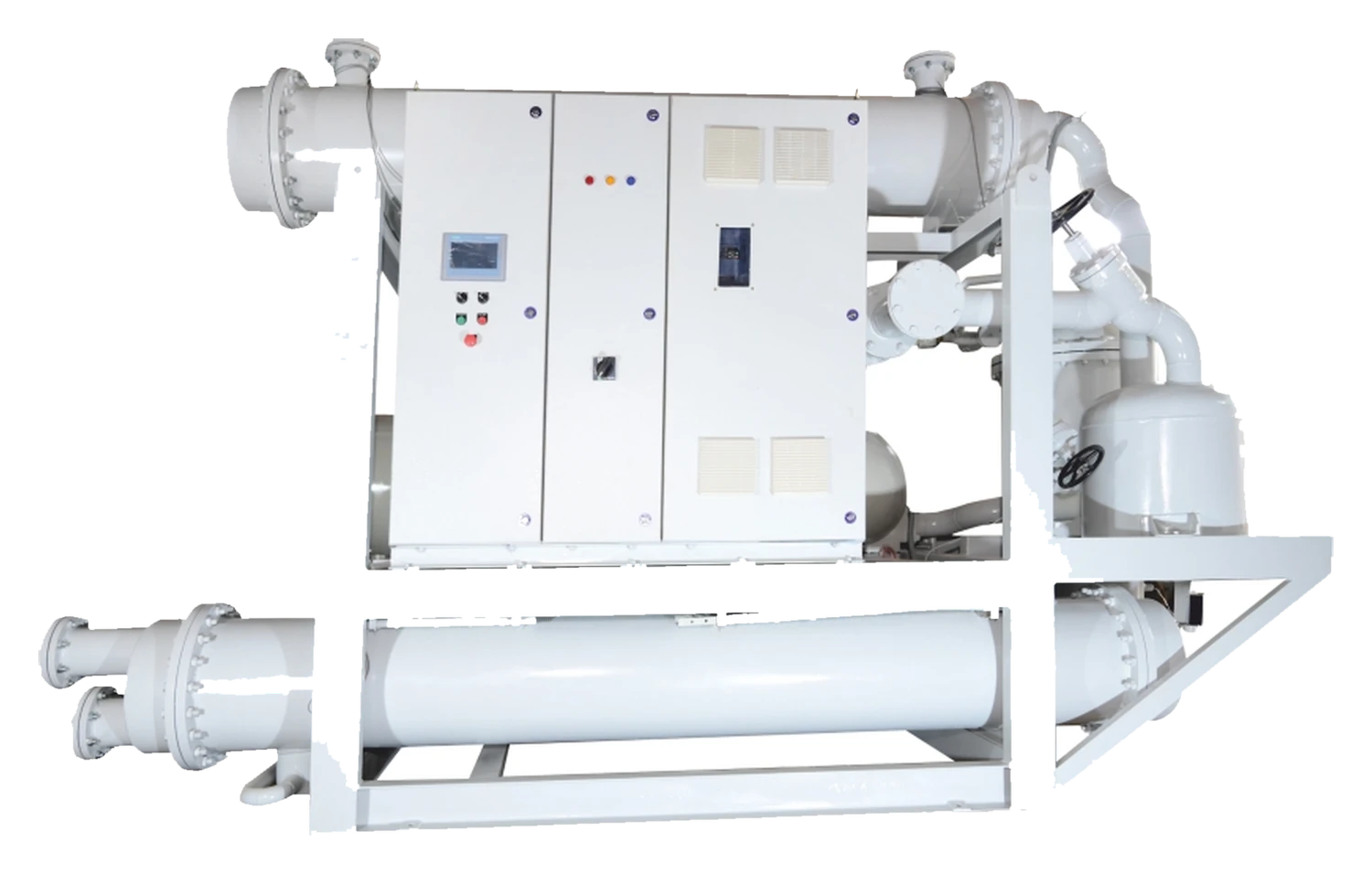
A process chiller removes heat that a production process creates and returns the coolant at a stable temperature. Get it right and a moulding cycle shortens, a reaction stays selective, a batch stays in specification. Get it wrong and the plant fights trips, frozen evaporators and temperature swings. Teqtive's process team selects every chiller from the process data first, then the hardware.
Process chillers by temperature band
| Band | Coolant | Typical processes | Teqtive equipment |
|---|---|---|---|
| +25 °C to +5 °C | Water | Plastics, machine tools, printing, lasers, HVAC process water | Scroll and screw chillers |
| +5 °C to +0.5 °C | Ice water | Milk chilling, concrete batching, beverages | Falling film chiller, batching chiller |
| 0 °C to −40 °C | Glycol, methanol, CaCl₂ brine | Pharma API reactors, chemicals, fermentation, solvent recovery | Brine, glycol, methanol chillers |
| −25 °C to −45 °C | Methanol or special brines | Low-temperature reactors, blast freezing loops | Two-stage brine chiller |
| −35 °C to −70 °C | Special low-temperature fluids | Ultra-low synthesis, gas liquefaction, test chambers | Cascade chiller |
| +25 °C to +40 °C | Oil | Hydraulic power packs, spindles, gearboxes | Oil chiller |
What makes a good process chiller
- Stable outlet temperature. Capacity control matched to the load: multiple scroll compressors, screw slide valves or VFDs, and hot-gas bypass where tight stability is required.
- Evaporator built for the fluid. Shell-and-tube or brazed plate, carbon steel or stainless steel, copper or SS tubes, sized for the coolant's viscosity at the lowest temperature.
- Freeze protection. Flow switches, low-temperature cut-outs and correct glycol or brine concentration so the evaporator cannot freeze.
- Hydraulics. A pump set and buffer tank sized to the process flow and pressure drop, with bypass for variable-flow users.
- Controls that fit the plant. PID, microprocessor or PLC control with remote monitoring and interlocks to the process.
Open loop, closed loop and two-pump systems
In a closed loop the chiller pumps coolant straight through the users and back; simple and clean, used for most glycol and brine duties. In an open-tank system the process returns to a tank, and a separate pump feeds the chiller, which decouples process flow from chiller flow. Plants with many users on different temperatures use a primary–secondary arrangement with a common tank, so each user takes what it needs without upsetting the chiller.
Sizing a process chiller
- Find the heat load: from machine data (kW), or flow × specific heat × temperature drop.
- Fix the supply temperature and ΔT the process needs.
- Choose the coolant and concentration for the lowest evaporator temperature.
- Correct compressor capacity for that temperature and your design ambient.
- Add margin for fouling and growth, typically 10–20 %.
Our tonnage calculator does steps 1–2; our engineers do the rest. For reactors specifically, see how to size a chiller for chemical and pharma reactors.
Process chillers by industry
Pharmaceutical · Chemical · Dairy, food and beverage · Plastics and rubber · Construction and concrete
Keeping a process chiller healthy
Most process chiller failures trace back to a few causes: low flow, wrong glycol strength, dirty condensers and neglected water treatment. Our maintenance checklist and troubleshooting guide cover them. For efficiency targets see COP and kW/TR explained.
Talk to our process team about your duty.
Frequently asked questions
What is a process chiller?
A process chiller is an industrial chiller that cools a manufacturing process rather than a building. It circulates chilled water, glycol or brine to equipment such as reactors, moulds, extruders, heat exchangers or condensers and holds the fluid at a set temperature while the process adds heat.
What is the difference between a process chiller and an industrial chiller?
The terms are used almost interchangeably. 'Process chiller' stresses the application, cooling a production process, while 'industrial chiller' stresses the build: heavy-duty, continuous-rated equipment. Every Teqtive industrial chiller is a process chiller.
What temperature does a process chiller run at?
It depends on the process: about +7 °C to +15 °C for plastics and machine cooling, +1 °C to +4 °C for dairy and concrete, −5 °C to −40 °C for pharmaceutical and chemical reactors, and down to −70 °C for ultra-low temperature synthesis with cascade systems.
Do I need a buffer tank with a process chiller?
Usually yes. A buffer or chilled-water tank adds thermal mass, prevents short-cycling of compressors on small or batch loads and stabilises the supply temperature. A common rule is 3 to 10 litres of system volume per kW of chiller capacity, more for highly variable batch loads.
What information is needed to quote a process chiller?
Heat load or process data (flow, inlet and outlet temperature), coolant type and concentration, required supply temperature and stability, site ambient, power supply, and whether air or water cooling is preferred.