A glycol chiller circulates a mixture of water and glycol instead of plain water, so the coolant stays liquid well below 0 °C. It is the standard choice when a reactor jacket, heat exchanger, fermenter or mould has to be held between +5 °C and −40 °C.
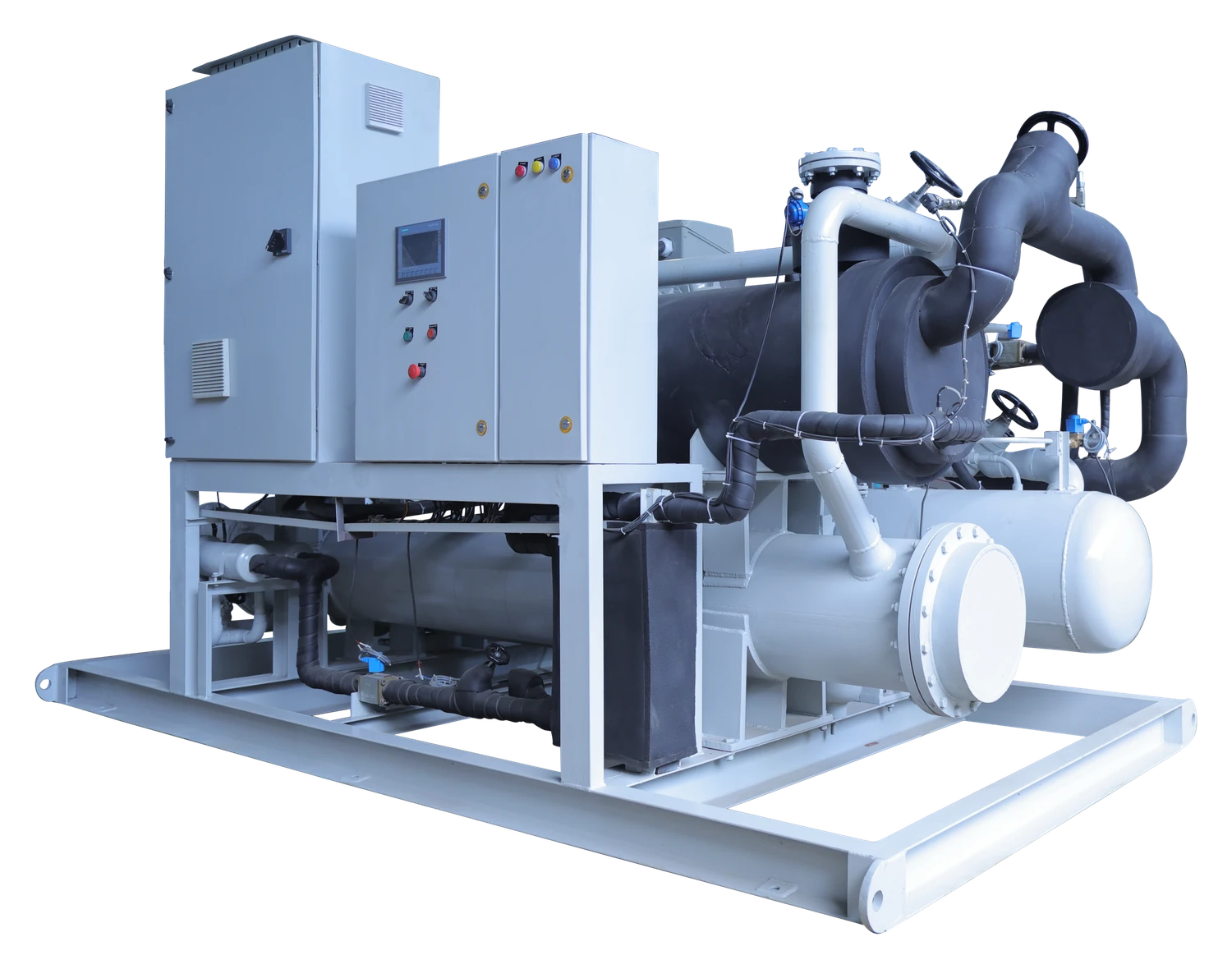
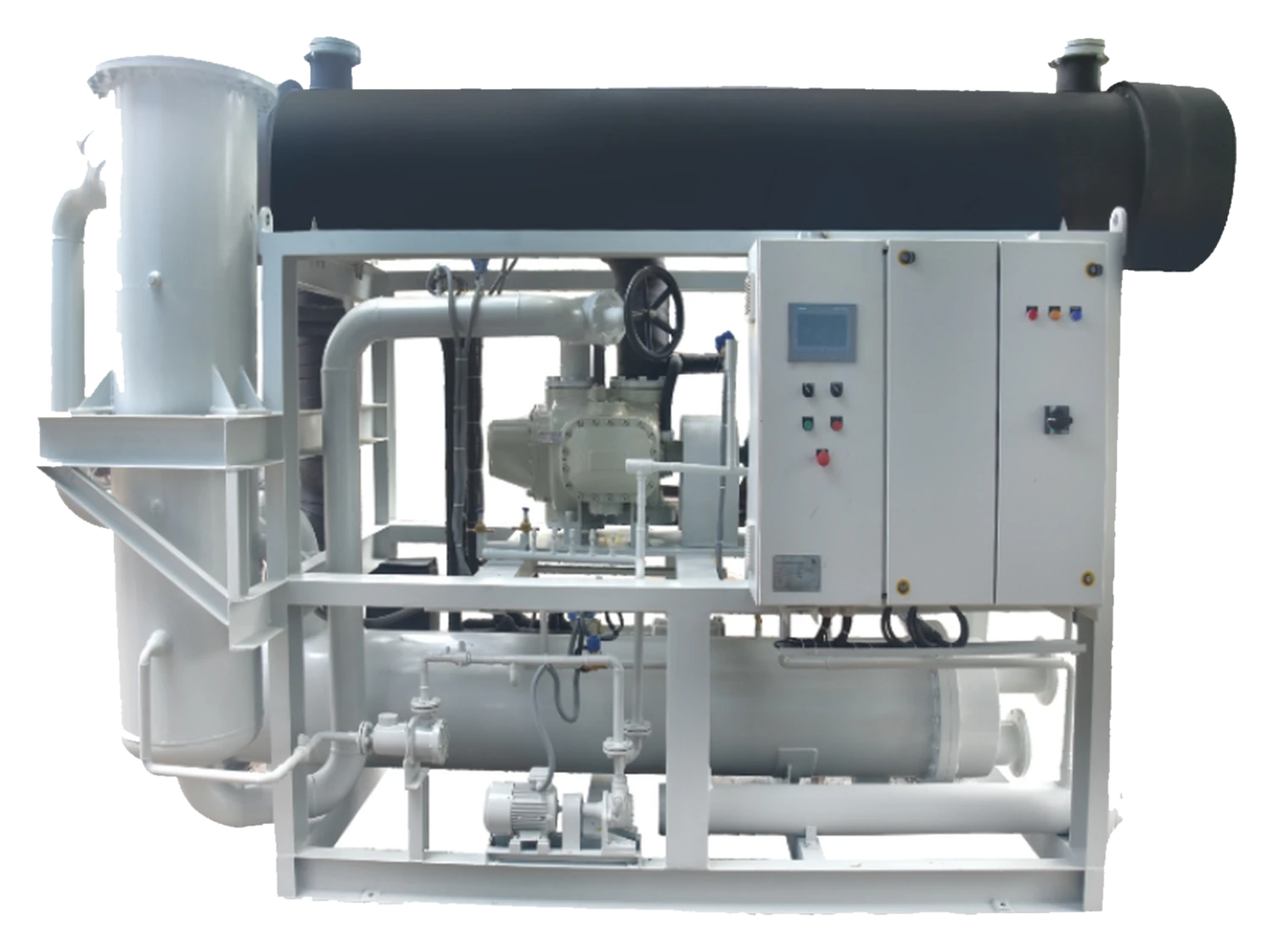
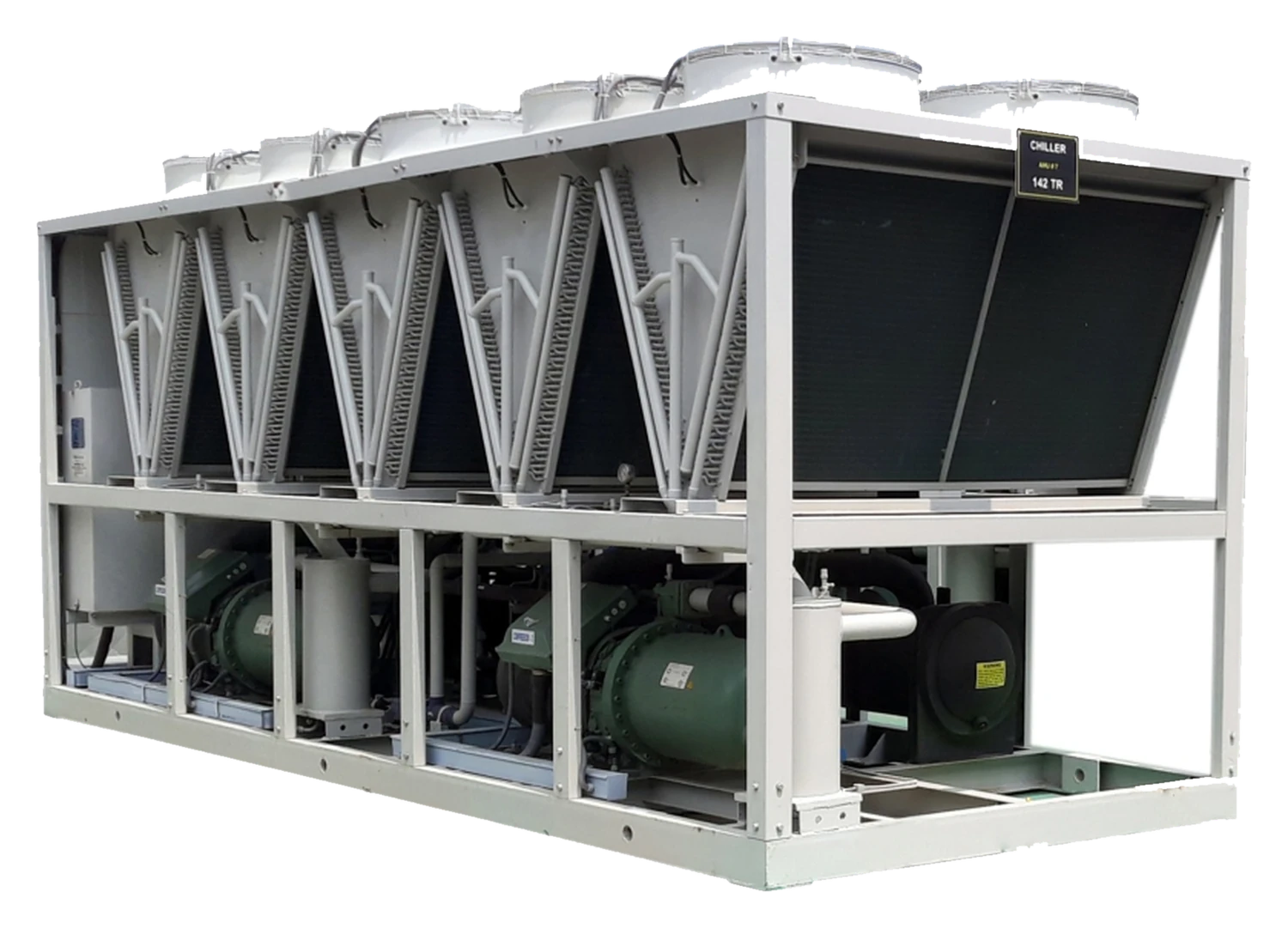
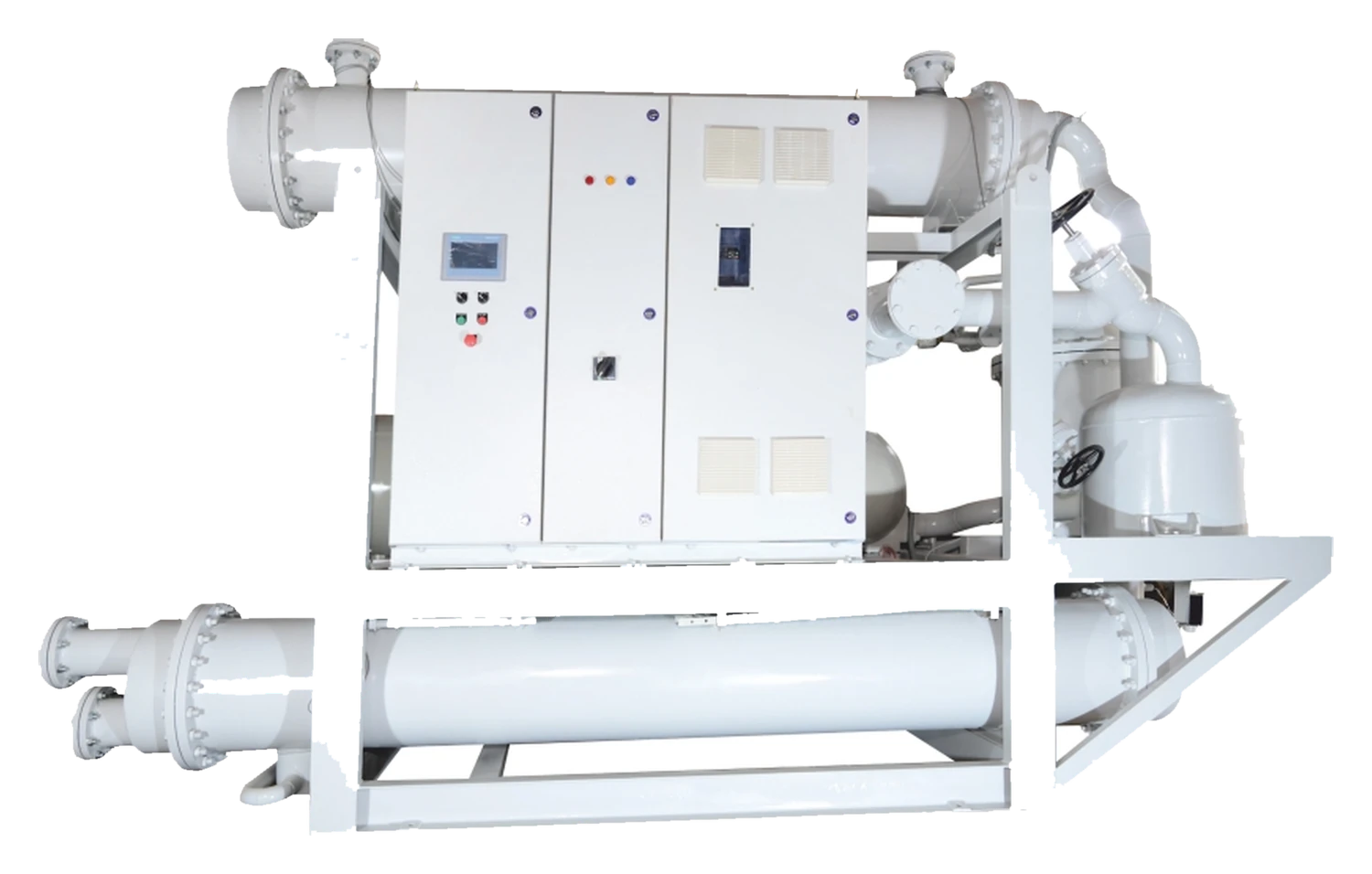
Teqtive builds glycol chillers on the same platform as its brine chillers: screw or reciprocating compressors in semi-hermetic or open construction, shell-and-tube or brazed plate evaporators in carbon steel or stainless steel, and air cooled or water cooled condensers. Capacities run from 1 TR to 500 TR; below −40 °C we move to two-stage or cascade systems.
MEG or PEG — which glycol?
- Monoethylene glycol (MEG) — better heat transfer and lower viscosity; the usual choice for chemical, pharmaceutical API and industrial process loops where the fluid cannot reach food.
- Monopropylene glycol (PEG / MPG) — lower toxicity and food-grade; used in dairies, breweries, beverages and food processing.
Approximate freezing points of water–glycol mixtures (by volume):
| Glycol concentration | MEG freezing point | PEG freezing point |
|---|---|---|
| 20 % | ≈ −8 °C | ≈ −7 °C |
| 30 % | ≈ −15 °C | ≈ −13 °C |
| 40 % | ≈ −24 °C | ≈ −21 °C |
| 50 % | ≈ −37 °C | ≈ −33 °C |
Rule of thumb: choose a concentration whose freezing point is 5–8 °C below the lowest temperature the evaporator will see. More glycol than necessary only raises viscosity and pumping power and lowers the chiller's usable capacity.
Sizing a glycol chiller
Glycol carries less heat than water — its specific heat is roughly 0.85–0.9 of water's — and compressor capacity falls as the set point drops. A chiller rated 50 TR on +7 °C water may deliver well under half that at −20 °C glycol. Always size on the actual fluid, flow and outlet temperature; our tonnage guide and calculator shows the method.
Typical applications
- Pharma API reactors & crystallisers
- Chemical condensers & solvent recovery
- Breweries & fermentation
- Dairy & ice-cream
- Plastic & rubber processing
- Cold rooms & process air coolers
What to send us for a quotation
Heat load or process details, glycol type and concentration, outlet temperature and ΔT, flow rate, site ambient, and whether you prefer air cooled or water cooled. Read brine vs glycol chiller if you are still choosing the coolant.