In a bulk drug or speciality chemical plant the chiller is a utility, like steam or nitrogen, and the reactors are its customers. Getting it wrong shows up as long batch times, lost yield or, for exothermic chemistry, a safety problem. This guide sets out how the cooling utility is chosen and how the load is calculated.
Utility temperature levels
Most plants run several cooling utilities and use the warmest one that will do the job, because cold is expensive: power per TR roughly doubles between +7 °C and −15 °C and doubles again by −40 °C.
| Utility | Typical supply | Used for | Source |
|---|---|---|---|
| Cooling tower water | 30–33 °C | Condensers on high-boiling solvents, first-stage cooling | Cooling tower |
| Chilled water | +5 °C to +8 °C | Cooling to 15–20 °C, vent condensers, HVAC | Water chiller |
| Chilled brine | −10 °C to −20 °C | Reactor cooling to 0 °C, solvent condensers, crystallisers | Brine chiller |
| Low-temperature brine | −30 °C to −45 °C | Low-temperature reactions, secondary vent condensers | Two-stage brine chiller |
| Ultra-low temperature | −50 °C to −70 °C | Lithiation and Grignard steps, freeze drying, cold traps | Cascade chiller |
A sensible rule is that the utility should be about 10–15 °C colder than the lowest batch temperature required, so that the jacket still has a useful temperature difference at the end of cooling.
Calculating the heat load
- Batch cooling. Q₁ = batch mass (kg) × specific heat (kcal/kg·°C) × temperature drop (°C) ÷ cooling time (h). Water is 1.0; most organic solvents are 0.4–0.6.
- Heat of reaction. Q₂ = total heat released by the batch ÷ addition or reaction time. This comes from the process chemist or calorimetry, and for exothermic steps it is often the largest term.
- Vessel and jacket. Q₃ = mass of metal × 0.11–0.12 kcal/kg·°C × temperature drop ÷ time, plus the brine hold-up in the jacket.
- Agitator. Nearly all the shaft power ends up as heat: 1 kW = 860 kcal/h.
- Heat gain. From ambient through insulation on the reactor and brine lines; commonly allowed as 5–10 % for well-insulated systems.
Worked example
A 5 KL stainless steel reactor holds 4,000 kg of a solvent-based batch (specific heat 0.5) to be cooled from 30 °C to −10 °C in 2 hours. The vessel weighs 3,000 kg and the agitator draws 5 kW. No reaction heat during cooling.
| Term | Calculation | kcal/h |
|---|---|---|
| Batch | 4,000 × 0.5 × 40 ÷ 2 | 40,000 |
| Vessel | 3,000 × 0.12 × 40 ÷ 2 | 7,200 |
| Agitator | 5 × 860 | 4,300 |
| Heat gain (about 8 %) | — | 4,100 |
| Total | 55,600 |
55,600 ÷ 3,024 = 18.4 TR, or about 21 TR with a 15 % margin, to be delivered with brine at about −20 °C. A water chiller's catalogue rating is no guide here: the machine must be selected for 21 TR at −20 °C brine outlet, as explained in brine chiller vs water chiller.
Can the jacket use what the chiller delivers?
The chiller is only half of the calculation. The jacket can transfer Q = U × A × ΔT, where A is the wetted jacket area and U the overall coefficient: very roughly 150–350 kcal/h·m²·°C for a stainless steel reactor and 100–200 for glass-lined, depending on agitation and viscosity. As the batch approaches the brine temperature, ΔT shrinks and cooling slows, however large the chiller is. If the last few degrees take too long, the answer is colder brine, more brine flow or more area, not more TR.
Several reactors on one chiller
- Add loads with a diversity factor; reactors rarely all pull down together. Base it on the production schedule, not on a guess.
- Use an insulated brine tank as thermal storage to cover batch peaks with a smaller chiller.
- Keep reactors that need different temperature levels on different circuits. Running one cold loop for a single low-temperature step makes every other user pay the power penalty.
Choosing the brine
Glycol to about −25 °C, calcium chloride to about −40 °C where corrosion can be managed, and methanol–water for the lowest viscosity down to about −45 °C in plants already equipped for flammable solvents. Freezing points and concentrations are tabulated in chilled brine temperature range.
Specification checklist
- Brine type, concentration, supply and return temperature, flow rate
- Capacity in TR or kcal/h at the brine outlet temperature
- Cooling water temperature and quality, or design ambient for air cooled
- Hazardous-area classification where the chiller and pumps will stand
- Materials: SS evaporator or wetted parts if required
- Redundancy: standby compressor or N+1 chillers for critical exothermic duties
- Controls: PLC, capacity steps or VFD, communication with the plant DCS
- Whether a two-stage or cascade design is needed; see two-stage vs cascade refrigeration
Common mistakes
- Sizing from reactor volume with a rule of thumb instead of from the batch.
- Ignoring the heat of reaction, or averaging it over the whole batch time when it is released during a short addition.
- Quoting TR without the temperature.
- Asking for −40 °C brine when −25 °C would do, and paying for it every hour.
- Under-insulating brine lines, then adding chiller capacity to compensate.
Teqtive chillers for process plants
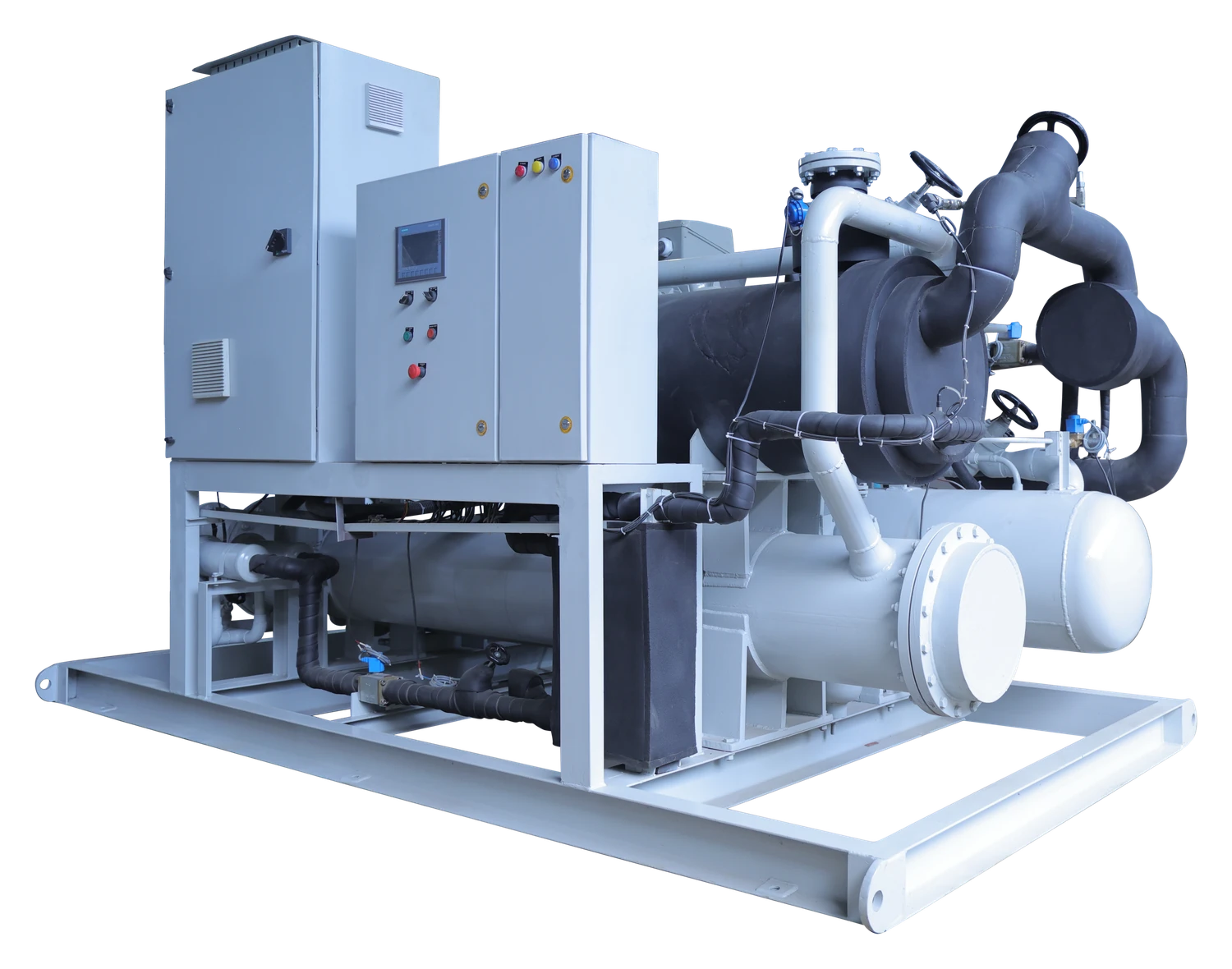
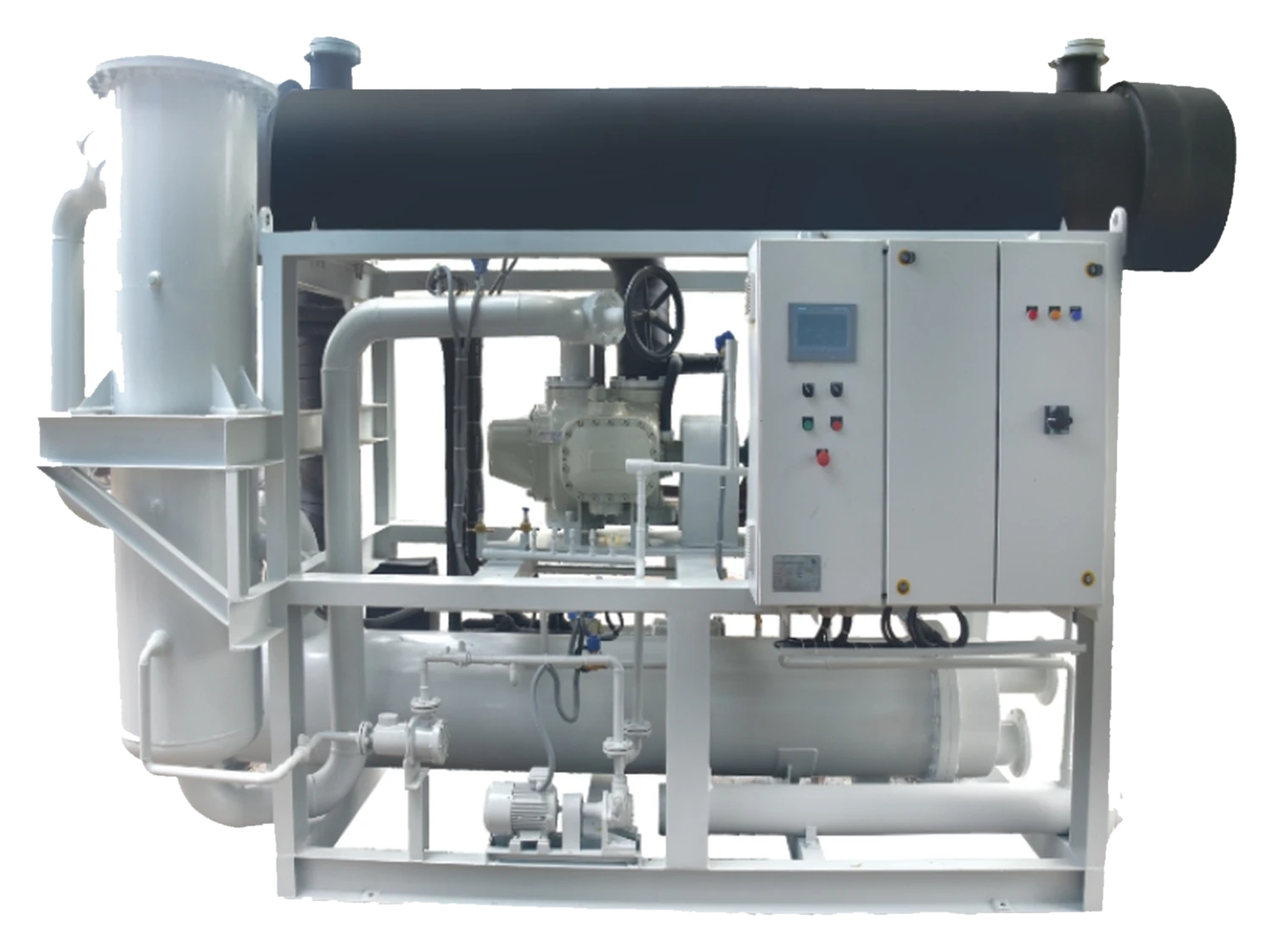
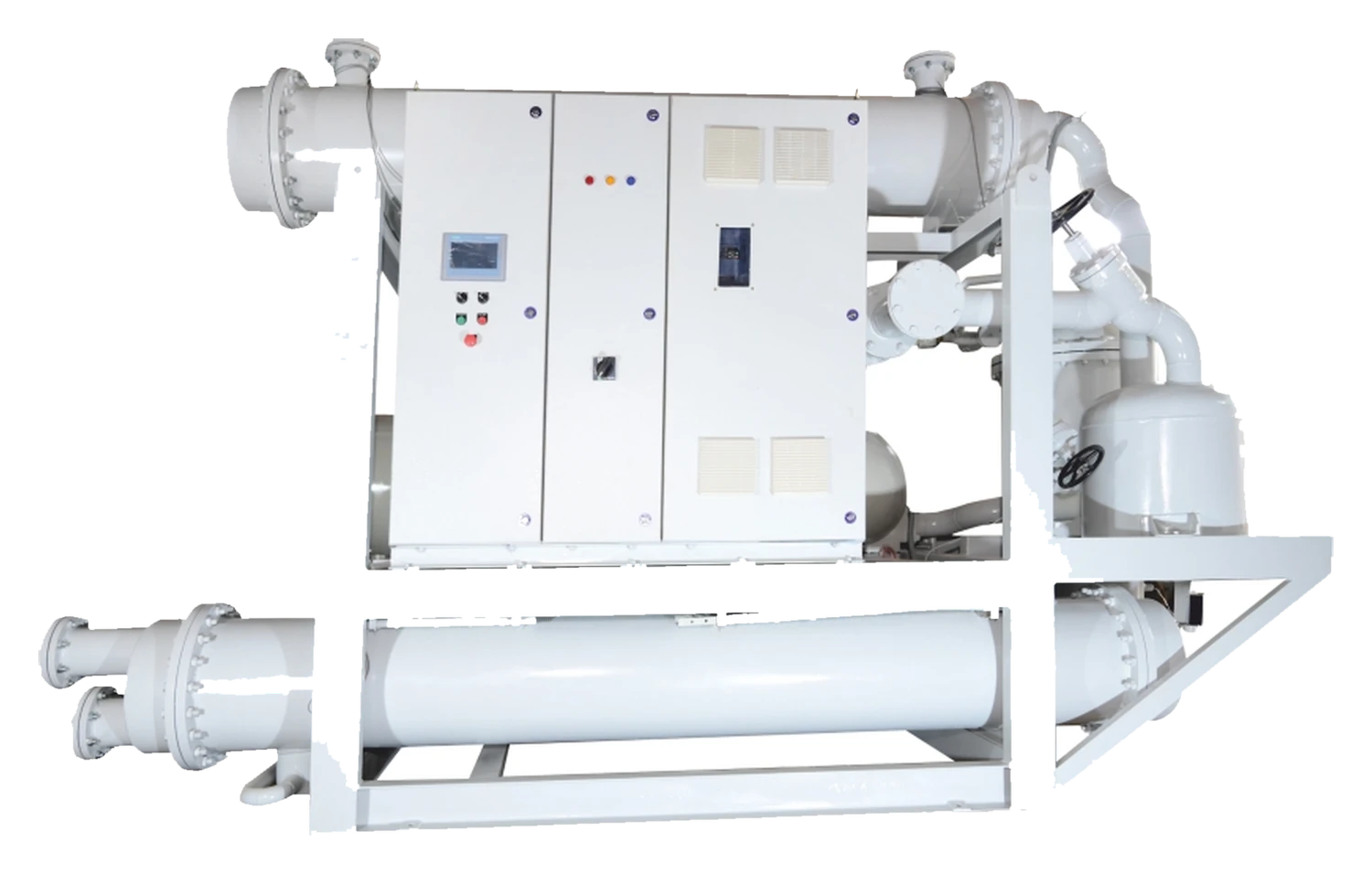
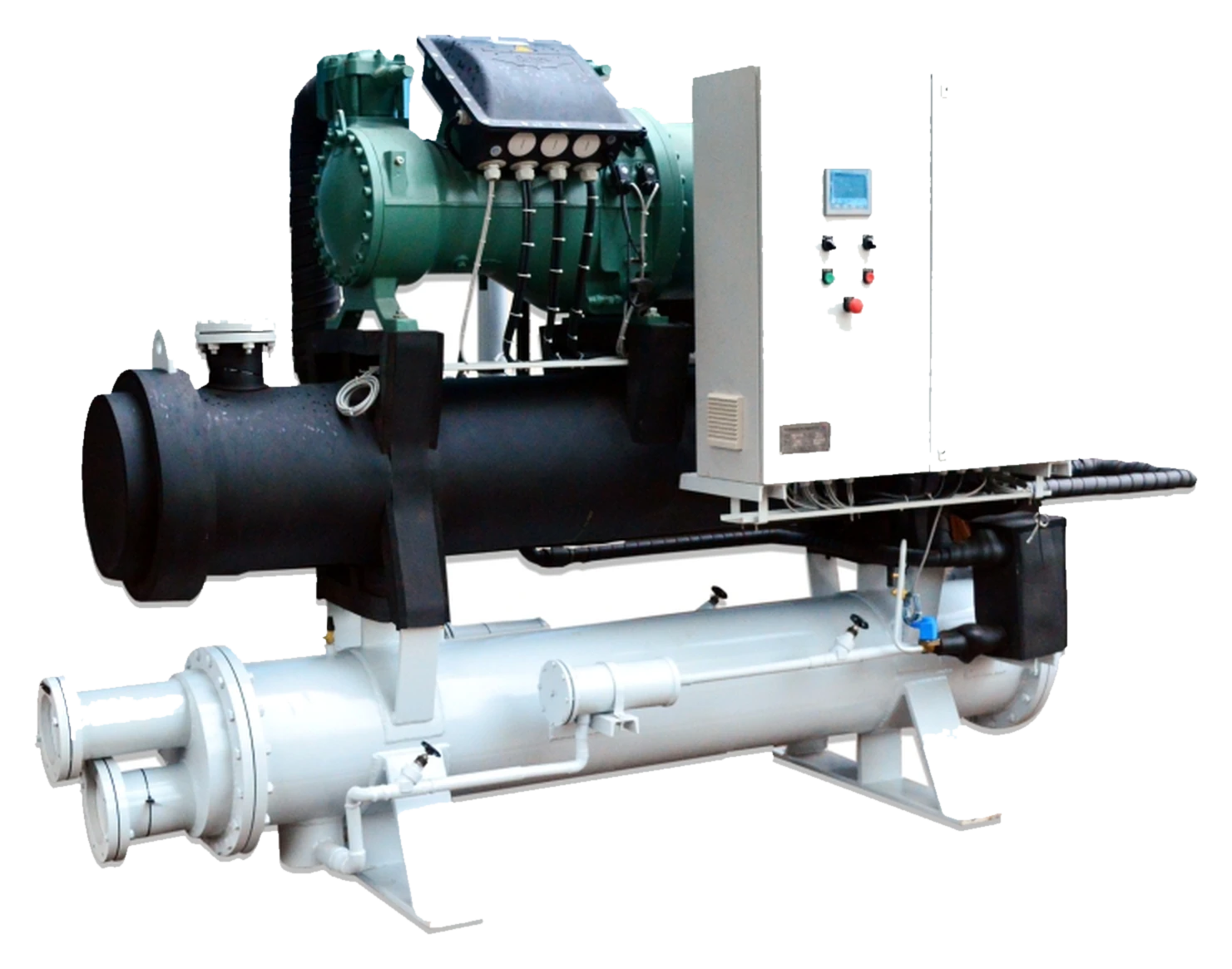
Teqtive manufactures brine chillers from 1 TR to 500 TR for 0 °C to −40 °C, two-stage chillers to −45 °C and cascade chillers to −70 °C, with installations in pharmaceutical API and chemical plants. Send us your batch data and our process team will check the load and propose the utility.
Frequently asked questions
Which chiller is used for chemical reactors?
Reactor jackets and limpet coils are usually cooled by a brine chiller circulating glycol, methanol–water or calcium chloride brine at −10 °C to −40 °C. Reactions and crystallisations that need −45 °C to −70 °C use two-stage or cascade brine chillers. Duties above +5 °C use an ordinary chilled water system.
How do I calculate chiller capacity for a reactor?
Add the batch cooling load (mass × specific heat × temperature drop ÷ cooling time), the heat of reaction released per hour, the heat needed to cool the vessel itself, agitator power and heat gain from surroundings. Convert kcal/h to TR by dividing by 3,024, state the result at the required brine temperature, and add a 10–20 % margin.
How many TR does a 5 KL reactor need?
There is no fixed figure, because the load depends on the batch and the cooling time rather than the vessel size. As an illustration, cooling 4,000 kg of a solvent batch from 30 °C to −10 °C in two hours needs roughly 18 TR at about −20 °C brine once the vessel, agitator and heat gain are included. The same reactor cooled in one hour would need nearly twice that.
Do reactor chillers need to be flameproof?
Where the chiller or its pumps stand in a classified hazardous area, the motors, panels and instruments must be rated for that zone and gas group. Many plants instead place the chiller in a safe utility area and pipe the brine to the reactors, which avoids flameproof construction on the chiller itself.