A single compressor can only lift heat through a limited pressure ratio. Once a process needs coolant below about −25 °C, the lift from evaporator to condenser is too large for one stage, and the designer must split it. There are two ways to do that: two-stage (compound) compression and cascade refrigeration. They are often confused, and choosing the wrong one costs either money or reliability.
Why one stage is not enough
Evaporating at −40 °C and condensing at +40 °C means a pressure ratio of roughly 13–18:1 with common refrigerants. At that ratio the discharge gas becomes hot enough to break down oil, the compressor's volumetric efficiency collapses and power per TR climbs steeply. Splitting the lift into two ratios of about 4:1 keeps each compression step efficient and cool.
How two-stage compression works
- The low-stage compressor (or the low-pressure cylinders of a compound compressor) draws vapour from the evaporator and compresses it to an intermediate pressure.
- An intercooler or economiser cools this gas and subcools the liquid refrigerant heading for the evaporator.
- The high-stage compressor takes the cooled gas up to condensing pressure.
- One refrigerant, one condenser, one oil system. Screw compressors achieve a similar effect in a single machine with an economiser port.
How cascade refrigeration works
- A high-temperature circuit with a conventional refrigerant rejects heat to cooling water or air.
- Its evaporator is the cascade condenser, where a second refrigerant condenses at about −30 °C.
- The low-temperature circuit uses a high-pressure refrigerant such as R-23, R-508B or CO₂ that still has a workable suction pressure at −70 °C.
- The two refrigerants never mix. Each circuit has its own compressor, oil and controls.
The full walkthrough, including refrigerant pairs and start-up sequence, is in cascade refrigeration system explained.
Side-by-side
| Aspect | Two-stage (compound) | Cascade |
|---|---|---|
| Refrigerants | One (R-404A, R-507, R-717, R-22 in older plants) | Two different refrigerants in separate circuits |
| Practical coolant temperature | −25 °C to −45 °C | −45 °C to −70 °C, lower with special designs |
| Link between stages | Intercooler / economiser, same refrigerant | Cascade condenser, refrigerants isolated |
| Suction pressure at lowest temperature | Can approach or fall below atmospheric near −45 °C | Stays above atmospheric |
| Number of circuits | One | Two (three for ultra-low) |
| First cost | Lower | Higher: two sets of compressors, controls and charge |
| Maintenance | One oil and refrigerant system | Two systems; LT refrigerant is expensive |
| Standstill behaviour | Normal | LT circuit needs an expansion vessel for pressure rise |
| Typical users | Low-temperature reactors, blast freezers, ice cream, solvent recovery | Freeze dryers, API crystallisation, cold traps, test chambers, gas liquefaction |
The overlap zone: −35 °C to −45 °C
This is where most selection arguments happen. Points that decide it:
- Suction pressure. If the single refrigerant would run in vacuum at your evaporating temperature, air and moisture will eventually enter. That pushes the design towards cascade.
- Capacity. Large loads at −40 °C favour two-stage screw or ammonia plant. Small loads favour whichever needs fewer components.
- Future temperature. If the process may later need −55 °C, start with cascade; a two-stage machine cannot be stretched.
- Operating hours. Continuous duty rewards the more efficient option; occasional batch duty rewards the cheaper one.
Efficiency expectations
Whatever the architecture, low temperature is expensive. Indicative figures for water cooled machines are about 2.5–3.5 kW/TR at −40 °C and 4–6 kW/TR at −65 °C. Before specifying, ask whether the process really needs the lowest temperature on the data sheet: moving a set-point from −60 °C to −45 °C can change the design from cascade to two-stage and cut both first cost and power sharply. For the arithmetic see COP and kW/TR explained.
Selection checklist
- Coolant outlet temperature and allowed tolerance
- Heat load in kcal/h or TR at that temperature, including pull-down time for batch duties
- Coolant: methanol–water, glycol, calcium chloride, or a specialist heat-transfer fluid for very low temperatures
- Cooling water temperature or design ambient
- Hazardous-area classification, if solvents are present
Teqtive low-temperature chillers
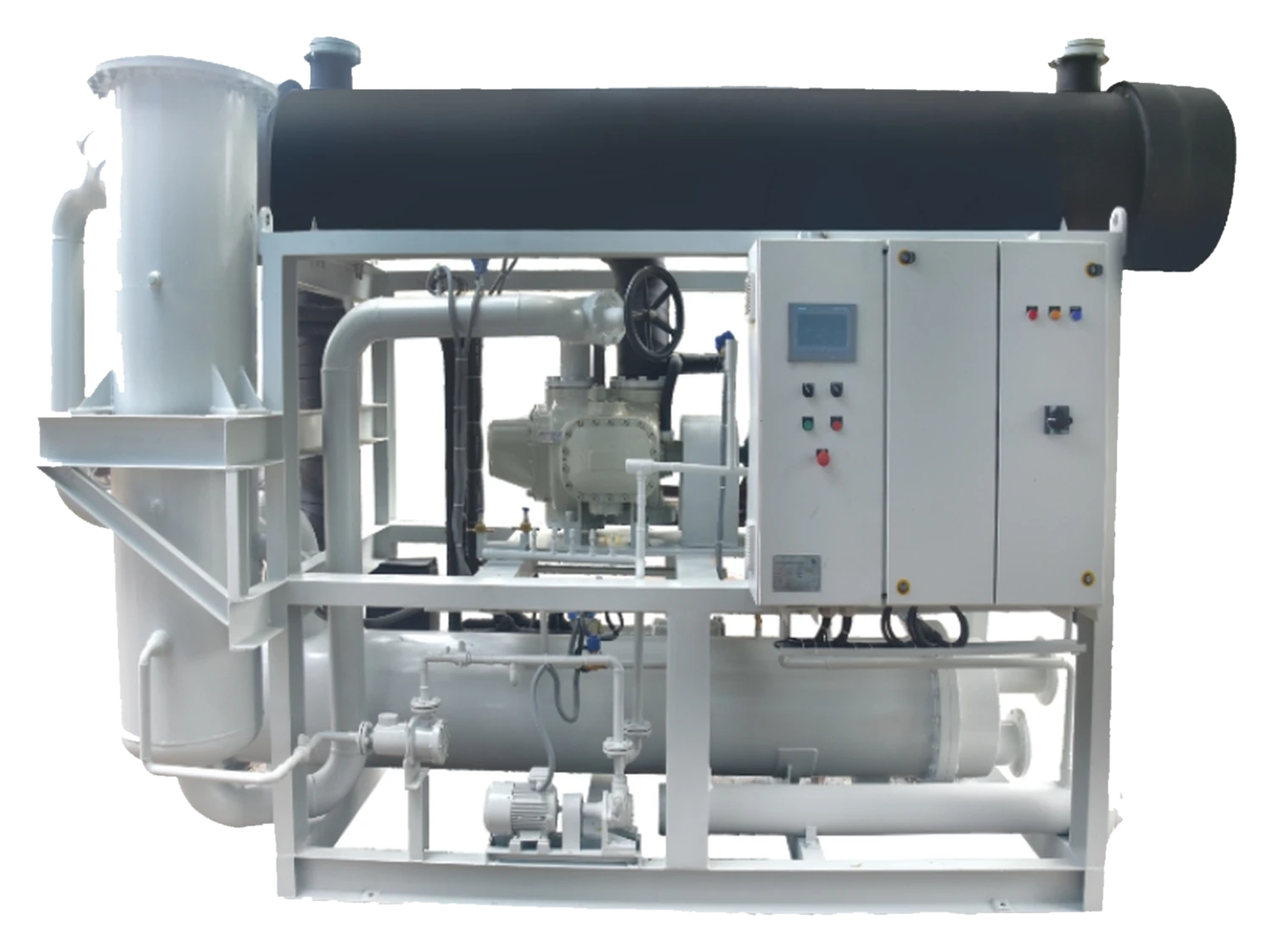
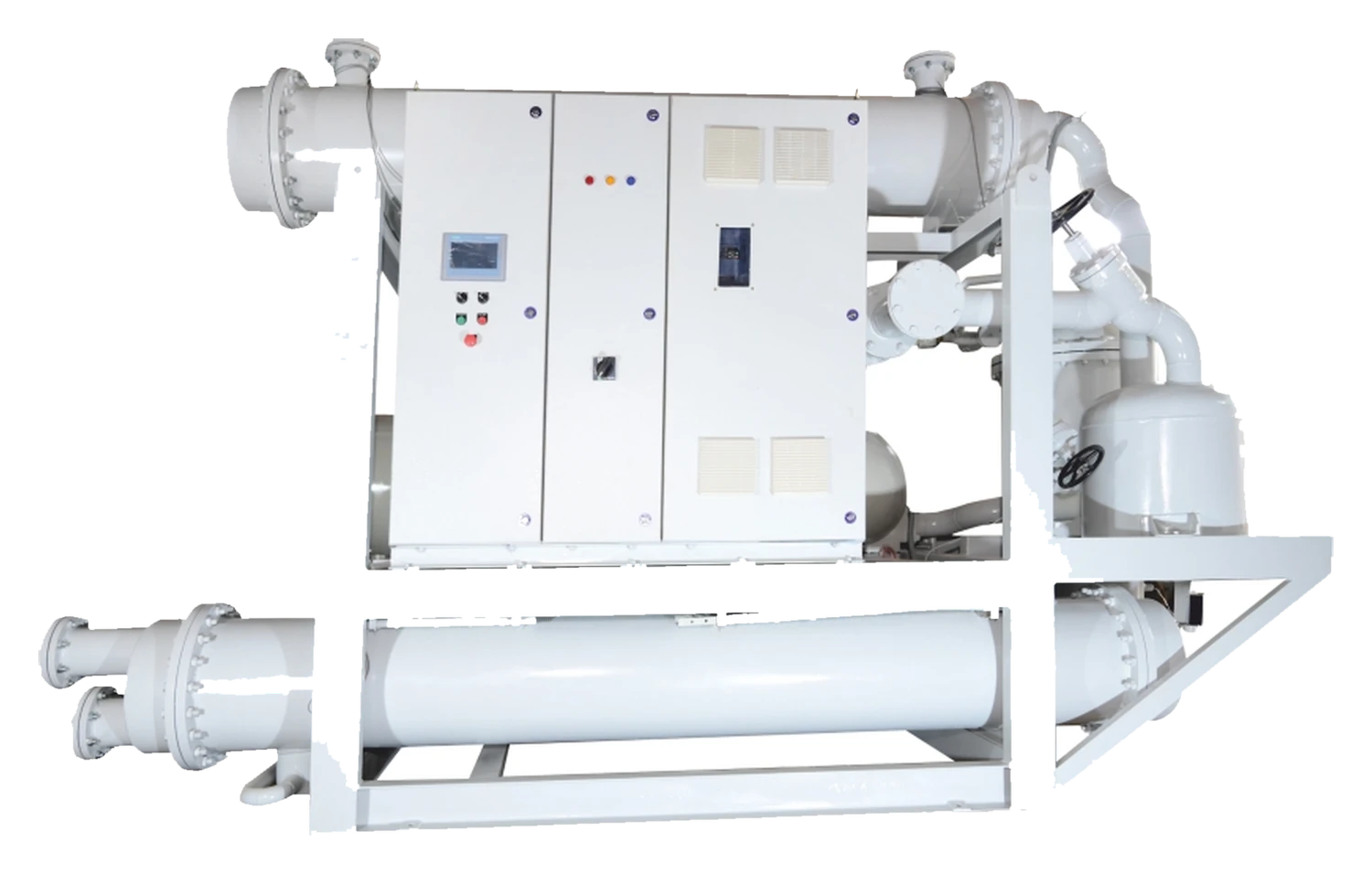
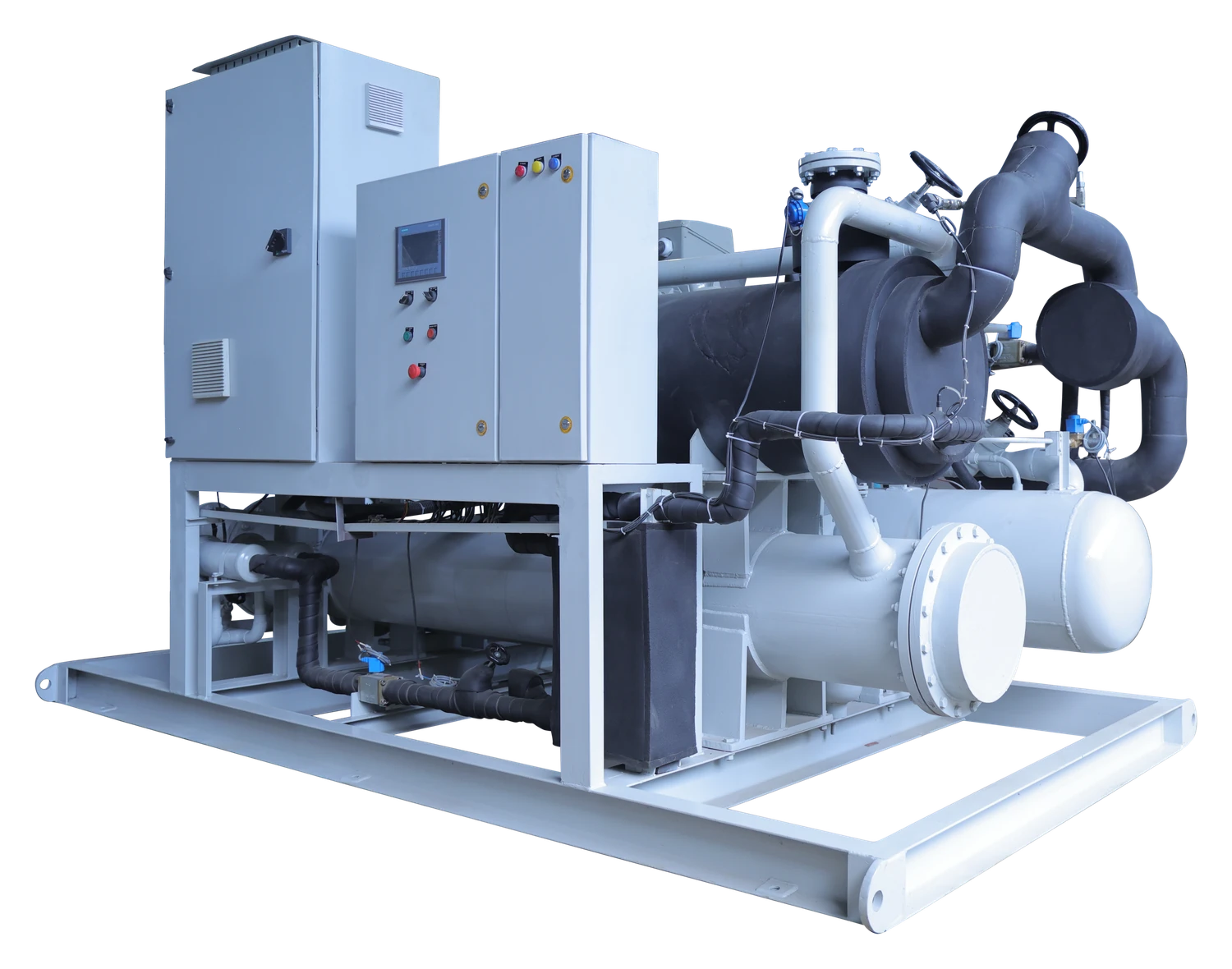
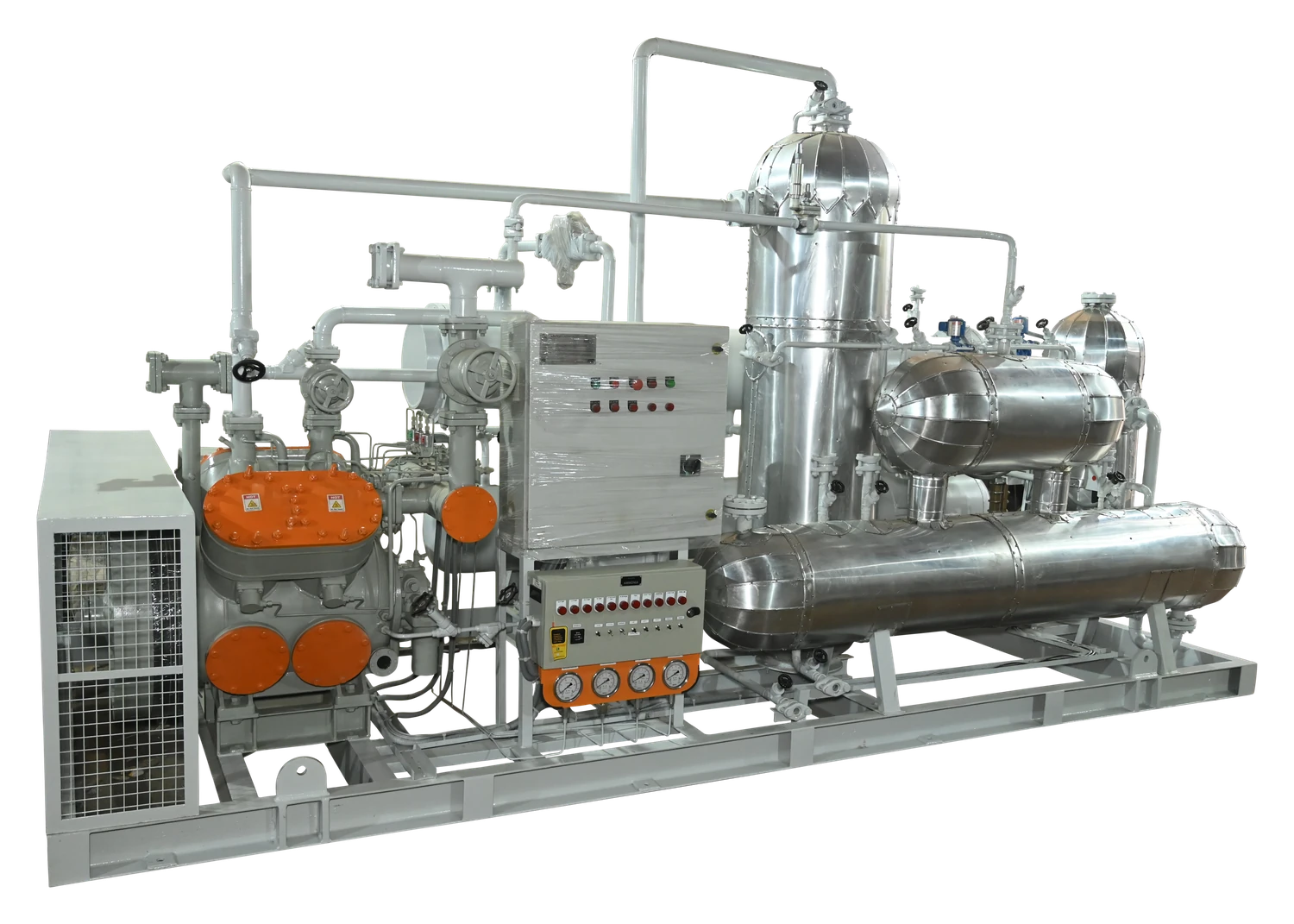
Teqtive builds two-stage brine chillers from 1 TR to 200 TR for −25 °C to −45 °C and cascade brine chillers from 1 TR to 100 TR for −35 °C to −70 °C, with screw or reciprocating compressors. Share your load and temperature and our process team will recommend the architecture and show the power figures for both where they overlap.
Frequently asked questions
What is the difference between two-stage and cascade refrigeration?
A two-stage system compresses one refrigerant in two steps with intercooling between them, all in a single circuit. A cascade system has two completely separate circuits with different refrigerants; the first circuit's evaporator cools the second circuit's condenser. Two-stage suits about −25 °C to −45 °C, cascade suits about −45 °C to −80 °C.
At what temperature do I need a cascade system?
As a rule, when the coolant has to leave the chiller colder than about −45 °C. Between −35 °C and −45 °C either design can work and the choice depends on capacity, refrigerant and budget. Above −25 °C a single-stage brine chiller is normally enough.
Is cascade more efficient than two-stage?
At temperatures both can reach, a well-designed two-stage system is usually simpler and at least as efficient. Below about −50 °C the cascade is more efficient and more reliable, because each refrigerant works in its comfortable pressure range and suction stays above atmospheric pressure.
What is an intercooler in two-stage compression?
It is a vessel or heat exchanger between the low-stage and high-stage compressors that cools the low-stage discharge gas, usually by flashing some liquid refrigerant. It brings the gas close to saturation before the second stage, which lowers the final discharge temperature, and it also subcools the liquid going to the evaporator, which raises capacity.