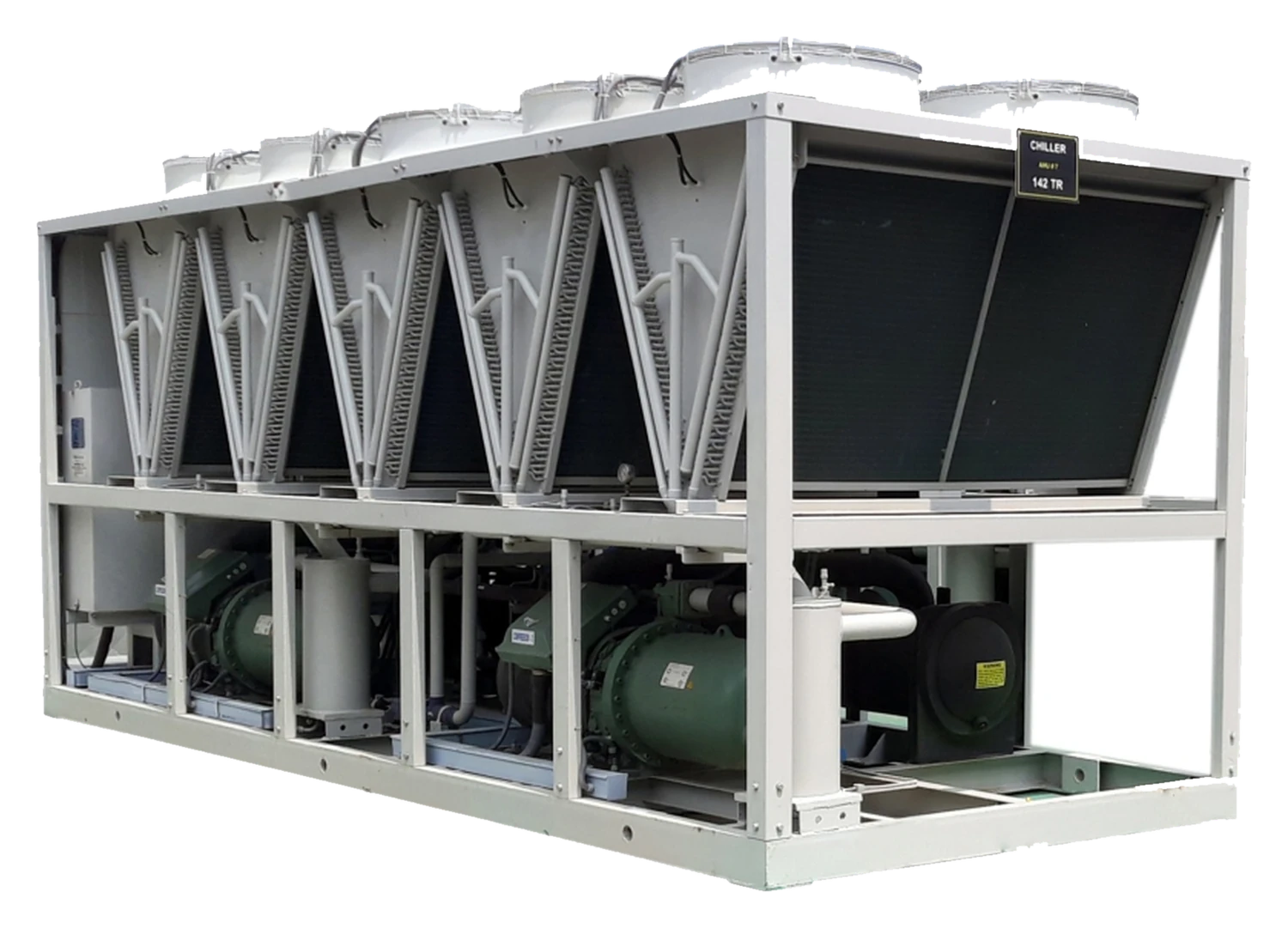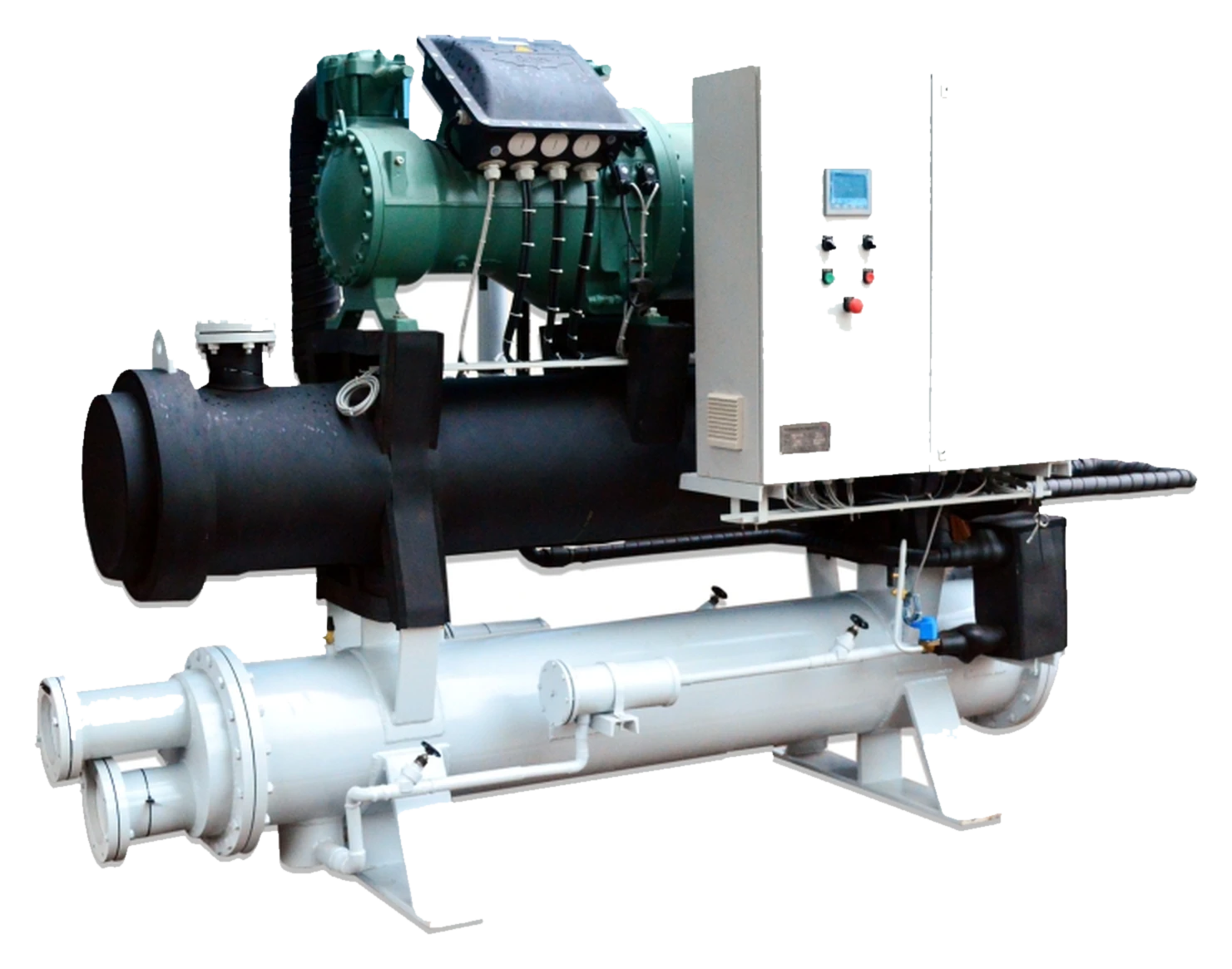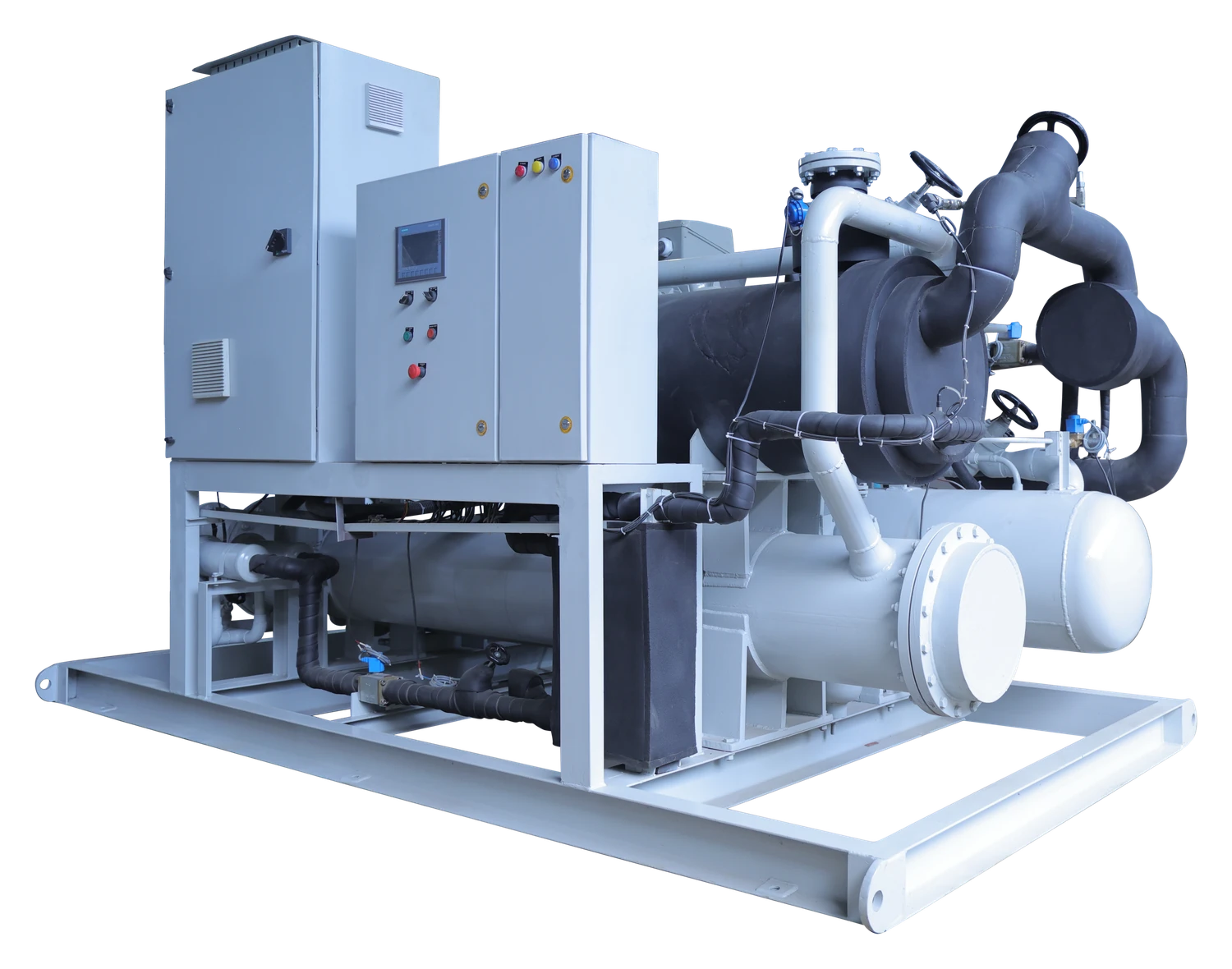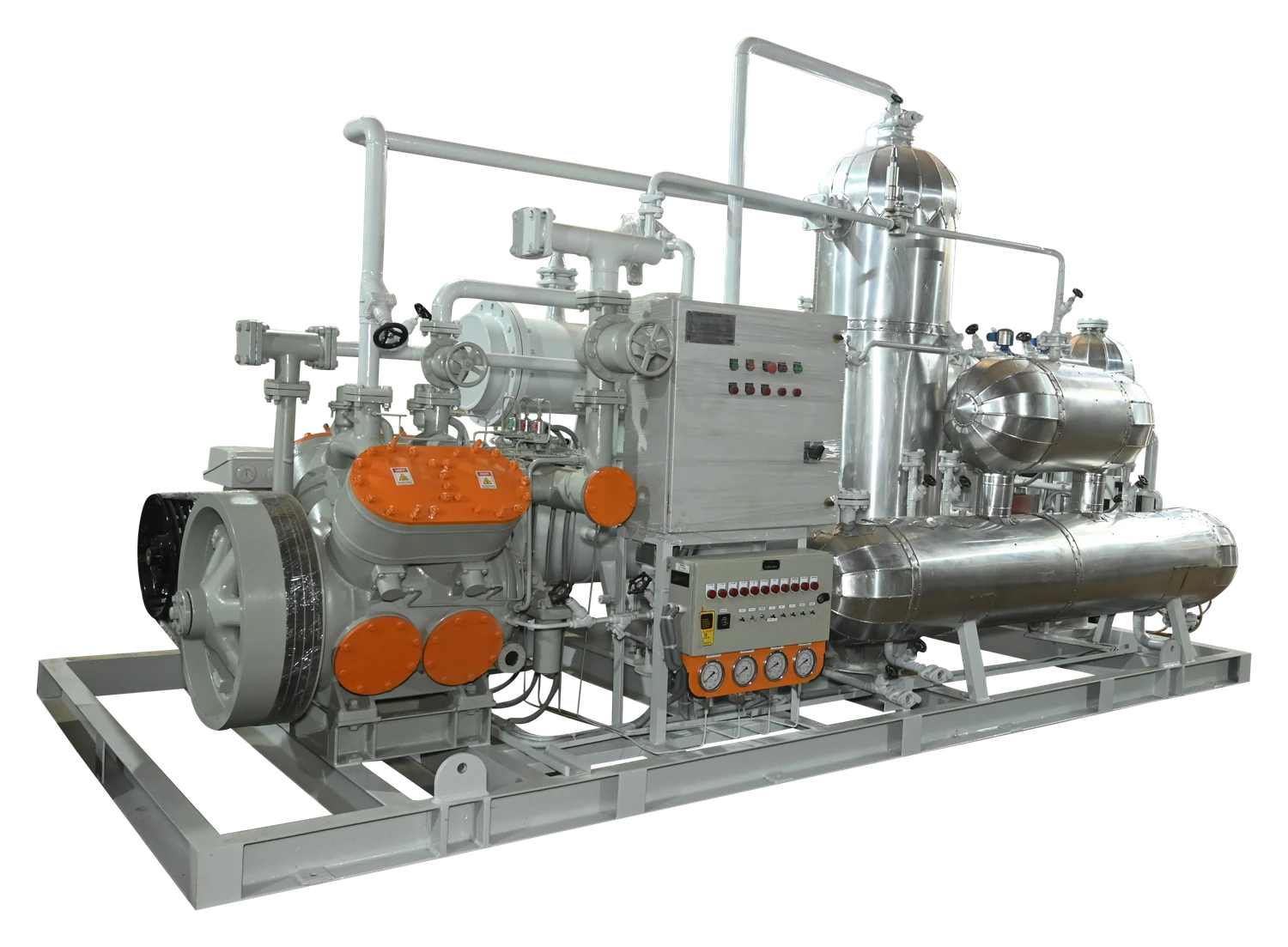
The screw chiller is the workhorse of industrial cooling. One screw compressor can deliver from a few tens to several hundred tons of refrigeration, run continuously for years, and follow the load smoothly. Teqtive builds screw chillers in air cooled and water cooled versions, and uses screw compressors across its brine and ammonia ranges.
Teqtive screw chiller range
| Teqtive range | Capacity | Temperature | Best for |
|---|---|---|---|
| Air cooled screw chiller | 40 – 500 TR | +25 °C to −10 °C | Plants without a cooling tower |
| Water cooled screw chiller | 40 – 500 TR | +25 °C to −10 °C | Lowest power per TR on large loads |
| Screw brine chiller | up to 500 TR | 0 °C to −40 °C | Pharma and chemical brine loops |
| Ammonia screw chiller | 20 – 1000 TR | 0 °C to −40 °C | Dairy, beverage, cold chain, large process plants |
How a screw compressor works
A male and a female rotor mesh inside a close-fitting casing. Suction gas fills the pockets between the lobes; as the rotors turn, each pocket is sealed off and shrinks as it travels toward the discharge port, compressing the gas. Oil is injected to seal clearances, cool the gas and lubricate, then separated from the discharge gas and returned. Because compression is continuous rather than stroke-by-stroke, the machine runs with little vibration and long service intervals. Economised screws add an intermediate port that takes flash gas from a subcooler, raising capacity and efficiency, which matters most at low temperature.
Air cooled vs water cooled screw chillers
| Aspect | Air cooled screw | Water cooled screw |
|---|---|---|
| Heat rejection | Finned coil and fans | Shell-and-tube condenser + cooling tower |
| Typical full-load power | Higher (condensing at ambient + 10–15 °C) | Lower, often 20–35 % less compressor power |
| Water use | None | Tower make-up and treatment |
| Location | Outdoors / roof | Plant room + tower outside |
| Best fit | Water-scarce sites, simpler plants | Large continuous loads, existing tower |
More detail in air cooled vs water cooled chiller.
Selecting a screw chiller
- Load profile. Steady 24-hour loads suit a single large screw; variable loads suit two or more compressors or a VFD.
- Part-load efficiency. Compare IPLV, not just full-load kW/TR. See IPLV and NPLV explained.
- Temperature. Below about −10 °C move to a screw brine chiller with economiser; below −40 °C to two-stage or cascade.
- Starting. Star-delta, soft starter or VFD to suit the plant's power supply.
Still deciding between compressor types? Read screw vs scroll chiller, or see all industrial chillers. For budgets, see the chiller price guide.
Frequently asked questions
What is a screw chiller?
A screw chiller is a chiller that uses a rotary screw compressor: two meshing helical rotors trap refrigerant gas and compress it as it moves along the rotors. Screw compressors run smoothly and continuously with few moving parts, which makes them the standard choice for loads from about 40 TR upward.
What capacity range do screw chillers cover?
Teqtive air cooled and water cooled screw chillers cover 40 TR to 500 TR for chilled water and glycol from +25 °C to −10 °C. Screw compressors are also used in our brine chillers (to −40 °C) and ammonia chillers (up to 1000 TR).
How is capacity controlled in a screw chiller?
By a slide valve that changes the effective rotor length (stepless, typically from 25 % to 100 %), by stepped capacity, by a variable-frequency drive on the motor, or by staging several compressors. Multi-compressor units combine these for good part-load efficiency.
Is a screw chiller better than a scroll chiller?
Neither is better in general. Scroll chillers are more economical and efficient below about 60–80 TR; screw chillers are better above that, and for continuous heavy duty. See our screw vs scroll guide for the full comparison.