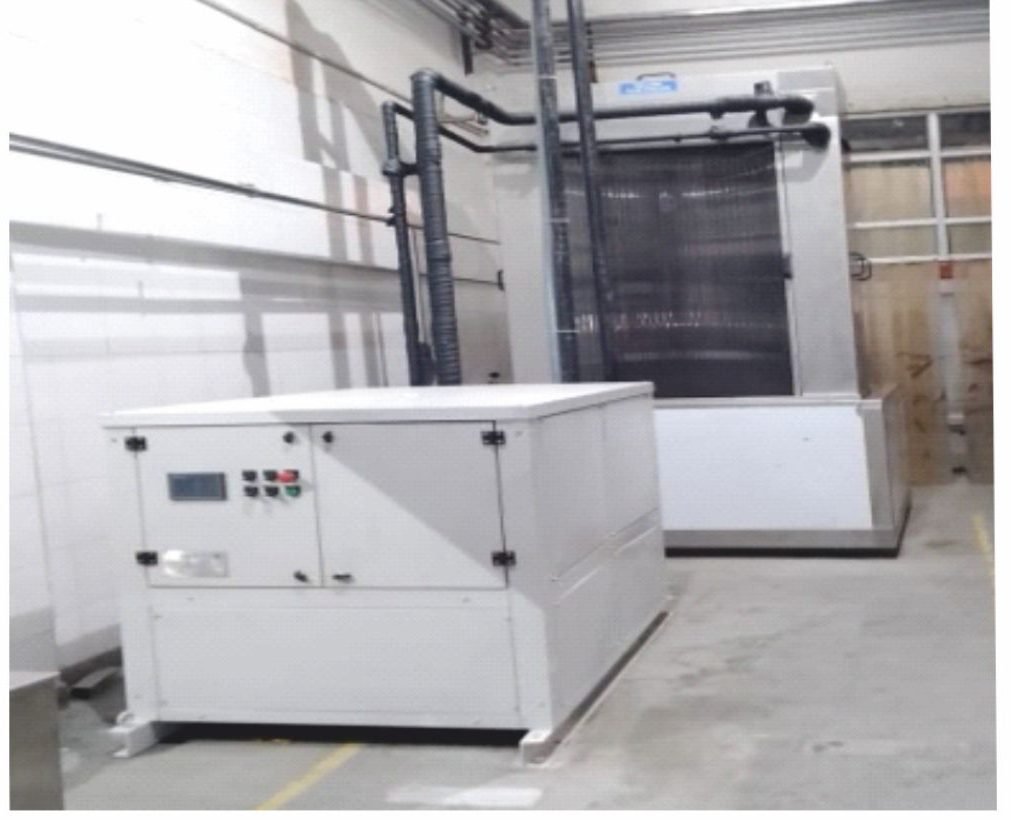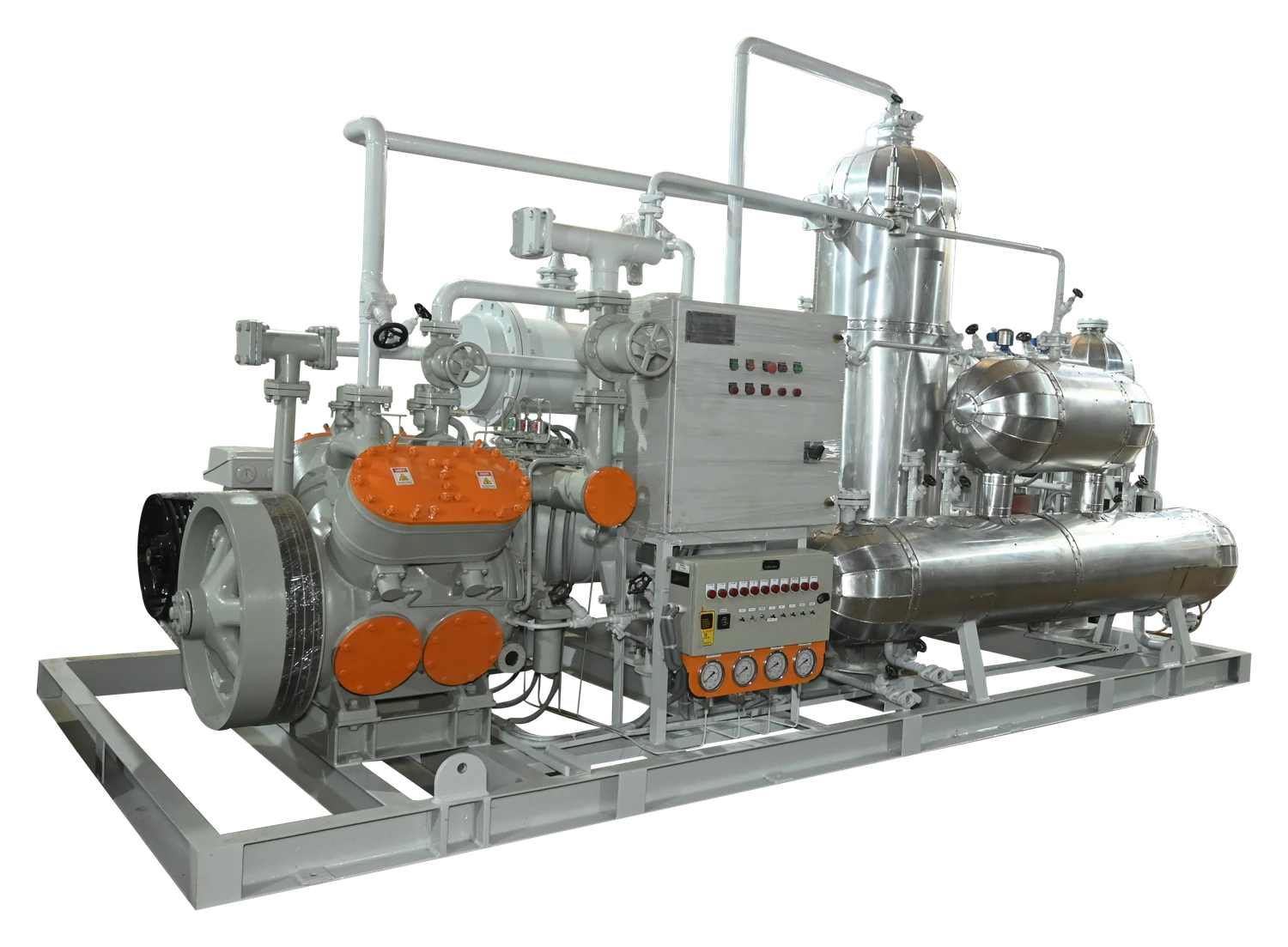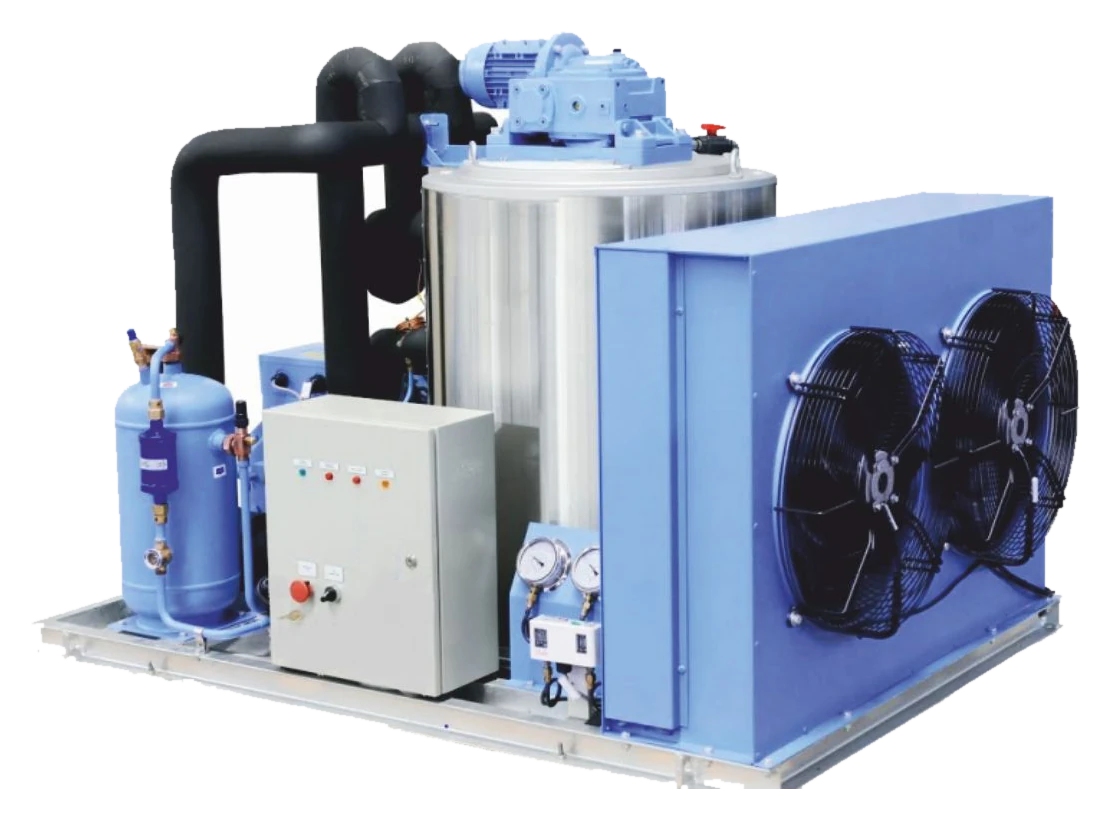
Food and beverage plants need cold that is reliable, hygienic and economical to run around the clock. Teqtive supplies the full set: ice water, glycol, ammonia refrigeration, flake ice and air chilling.
Cooling duties and equipment
| Duty | Temperature | Equipment |
|---|---|---|
| Milk reception and chilling | Ice water +0.5 °C to +2 °C | Falling film chiller, ammonia chiller |
| Pasteuriser regeneration and product cooling | Ice water or glycol | Falling film, glycol chiller |
| Brewery fermenters and bright beer tanks | Propylene glycol −4 °C to −6 °C | Glycol chiller |
| Beverage and juice process water | +2 °C to +5 °C | Scroll / screw chiller |
| Cold rooms and air handling | Air +2 °C to +5 °C | Air chiller, condensing units |
| Fish, meat and poultry, bakery dough | Flake ice | Ice machine |
| Large plants and cold stores | 0 °C to −40 °C, 20 – 1000 TR | Ammonia refrigeration |
| CO₂ recovery at breweries | −25 °C to −30 °C | CO₂ liquefaction |
Ammonia or packaged glycol?
Below about 50 TR a packaged glycol chiller is almost always right; above about 150 TR ammonia usually wins on running cost, with glycol or ice water distributed to the production hall. The full comparison is in ammonia vs glycol refrigeration for food plants.
Heat recovery
Dairies and breweries need hot water as well as cold. An industrial heat pump can upgrade waste heat from refrigeration to +60 °C to +90 °C for CIP and washing. See how industrial heat pumps work.
Send us your throughput and temperatures for a proposal.
Frequently asked questions
What chiller is used in a dairy plant?
Dairies chill milk with ice water at about +1 °C, produced by a falling film chiller or an ice bank, usually driven by ammonia in larger plants or by packaged HFC units in smaller ones. Glycol is used for cold rooms, ice cream and some process duties.
What is a falling film chiller?
A falling film chiller cools water as a thin film running down vertical plates on the outside of which refrigerant evaporates. Because the film cannot freeze solid, it can deliver ice water as cold as +0.5 °C continuously.
What glycol is used in food plants?
Food-grade, inhibited propylene glycol wherever there is any chance of contact with product. Ethylene glycol is limited to closed industrial loops away from food.