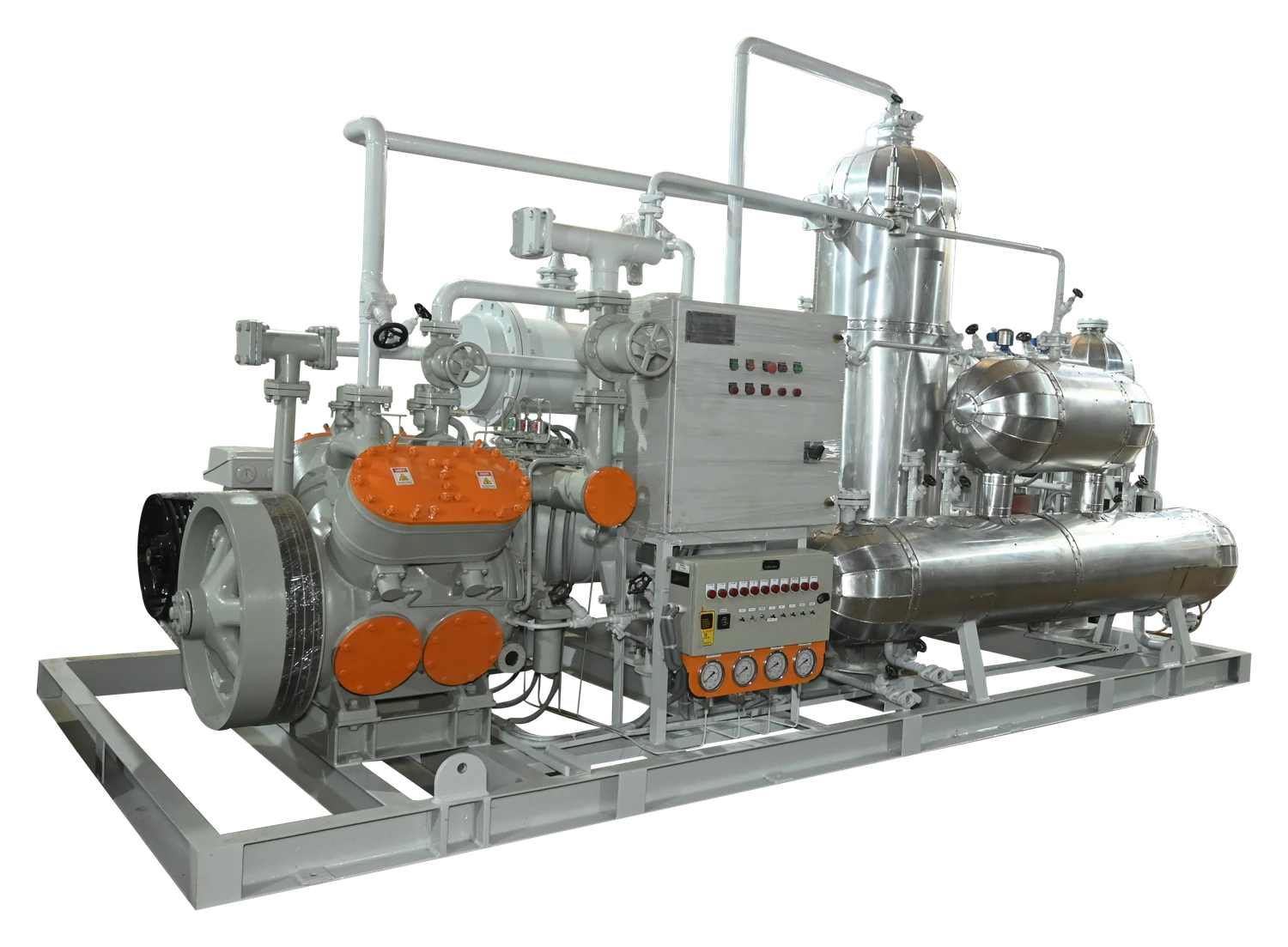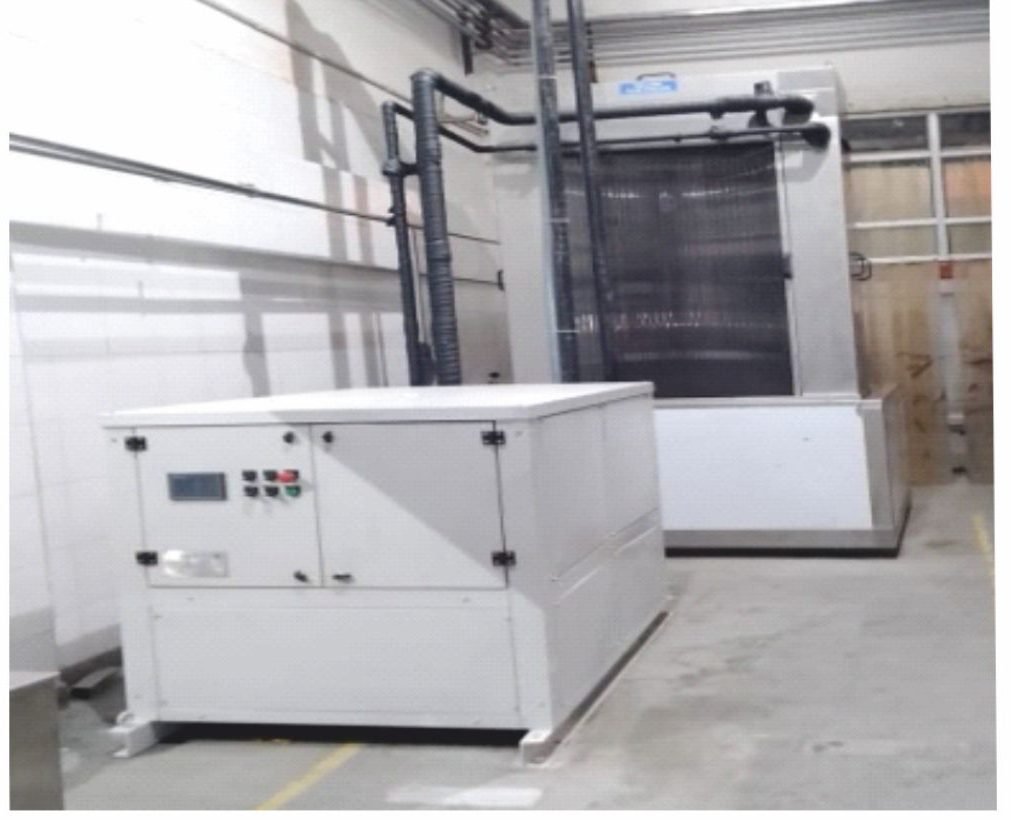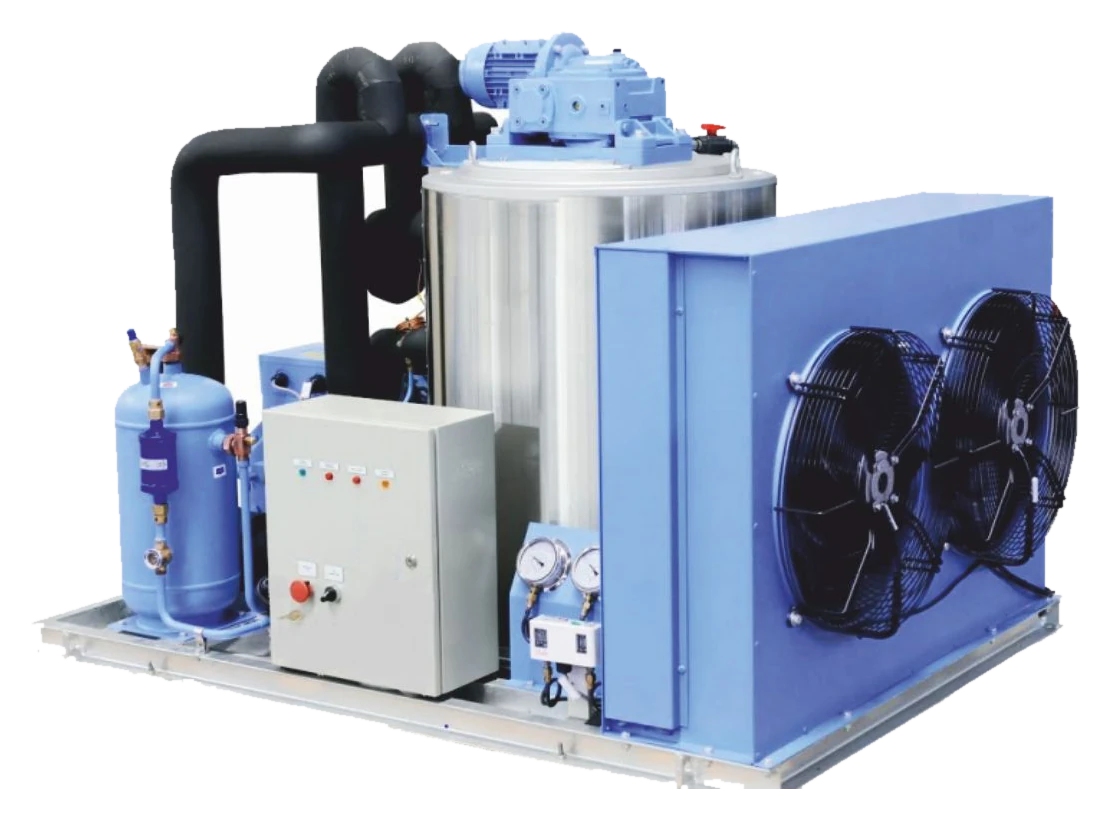
Food engineers often search for "ammonia vs glycol" as if they were two competing refrigerants. They are not. Ammonia (R-717) is a primary refrigerant: it evaporates and condenses in a compressor circuit to produce cooling. Glycol is a secondary coolant: a water–glycol mixture that is chilled by a refrigeration plant and pumped to tanks, heat exchangers and air coolers. A food plant can use ammonia alone, glycol chilled by ammonia, or glycol chilled by a packaged HFC chiller. This guide compares the three.
The three system layouts
- Direct ammonia. Liquid ammonia is pumped or fed straight to evaporators in the cold rooms, freezers and process heat exchangers. Highest efficiency, largest ammonia charge, ammonia piping throughout the plant.
- Ammonia-chilled glycol (indirect). An ammonia chiller in the machine room cools glycol in a plate or shell-and-tube evaporator. Only glycol leaves the machine room. The ammonia charge is a fraction of a direct system.
- Packaged glycol chiller. A factory-built glycol chiller with scroll, reciprocating or screw compressors on an HFC refrigerant. No ammonia on site at all. Standard choice for small and medium loads.
Side-by-side comparison
| Aspect | Direct ammonia | Ammonia-chilled glycol | Packaged glycol chiller (HFC) |
|---|---|---|---|
| Energy efficiency | Best | About 10–20 % more power than direct | Typically 10–20 % more again at low temperature |
| Refrigerant in production area | Yes | No | No |
| Refrigerant charge | Large | Small, confined to machine room | Small, sealed |
| Typical temperature | +5 °C to −40 °C | Glycol at −2 °C to −30 °C | Glycol at +5 °C to −30 °C |
| Sensible plant size | Above about 100 TR | Above about 50–100 TR | 1 TR to about 150 TR |
| Piping | Welded steel, pressure tested | Steel in machine room, SS / PPR / CPVC for glycol | Glycol piping only |
| Operators | Trained ammonia operators | Trained operators for machine room | General maintenance staff |
| Adding a new tank or line | Refrigeration contractor | Plumbing job | Plumbing job |
| Refrigerant climate impact | Zero ODP, zero GWP | Zero ODP, zero GWP | HFC, subject to phase-down |
Why ammonia still dominates large food plants
Ammonia has a very high latent heat, excellent heat transfer and costs little per kilogram. In a large cold store, ice plant or dairy the power saving over an HFC plant is typically 10–20 %, and it grows as the temperature falls. Ammonia has zero ozone-depletion and zero global-warming potential, so it is not affected by the HFC phase-down. Its sharp smell means leaks are noticed long before they become dangerous. The trade-offs are toxicity, the need for steel piping (ammonia attacks copper), a ventilated machine room with gas detection, and trained staff. These are covered in more detail in ammonia vs Freon refrigeration.
Why food plants put glycol between ammonia and product
- Food safety. A leak of ammonia into a production hall can taint product and force an evacuation. A leak of food-grade propylene glycol is a housekeeping issue.
- Lower charge. Confining ammonia to a compact chiller in the machine room cuts the charge dramatically, which simplifies safety design and approvals.
- Flexibility. Fermenters, silos, pasteuriser cooling sections, jacketed kettles and air handlers each take glycol through a control valve. Adding a user is a piping job, not a refrigeration job.
- Stable control. A buffered glycol loop absorbs the batch peaks typical of dairies and breweries.
Which glycol, and how strong?
Use inhibited propylene glycol where contact with food is possible and ethylene glycol only on closed industrial duties. Concentration is set by the coldest temperature in the evaporator, not the supply temperature: the mixture's freezing point should sit about 10 °C below the glycol outlet temperature. Roughly 30 % glycol protects to about −13 °C to −15 °C, 40 % to about −21 °C to −24 °C and 50 % to about −33 °C to −36 °C. Stronger than necessary is not safer, because viscosity rises and heat transfer falls. See chilled brine temperature range and freezing points for a full table, and brine vs glycol chiller for the fluid choice.
Typical food and beverage duties
| Duty | Coolant and temperature | Common arrangement |
|---|---|---|
| Milk chilling after reception | Ice water at +0.5 °C to +1 °C | Falling film chiller or ice bank, ammonia or HFC |
| Pasteuriser and process cooling | Ice water or glycol at −2 °C | Ammonia-chilled glycol or ice water |
| Brewery fermenters and bright beer tanks | Propylene glycol at −4 °C to −6 °C | Packaged glycol chiller; ammonia above about 100 TR |
| Ice cream hardening and freezing | −30 °C to −40 °C air | Direct ammonia or low-temperature condensing units |
| Meat and poultry chilling | Air at 0 °C to +4 °C, ice | Ammonia, glycol air coolers, flake ice |
| Frozen cold stores | −18 °C to −25 °C rooms | Direct ammonia for large stores, HFC units for small rooms |
| Soft drink and juice carbonation | Glycol at −2 °C to −5 °C | Packaged glycol chiller |
How to choose
- Below about 50 TR: a packaged glycol chiller is almost always right. The ammonia overhead cannot be justified.
- 50 to 150 TR: compare a multi-compressor screw glycol chiller against an ammonia chiller on ten-year power cost. Running hours decide it; a plant running 20 hours a day favours ammonia.
- Above about 150 TR, or below −25 °C: ammonia, with glycol or ice water for everything that touches production and direct ammonia only for freezers and cold stores.
Whichever route you choose, size the plant from the real heat load rather than nameplate tonnage: capacity at −8 °C glycol is far lower than the same compressor's rating at +7 °C. The method is in how to calculate chiller tonnage.
Teqtive for food and beverage plants
Teqtive builds ammonia chillers from 20 TR to 1000 TR for water, glycol, methanol and calcium chloride brines, packaged glycol chillers, falling film chillers for ice water at +0.5 °C and ice machines from 1 to 60 tonnes per day. Send us your product, throughput and temperatures and our process team will propose the layout that fits your plant size.
Frequently asked questions
Is ammonia or glycol better for a food plant?
They do different jobs. Ammonia is the refrigerant that produces the cold; glycol is a food-safe liquid that carries the cold to the process. Large plants usually get the lowest running cost from an ammonia plant in the machine room that chills a glycol loop for the production hall. Small plants are usually better served by a packaged glycol chiller with an HFC refrigerant.
Why do food plants use glycol instead of circulating ammonia?
Keeping ammonia out of production areas removes the risk of a leak contaminating product or injuring staff. A glycol loop runs at low pressure in simple stainless or plastic piping, is easy to extend to new tanks and lines, and with food-grade propylene glycol an accidental leak into product is far less serious.
Which glycol is used in food and beverage plants?
Propylene glycol (food grade, inhibited) is used wherever there is any chance of contact with product, such as dairies, breweries and beverage lines. Ethylene glycol has slightly better heat transfer and lower viscosity but is toxic, so it is limited to closed industrial duties away from food.
How much efficiency is lost with a glycol secondary loop?
A secondary loop adds one heat-exchange step and a pump. The refrigerant has to evaporate roughly 4–6 °C colder than in a direct system, which costs about 10–20 % more compressor power, plus the glycol pump power. Many food plants accept this in exchange for a much smaller ammonia charge and simpler, safer distribution.