"Freon" is a trade name that has come to mean any halocarbon refrigerant — originally the CFC R-12, then the HCFC R-22, and today HFC blends such as R-404A, R-407C, R-134a and R-410A. Ammonia (R-717) is the oldest industrial refrigerant and still the standard for large cold-chain and process plants. The choice between them affects running cost, safety design and the size of plant you can sensibly build.
Comparison at a glance
| Factor | Ammonia (R-717) | Freon / HFC (R-404A, R-407C, R-134a) |
|---|---|---|
| Energy efficiency | Highest of the common refrigerants; 10–20 % lower kW/TR | Good; falls faster at low temperatures |
| Refrigerant cost | Very low | Moderate to high, and rising under the HFC phase-down |
| Toxicity | Toxic at low concentrations — but its sharp smell gives early warning | Non-toxic in normal use; odourless, so leaks go unnoticed |
| Flammability | Mildly flammable (class B2L) | Non-flammable (A1) |
| Environmental | Zero ozone depletion, zero GWP | Zero ODP; GWP 1,400–4,000 — being phased down under Kigali |
| Materials | Steel piping; copper and brass are attacked | Copper piping; standard brazed construction |
| Compressors | Open-drive reciprocating and screw | Hermetic, semi-hermetic or open |
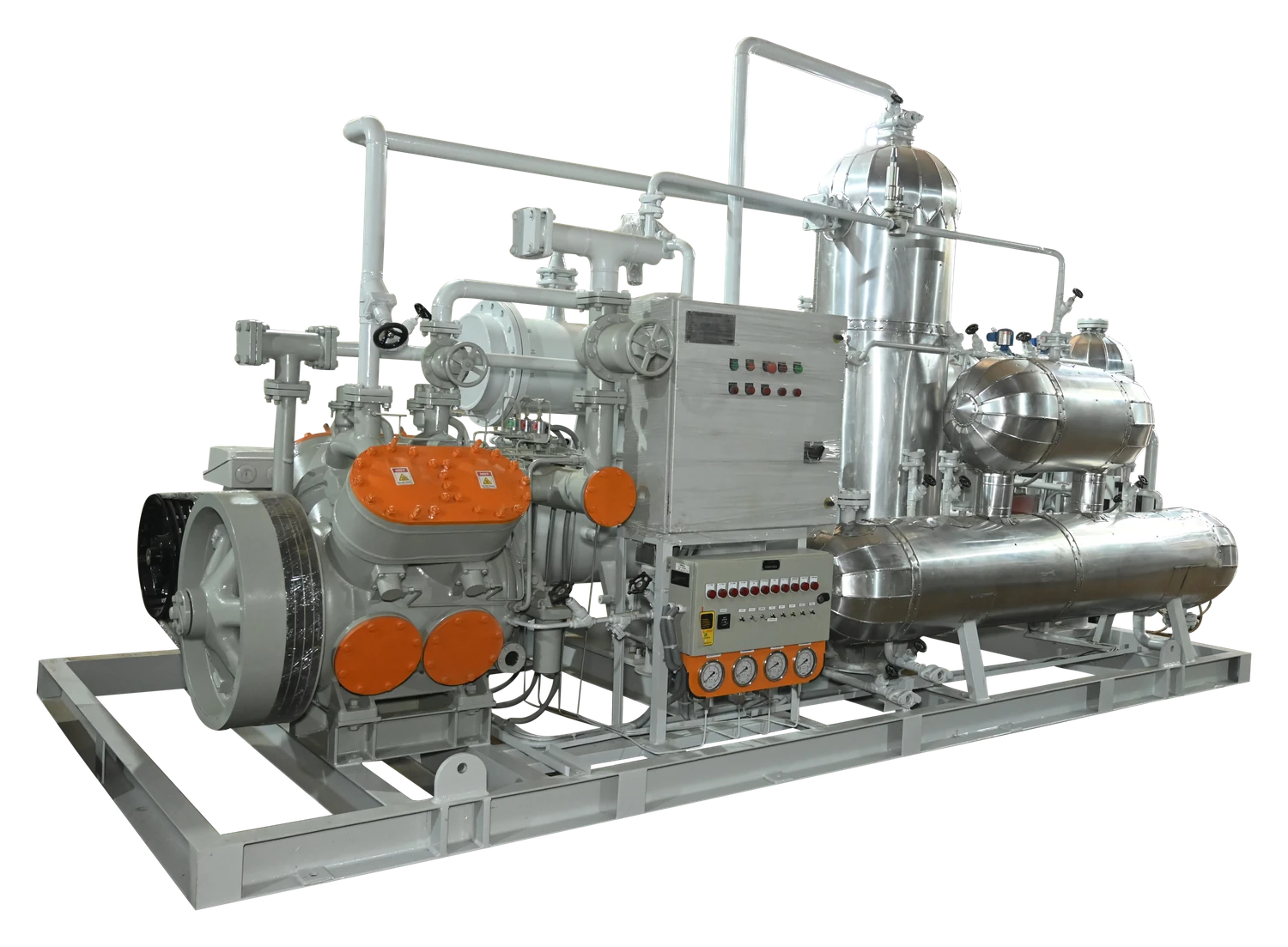
| Plant type | Site-built or large packaged; machine room, detection and ventilation required | Packaged, factory-charged units |
| Operators | Trained ammonia operators | Standard HVAC technicians |
| Economic size | Above ≈ 50–100 TR | 1 TR to a few hundred TR |
Where ammonia wins
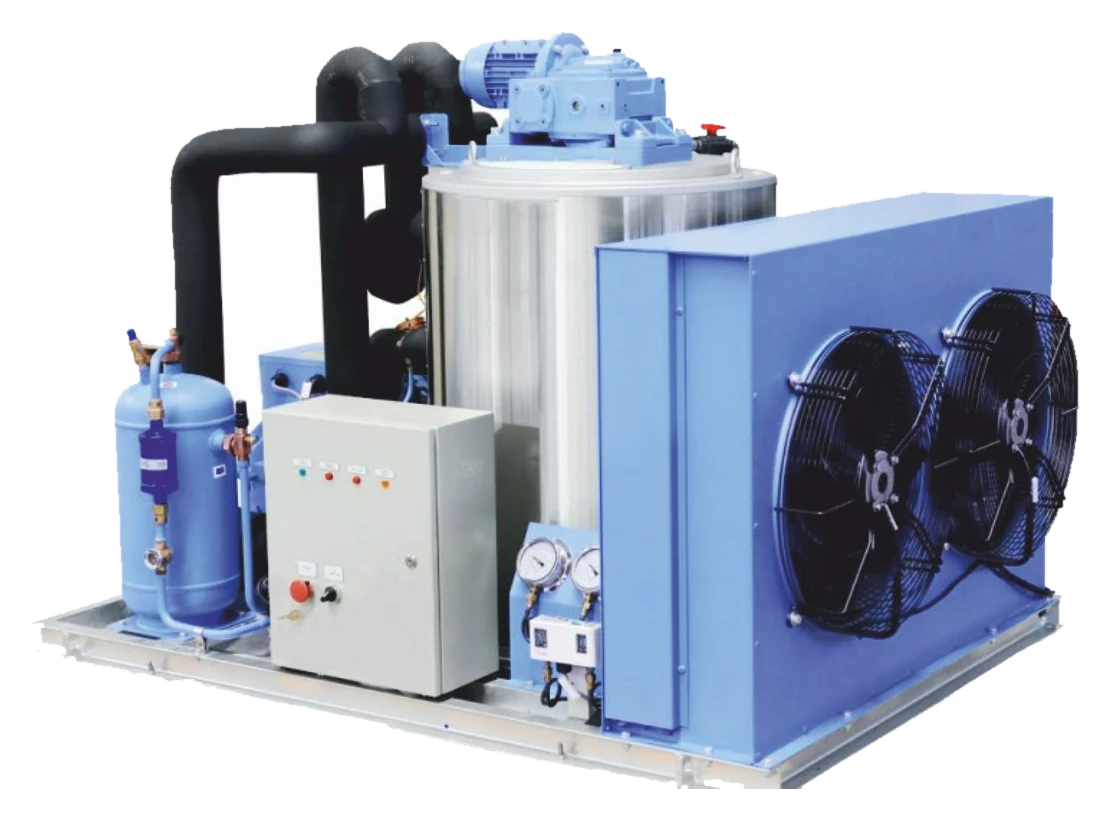
Ammonia's latent heat is roughly six times that of R-404A, so a plant moves far less refrigerant mass for the same duty and the compressors, piping and heat exchangers are smaller for a given tonnage. Its heat-transfer coefficients are excellent, so evaporators and condensers run at closer approach temperatures, which is where the efficiency gain comes from. Over the 20–30-year life of a cold store or ice plant that difference in kW/TR dominates every other cost. Ammonia is also cheap to buy and top up, has no GWP and will never face a phase-down. For these reasons Teqtive's large ammonia chillers and ice plants are the default choice above about 100 TR.
Where Freon-type HFCs win
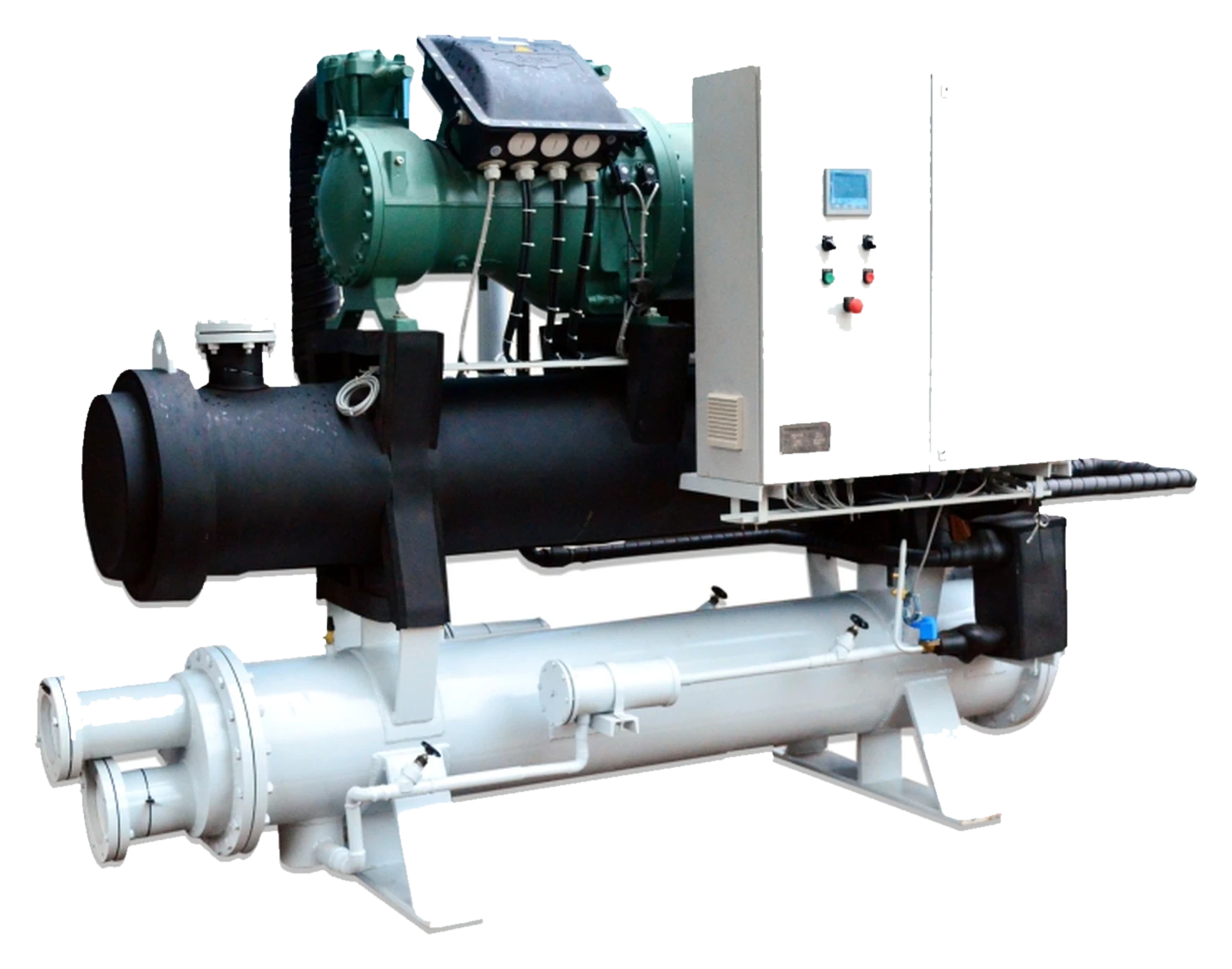
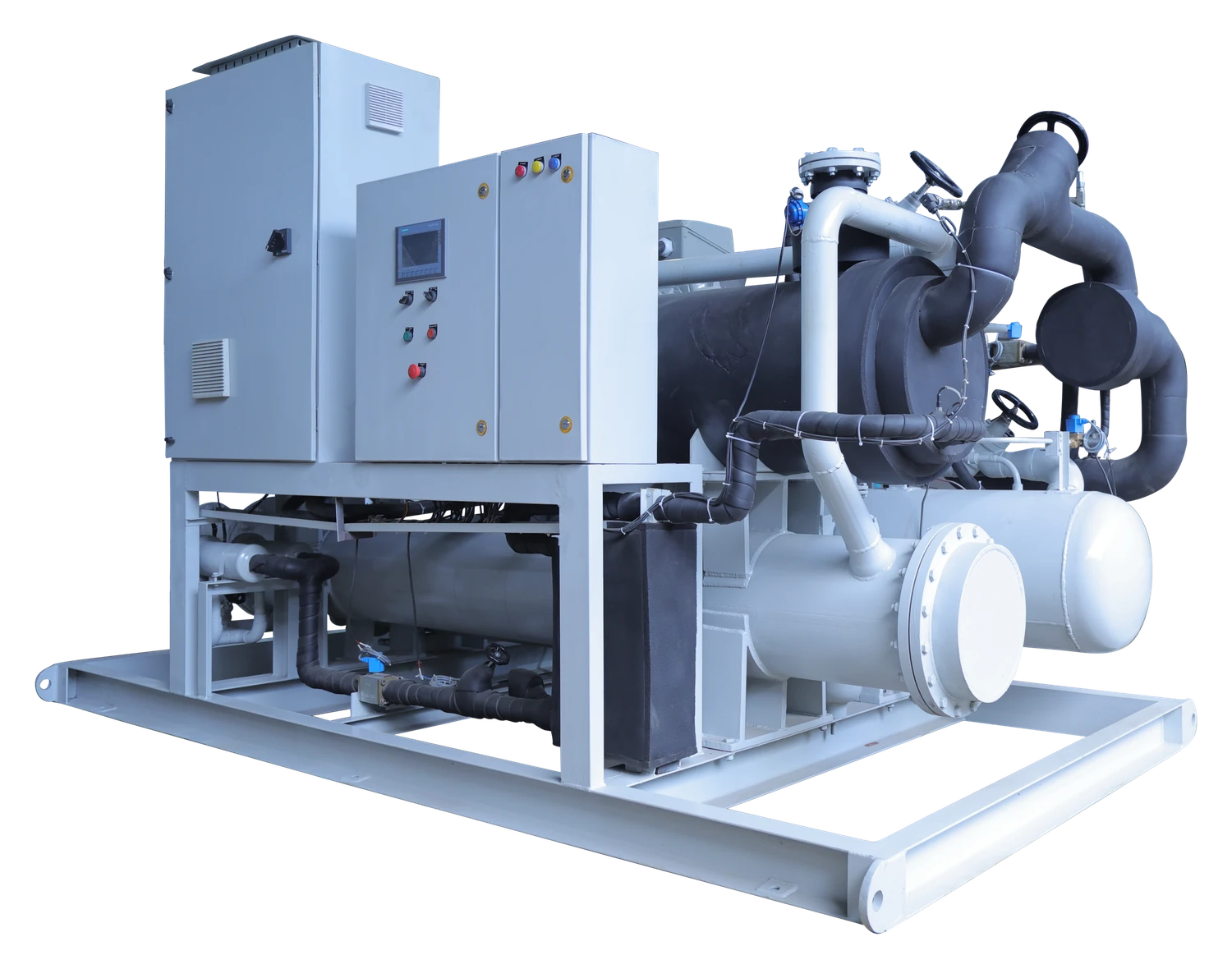
An HFC chiller is a sealed, factory-tested package. It can sit on a plant floor next to people, uses ordinary copper piping and hermetic compressors, and can be serviced by any refrigeration technician. For 1 TR to a few hundred TR — most scroll, screw and brine chillers on Indian plant floors — this simplicity outweighs the energy penalty. HFCs also suit multi-point installations such as supermarkets and pharma buildings where piping passes through occupied space.
Safety design for ammonia
- Dedicated machine room with ammonia gas detectors, emergency ventilation and an emergency shutdown outside the door.
- Steel piping and vessels; no copper, brass or zinc anywhere in the circuit.
- Pressure relief valves vented to a safe location or a water diffusion tank.
- Eye-wash, showers, breathing apparatus and trained operators on every shift.
- Indirect systems: the ammonia stays in the machine room and a secondary coolant (brine or glycol) goes to the process, so the charge is small and never enters occupied areas.
Regulations in India
CFCs are banned. R-22 is under the HCFC phase-out management plan, with Indian production and consumption ending by 2030, so no new R-22 plant should be built. HFCs are legal but India ratified the Kigali Amendment, with consumption freezing in 2028 and falling 85 % by 2047 — HFC prices will rise. Ammonia plants follow the Factories Act, IS 660 and ISHRAE/ASHRAE 15 practice for machine-room design. For low-temperature duty, cascade systems with CO₂ in the low stage avoid high-GWP refrigerants entirely.
A simple decision rule
- Under 50 TR, or the chiller must sit near people: HFC packaged chiller.
- 50–100 TR: either; compare lifetime energy cost against the machine-room and operator cost.
- Over 100 TR, 24-hour cold store, ice plant or food processing: ammonia, usually with brine or glycol to the process.
- Any size, low-GWP mandated by the customer: ammonia, CO₂ or HFO blends.
Teqtive builds both. See ammonia chillers and the HFC range on the products page, or send us the duty for a side-by-side proposal.
Frequently asked questions
Is ammonia more efficient than Freon?
Yes. Ammonia (R-717) has a very high latent heat and excellent heat-transfer properties, so an ammonia plant typically uses 10–20 % less power per TR than an equivalent HFC plant at the same temperatures, and the gap widens at low temperatures and in large systems.
Why is ammonia not used in small chillers?
Ammonia is toxic and mildly flammable, so it needs open-drive or ammonia-rated compressors, steel (never copper) piping, a machine room with gas detection and ventilation, and trained operators. That overhead is only justified above roughly 50–100 TR. Small and medium chillers use HFC refrigerants in sealed, packaged units.
Is Freon banned in India?
The original Freon, R-12 (a CFC), is banned. R-22 (an HCFC) is being phased out under the Montreal Protocol, with production ending in India by 2030. HFC blends such as R-404A, R-407C, R-134a and R-410A are legal but subject to a gradual phase-down under the Kigali Amendment, so new plants should use low-GWP options where possible.
Which refrigerant is used in cold storage in India?
Large cold stores, ice plants and food-processing plants mostly use ammonia. Smaller cold rooms and packaged chillers use HFC refrigerants such as R-404A and R-407C, and increasingly CO₂ and low-GWP HFO blends.