Indian industry burns large quantities of diesel, gas, coal and electricity simply to make hot water at 50–90 °C for washing, cleaning, pre-heating and process baths. A heat pump produces the same hot water using a third to a quarter of the energy, because it collects heat that already exists in the air or in waste water and upgrades it.
Working principle
- Evaporator. Liquid refrigerant at low pressure absorbs heat from the source, either ambient air or a water stream, and boils.
- Compressor. The vapour is compressed, which raises its temperature well above the required hot water temperature. This is the only step that consumes significant electricity.
- Condenser. The hot vapour gives up its heat to the water being heated and condenses.
- Expansion valve. The liquid drops in pressure and returns to the evaporator.
It is exactly the cycle described in how an industrial chiller works; the difference is which side you use. In a chiller the condenser heat is thrown away. In a heat pump it is the product.
COP: why it uses so little power
COP = heat delivered ÷ electrical power consumed. A COP of 3.5 means 1 kWh of electricity delivers 3.5 kWh of heat; the other 2.5 kWh came from the source at no cost. COP depends on the temperature lift:
| Hot water temperature | Typical COP, source at about 25–30 °C |
|---|---|
| 45–50 °C | 4.0–5.0 |
| 55–60 °C | 3.2–4.2 |
| 70–75 °C | 2.6–3.3 |
| 85–90 °C | 2.2–2.8 |
These are indicative ranges. A warmer source, such as cooling tower return at 35 °C, raises them; a cold winter morning lowers them for air-source units.
Air-to-water and water-to-water
| Aspect | Air-to-water | Water-to-water |
|---|---|---|
| Heat source | Ambient air | Cooling water return, chilled water return, effluent, ground water |
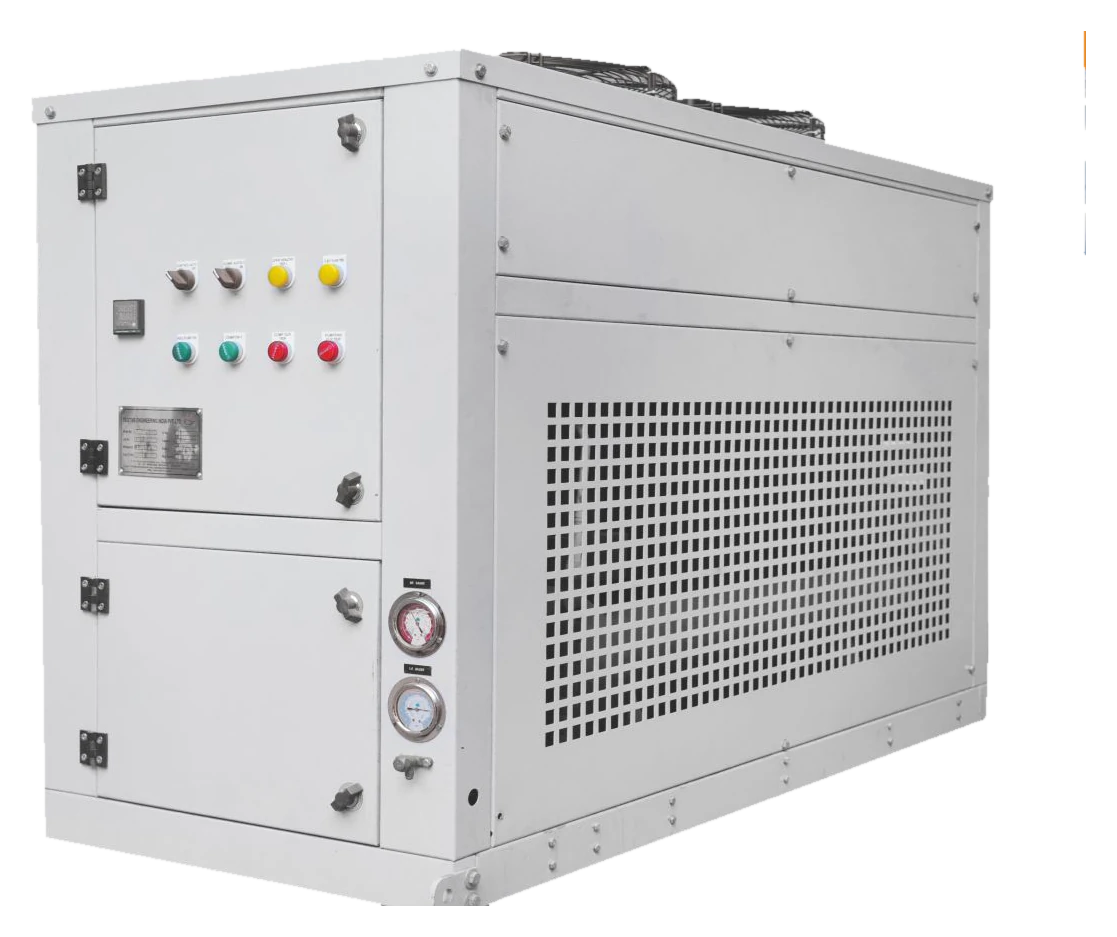
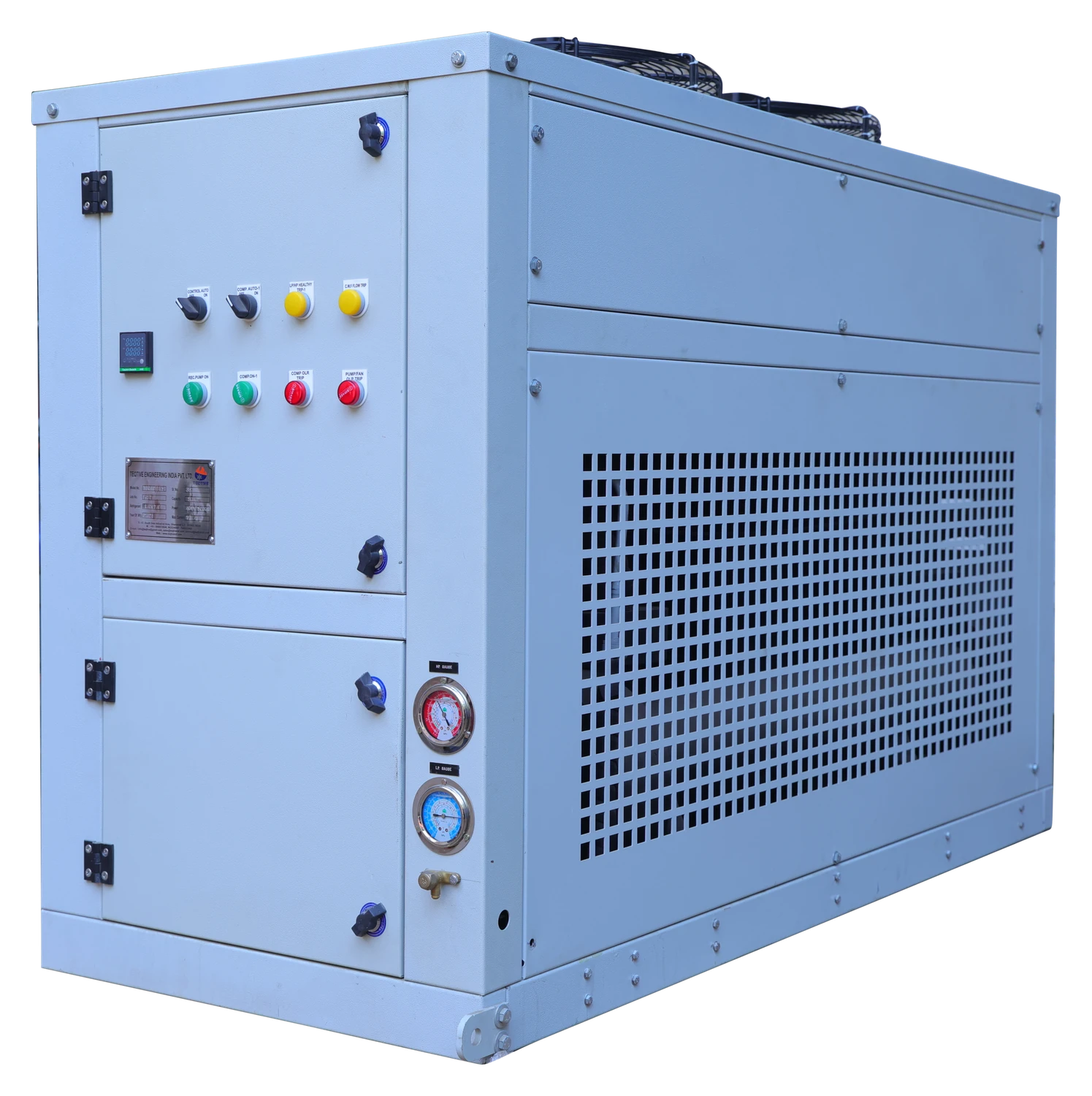
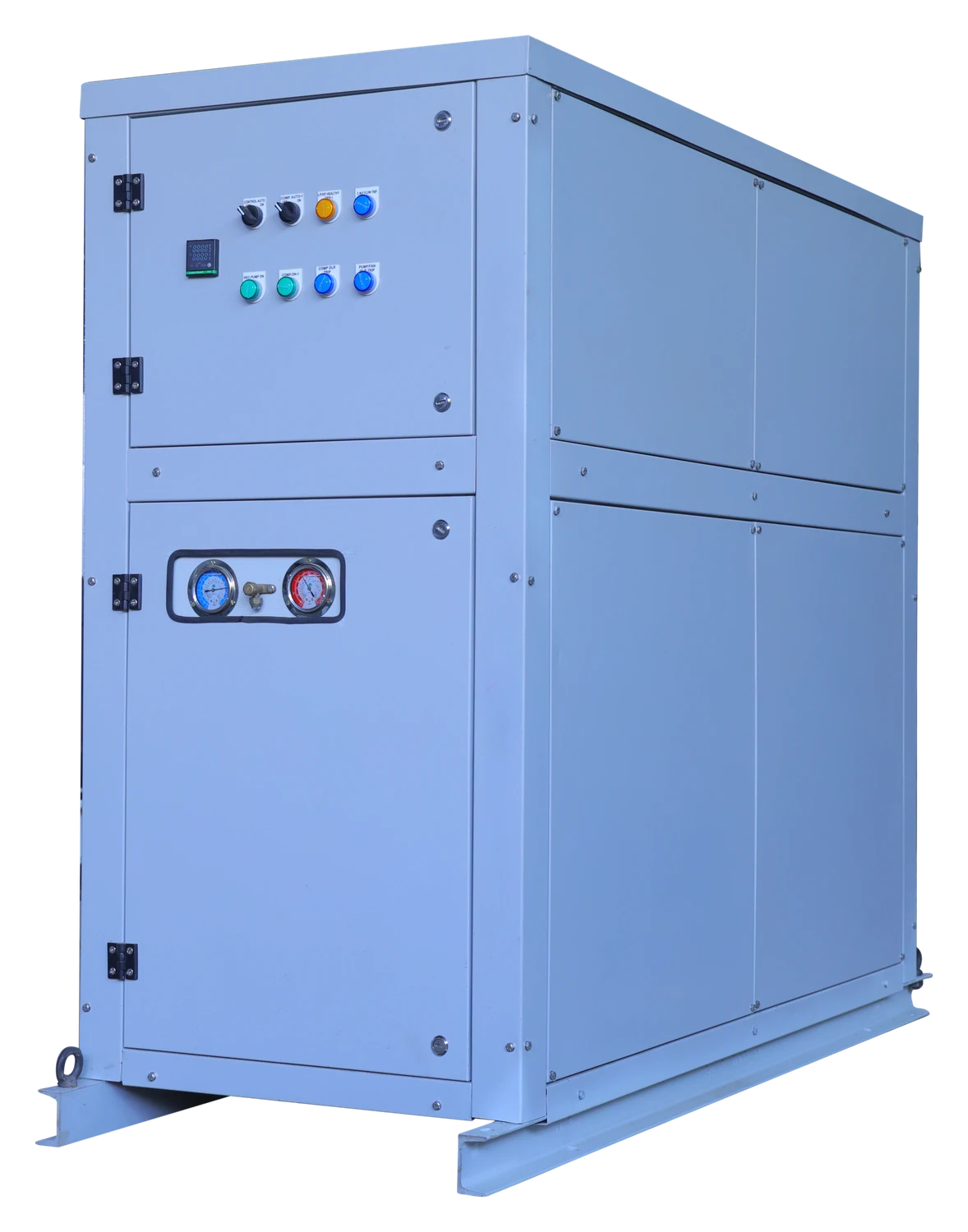
| Installation | Outdoors, needs free air flow | Indoors, needs source water piping |
| Efficiency | Good; varies with weather | Higher and steadier |
| Useful by-product | Cool, dry air | Chilled or cooled water |
| Best for | Hotels, hostels, small process hot water | Plants with waste heat or simultaneous cooling demand |
Heating and cooling at the same time
Every heat pump also produces cooling at its evaporator. If the plant needs both, for example a dairy that needs hot water for CIP and chilled water for milk, or a factory with process cooling and hot wash water, a water-to-water heat pump serves both from one compressor. Counting both outputs, the combined COP can exceed 6. This is the strongest case for a heat pump and worth checking before buying a separate chiller and heater.
Energy comparison: 10,000 litres a day from 25 °C to 60 °C
Heat required = 10,000 × 35 = 350,000 kcal, which is 407 kWh of heat per day.
| Method | Assumption | Energy used per day |
|---|---|---|
| Electric heater | About 95 % efficient | About 430 kWh |
| Diesel-fired boiler | About 80 % efficient | About 50 litres of diesel |
| Heat pump | COP 3.5 | About 116 kWh |
Multiply by your own tariff and fuel price to get the saving. The heat pump uses roughly a quarter of the electricity of a resistance heater, and no fuel is stored or burned on site.
Sizing a heat pump
Heating capacity (kW) = litres × temperature rise (°C) ÷ (860 × heating hours).
For 10,000 litres raised by 35 °C over 10 running hours: 10,000 × 35 ÷ (860 × 10) = 40.7 kW heating capacity, drawing about 11.6 kW at a COP of 3.5. Heat pumps work best running long hours into an insulated storage tank sized for the daily peak, rather than being sized for instantaneous demand.
Applications in Indian industry
- Hotels, hospitals and hostels: hot water and laundry
- Dairy and food: CIP, washing, pasteuriser pre-heat
- Pharma: hot water loops and jacket heating
- Automobile: degreasing and phosphating baths
- Electroplating and surface treatment baths
- Textile: dyeing and washing pre-heat
- Boiler feed water pre-heating
- Drying with warm air
Limits to know before you specify
- Standard units deliver hot water up to about 90 °C. Steam needs a boiler.
- COP falls as the delivery temperature rises; do not ask for 85 °C if the process needs 60 °C.
- Heat pumps like a steady load and a storage tank. Frequent short cycling wastes their advantage.
- Hard water scales the condenser at high temperature; soften the water or use an intermediate heat exchanger.
- Air-source units need space and clear air flow, and lose some capacity in cold weather.
Teqtive industrial heat pumps
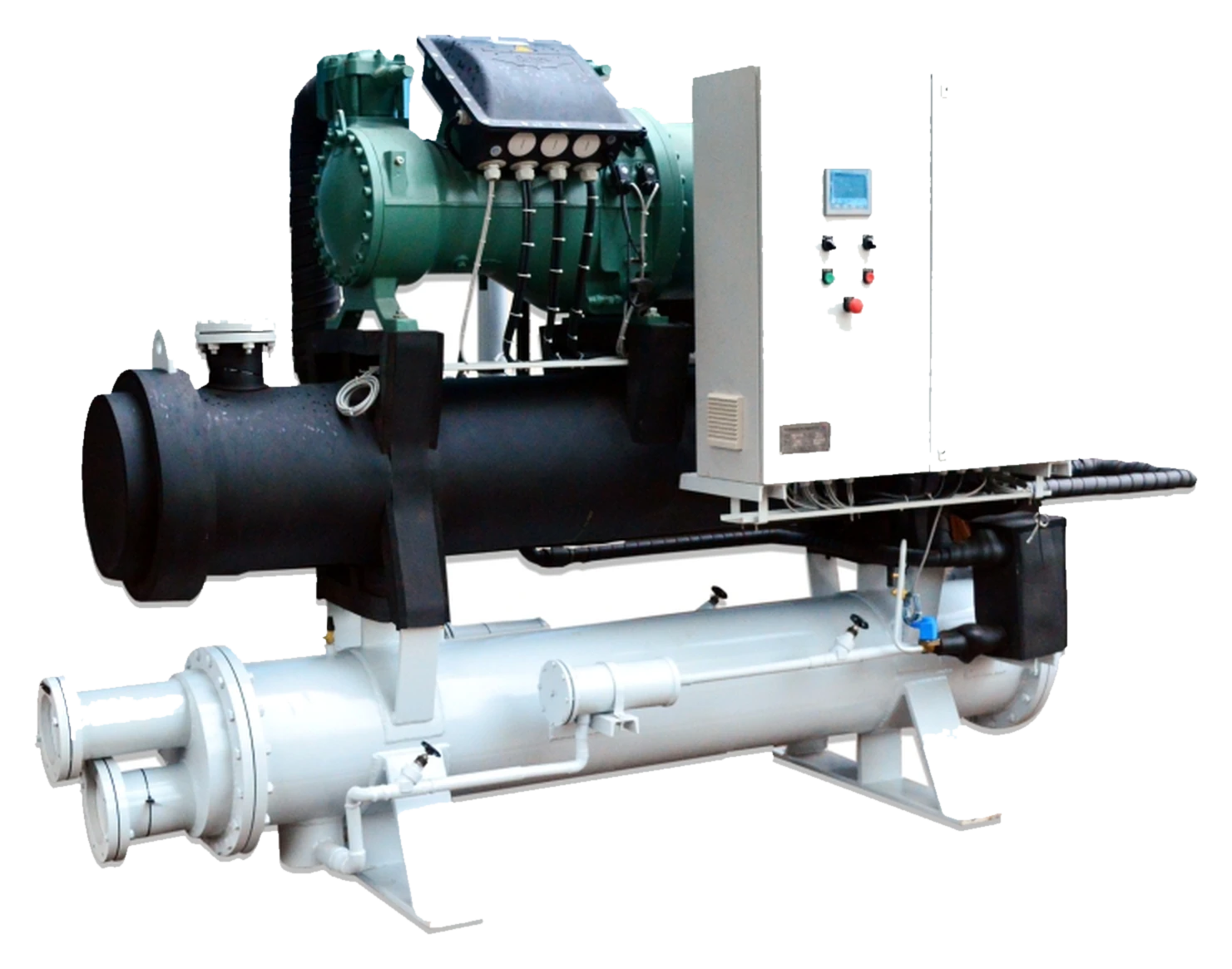
Teqtive manufactures air-to-water and water-to-water industrial heat pumps from 3 kW to 2000 kW delivering hot water from +45 °C to +90 °C, with scroll and screw compressors. Tell us your daily hot water volume, temperatures and any available waste heat and we will size the unit and estimate the energy saving.
Frequently asked questions
How does an industrial heat pump work?
It uses the same vapour-compression cycle as a chiller. Refrigerant evaporates by absorbing low-temperature heat from ambient air, water or process waste heat. A compressor raises the vapour's pressure and temperature, and the condenser then releases that heat into water at 45 °C to 90 °C. Electricity only drives the compressor; most of the delivered heat comes from the source.
What is the COP of an industrial heat pump?
Typically 3 to 4.5 for hot water at 55–60 °C and about 2.2 to 3 at 80–90 °C. COP falls as the hot water temperature rises and as the heat source gets colder, because the compressor has to lift the heat through a larger temperature difference.
Can a heat pump replace a boiler?
For hot water up to about 90 °C, yes, and usually at a much lower energy cost than electric, diesel or gas heating. Heat pumps do not produce steam, so processes that need steam or temperatures above about 90 °C still need a boiler or a specialist high-temperature heat pump. Many plants use a heat pump for the base hot water load and keep the boiler for steam.
What is the difference between air-to-water and water-to-water heat pumps?
An air-to-water heat pump takes heat from ambient air through a finned coil and fan; it is simple to install anywhere. A water-to-water heat pump takes heat from a water stream such as cooling tower return, chilled water return or warm effluent; it is more compact, more efficient and can cool that stream usefully at the same time.