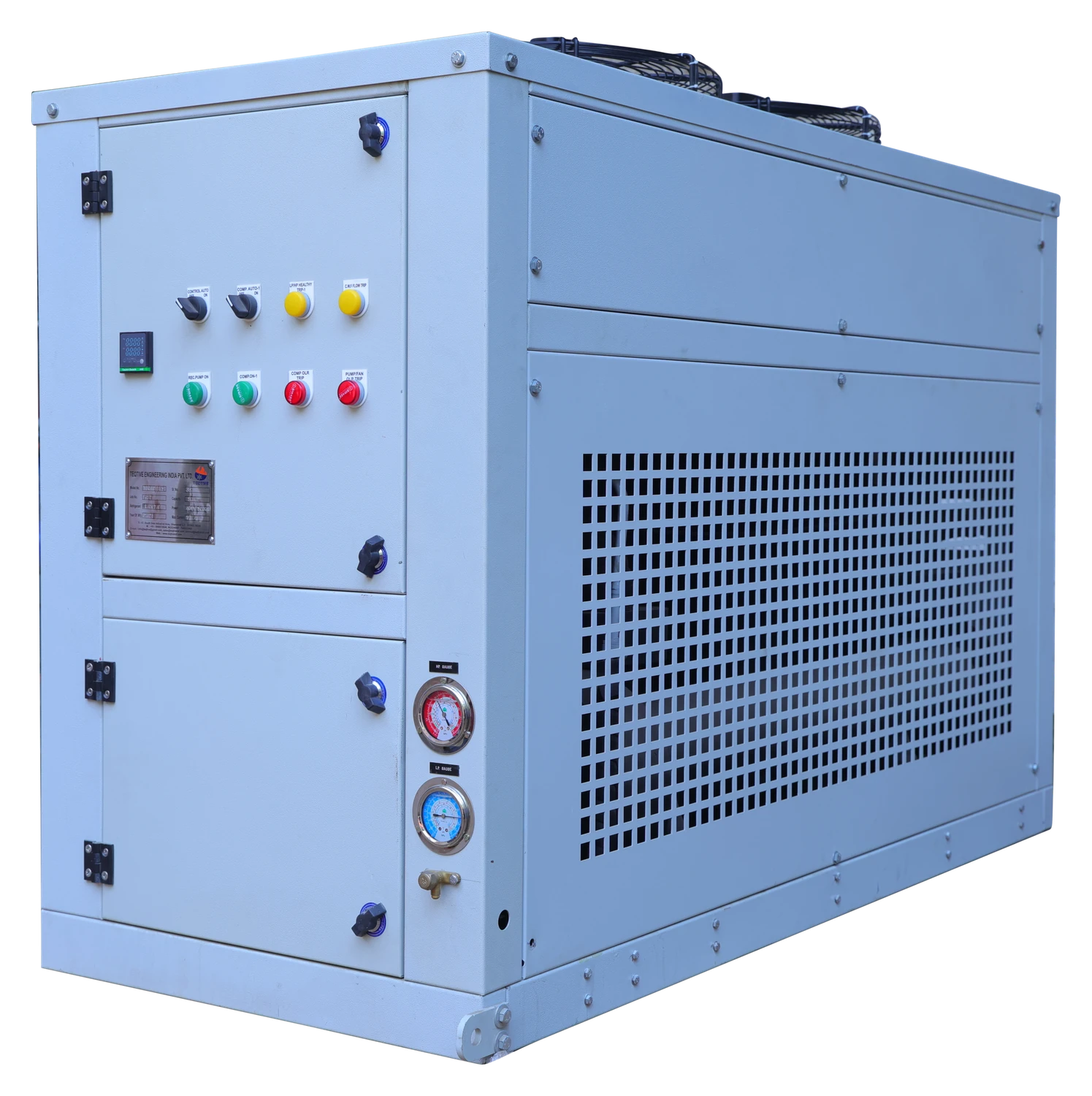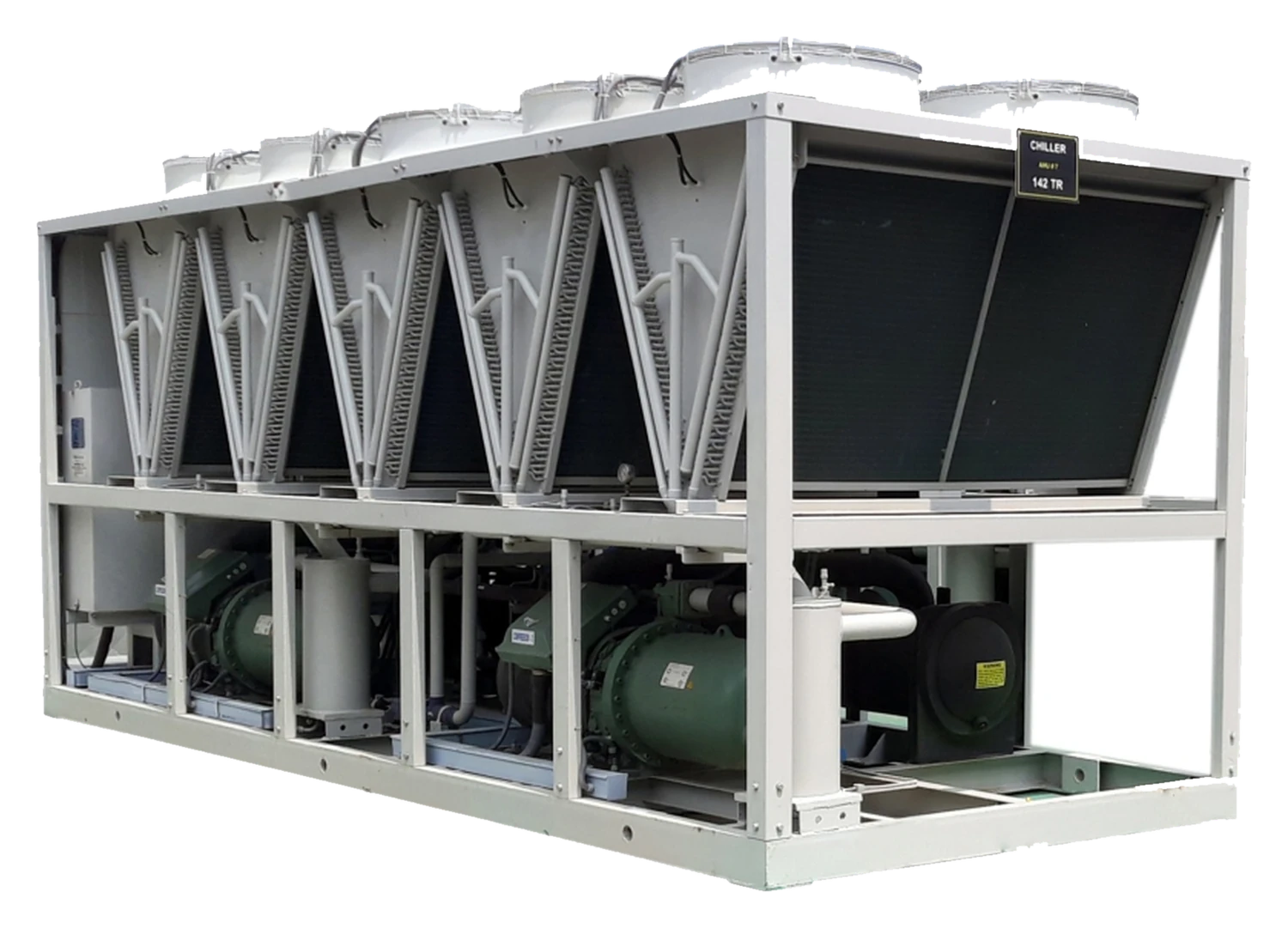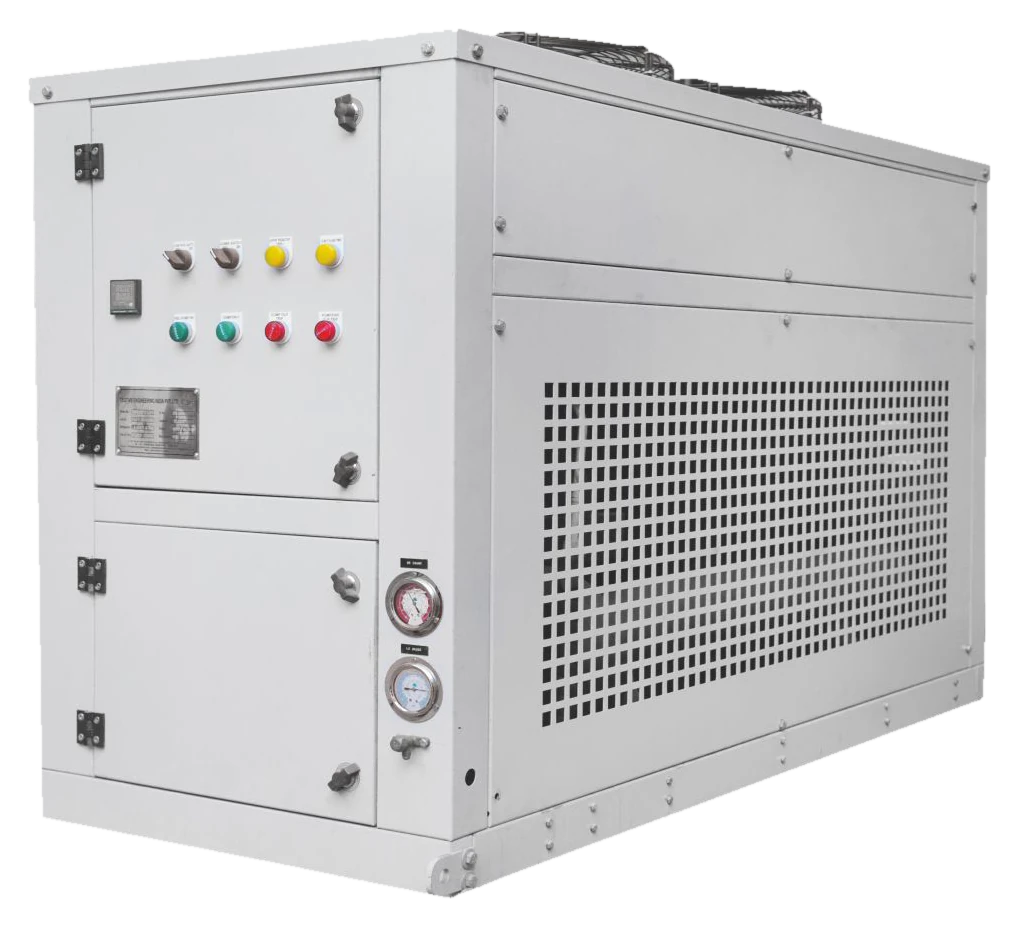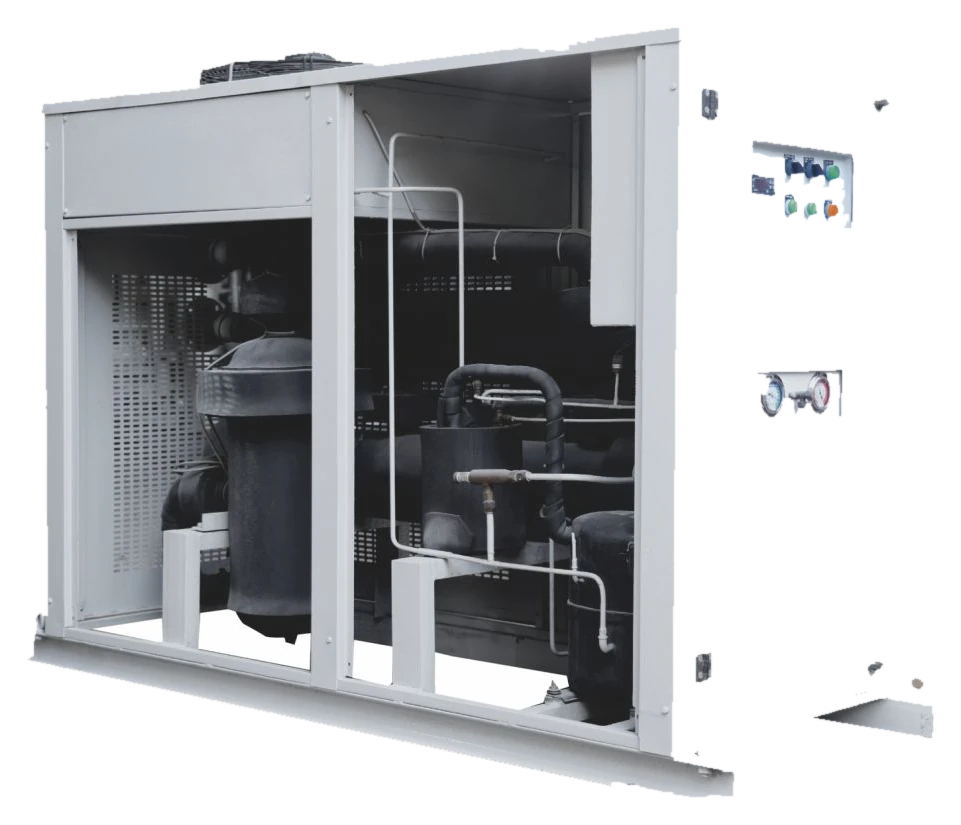
In plastics processing, cooling is often the longest part of the cycle. A correctly sized chiller holding a steady mould temperature shortens cycle times, cuts rejects and keeps hydraulics healthy. Teqtive supplies machine-side and central chillers to moulders, extruders and rubber processors.
Applications
| Application | Typical temperature | Equipment |
|---|---|---|
| Injection moulding (moulds) | +7 °C to +15 °C | Scroll or central screw chiller |
| Hydraulic oil | +25 °C to +40 °C | Oil chiller or chilled-water heat exchanger |
| Blow moulding (PET, HDPE) | +7 °C to +12 °C | Scroll / screw chiller |
| Extrusion, calibration and cooling tanks | +10 °C to +20 °C | Scroll chiller |
| Compressed air for blowing | PDP +2 °C | Air dryer |
| Rubber mixing, mills and tyre curing water | +10 °C to +20 °C | Screw chiller |
Sizing a chiller for moulding
| Polymer (indicative) | TR per 100 kg/h throughput |
|---|---|
| PP, HDPE, LDPE | about 12 – 15 |
| ABS, PS | about 10 – 12 |
| PVC | about 8 – 10 |
| PET (preforms) | about 12 – 16 |
| PC, PA (nylon) | about 10 – 13 |
These are rule-of-thumb figures for mould cooling only; add hydraulic and barrel-zone loads if they share the circuit, and size air cooled units for your summer ambient. The method is in how to calculate chiller tonnage; budgets are in the chiller price guide.
Central vs machine-side chillers
A central plant with two or more screw chillers, a tank and a header gives the lowest cost per TR and built-in standby. Machine-side scroll chillers suit shops with few machines or very different mould temperatures. See screw vs scroll and air cooled vs water cooled.
Send your machine list and we will size the plant.
Frequently asked questions
What size chiller do I need for an injection moulding machine?
A common rule of thumb is about 0.1 to 0.15 TR per kg/h of polymer processed for mould cooling, plus hydraulic oil cooling if it is on the same circuit. Machine makers often state the heat load in kW, which you divide by 3.517 to get TR. Always check against the actual polymer and cycle.
What water temperature is used for mould cooling?
Typically +7 °C to +15 °C for most commodity polymers. Lower temperatures shorten cycles but risk condensation on moulds in humid weather.
Central chiller or one chiller per machine?
A central screw chiller with a header serves many machines at lower cost per TR and is easier to maintain; machine-side scroll chillers give independent temperatures and flexibility. Many plants combine both.