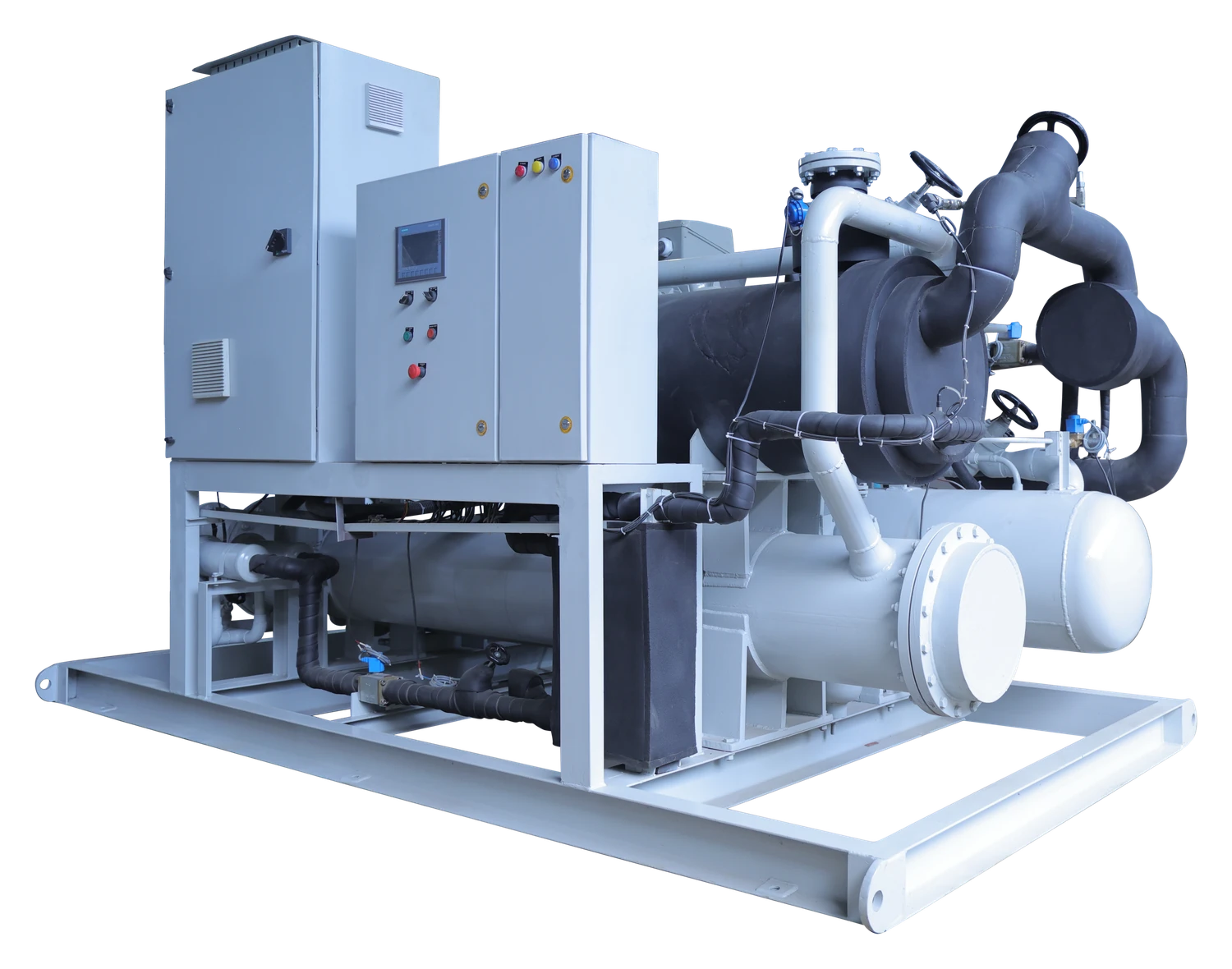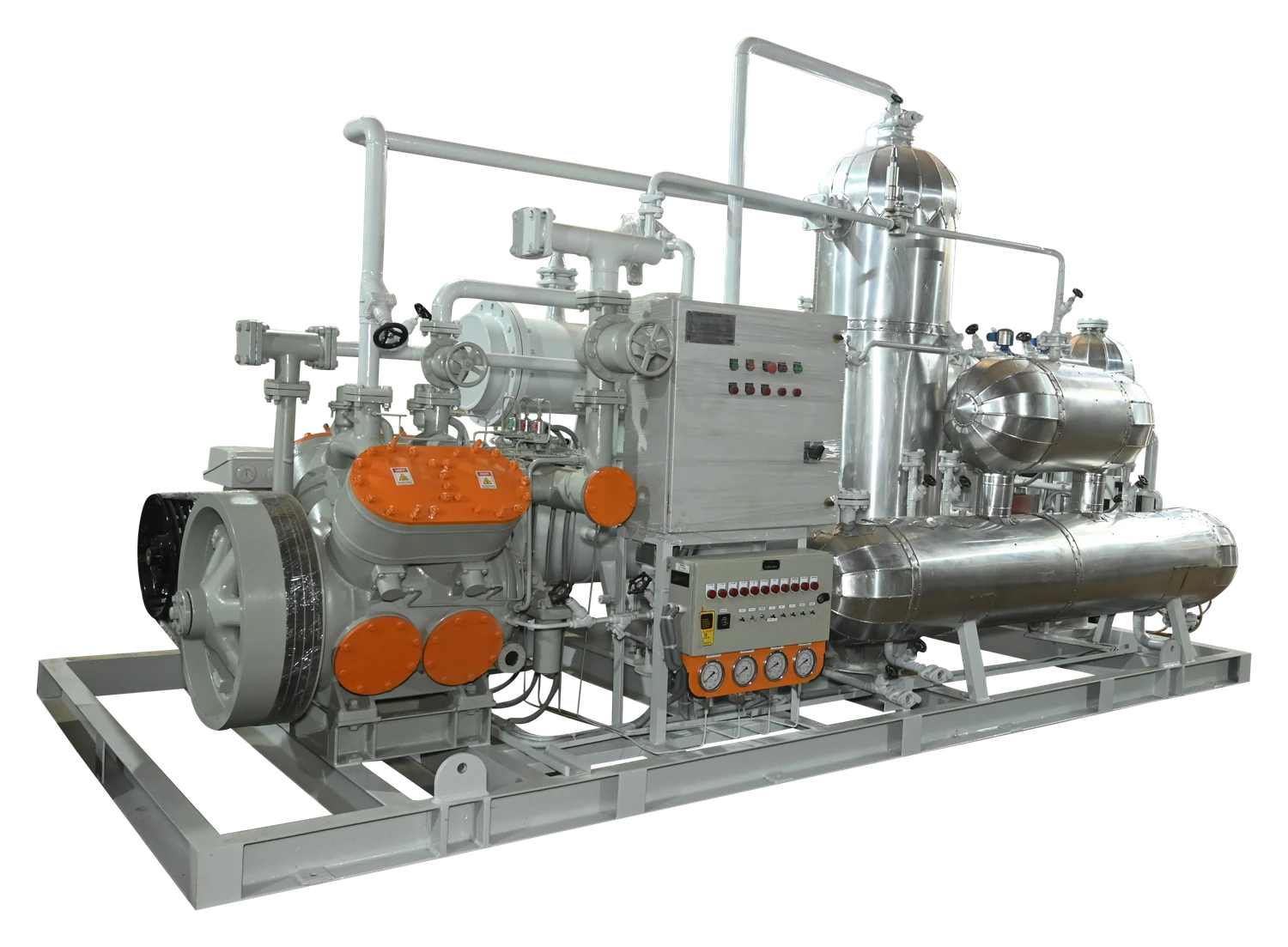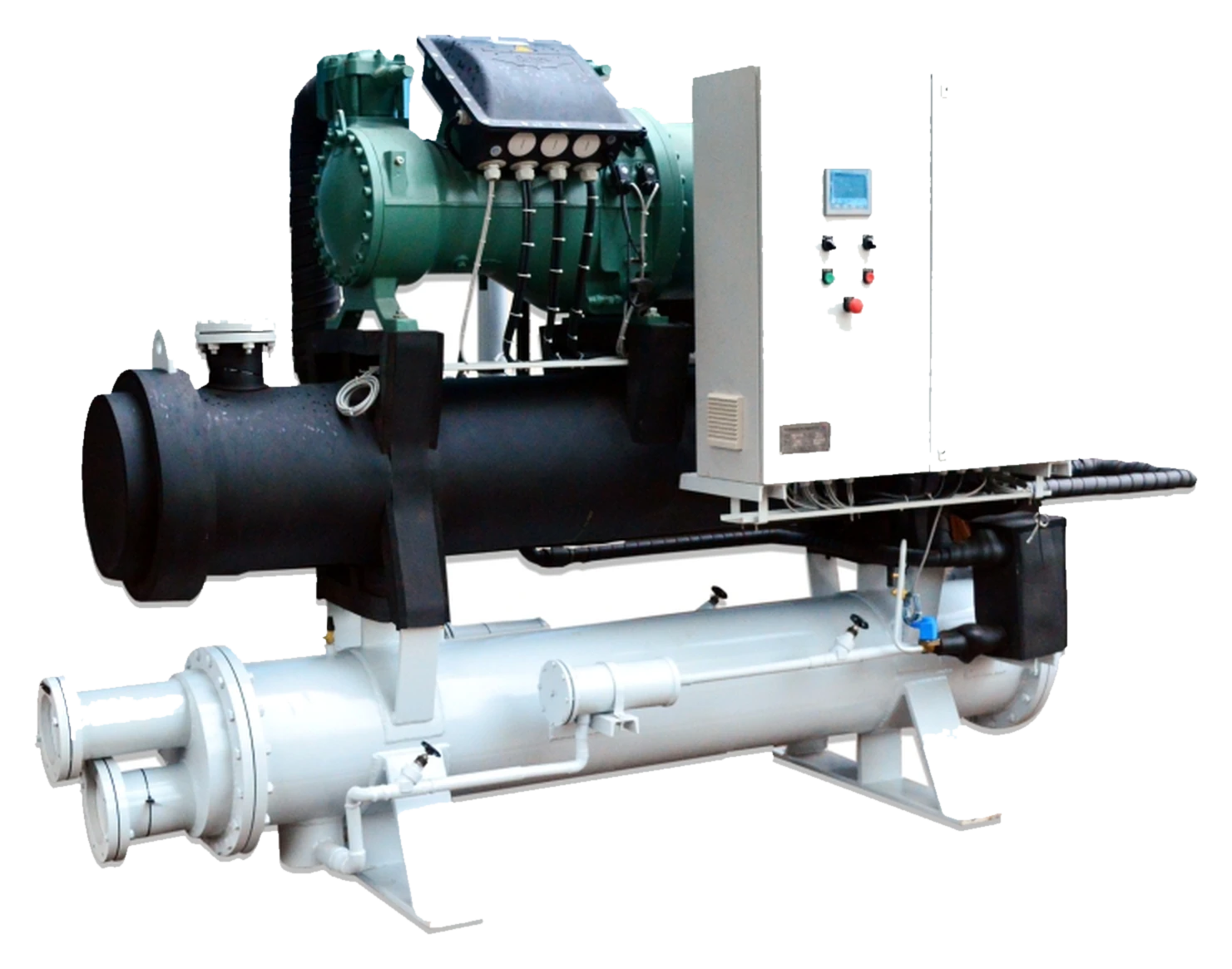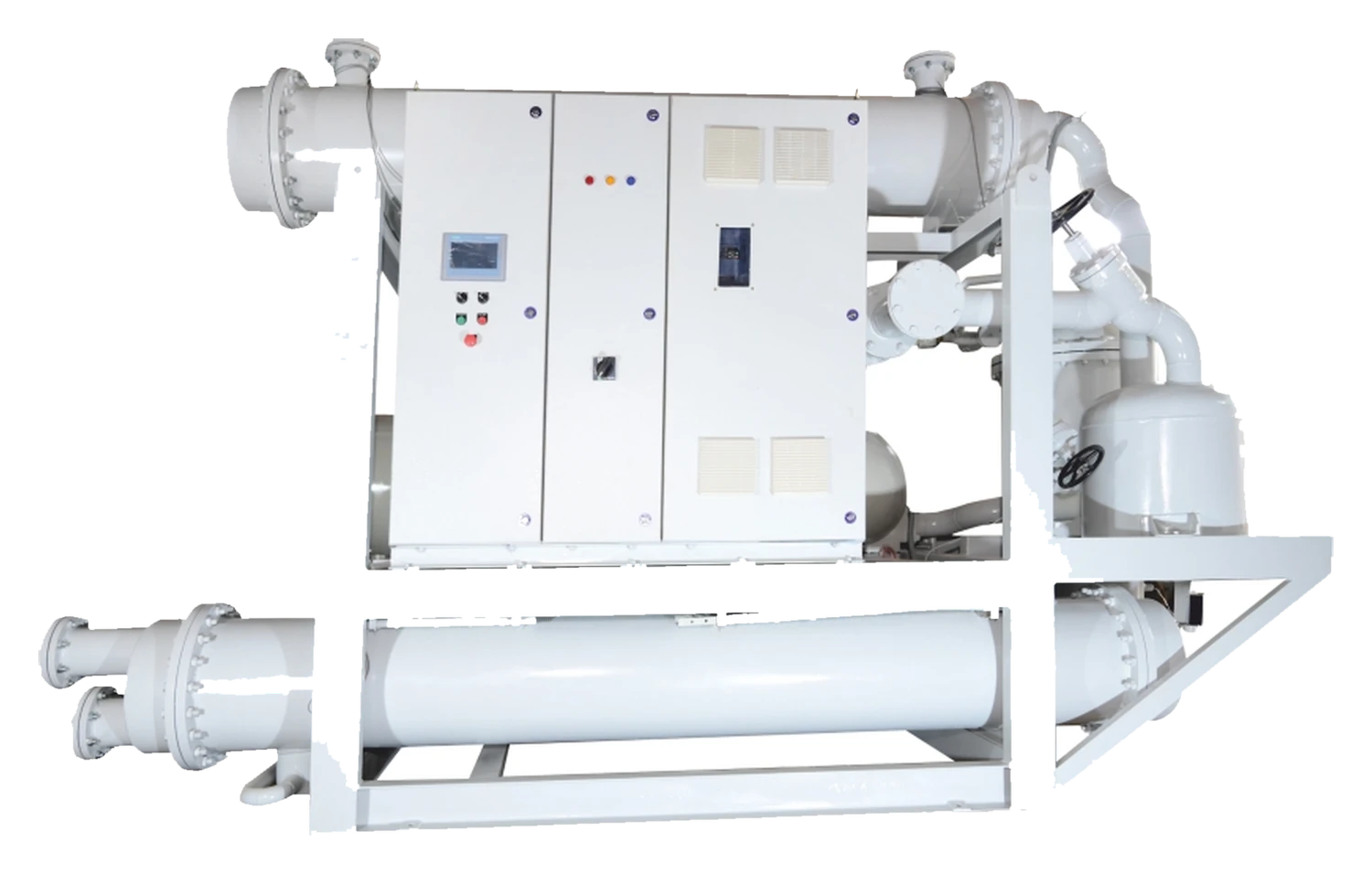
In chemical manufacturing the chiller is part of the process: it sets reaction rates, controls exotherms, recovers solvents and keeps emissions within limits. Teqtive supplies chilled water, brine and ammonia refrigeration to chemical, specialty chemical, agrochemical, dye and fertiliser plants.
Chemical process cooling duties
| Duty | Typical temperature | Equipment |
|---|---|---|
| Exothermic reaction control | +5 °C to −30 °C | Brine chiller, glycol chiller |
| Solvent recovery and vent condensers | −10 °C to −40 °C | Brine / methanol chiller |
| Crystallisation | 0 °C to −20 °C | Brine chiller |
| Cooling-water trim and product cooling | +5 °C to +15 °C | Screw chiller |
| Large refrigeration plants | 0 °C to −40 °C, 20 – 1000 TR | Ammonia chiller |
| Gas condensing and liquefaction | −25 °C to −70 °C | Gas liquefaction systems, cascade chiller |
Design points for chemical plants
- Materials matched to the brine: CS or SS evaporators, copper or SS tubes, inhibited fluids.
- Process safety: interlocks with the DCS, freeze protection, and hazardous-area considerations where flammable brines or solvents are present.
- Multiple temperature levels from one plant using primary–secondary circuits, or separate chillers per level for efficiency.
- Large plants: above about 150 TR, ammonia often wins on running cost. See ammonia vs Freon.
Related guides: reactor chiller sizing · brine chiller working principle · cascade refrigeration. Ask for a process proposal.
Frequently asked questions
What chillers do chemical plants use?
Chemical plants typically run chilled water at +5 °C to +10 °C for general process cooling, glycol or brine at −10 °C to −40 °C for reactors, condensers and crystallisers, and in large plants ammonia refrigeration. Ultra-low temperature duties use cascade chillers to −70 °C.
Which brine is best for chemical process cooling?
Ethylene glycol suits most closed loops down to about −30 °C. Methanol brine is preferred below about −25 °C for its low viscosity. Calcium chloride brine is economical but corrosive and needs careful inhibition. The choice depends on temperature, materials and safety.
How do chillers help solvent recovery?
Colder condensers recover more solvent. Dropping a vent condenser from +10 °C water to −20 °C brine can sharply reduce solvent losses and emissions, often paying back the chiller through recovered solvent.