Superheat is how many degrees the suction vapour is above its saturation temperature; subcooling is how many degrees the liquid leaving the condenser is below its saturation temperature. Superheat = suction line temperature − saturation temperature at suction pressure. Subcooling = saturation temperature at liquid line pressure − liquid line temperature. Read together, they show whether the evaporator is properly fed and whether the charge is right.
What the two numbers mean
Inside the evaporator the refrigerant boils at a constant temperature set by its pressure. Once the last drop has boiled, further heat only warms the vapour. That extra warming is superheat. Some is necessary, because a compressor is built to pump vapour and liquid returning to it washes out oil and damages valves, scrolls or rotors. Too much means the last part of the evaporator is doing almost no cooling and the compressor runs hot.
In the condenser the vapour condenses at a constant temperature, and the liquid then cools a little further before leaving. That is subcooling. It guarantees that only liquid, with no flash gas, reaches the expansion valve, and it adds a little capacity. The basic cycle is described in how an industrial chiller works.
Formulas
Superheat (K) = Tsuction line − Tsat at suction pressure
Subcooling (K) = Tsat at liquid line pressure − Tliquid line
A temperature difference in kelvin is the same number as in °C.
How to measure
- Let the chiller run steadily for 10–15 minutes at a stable load.
- Read the suction pressure at the compressor suction or evaporator outlet, and the high-side pressure at the liquid line or condenser outlet.
- Convert each pressure to saturation temperature with the pressure-temperature chart for the exact refrigerant on the nameplate. Service gauges read gauge pressure; tables in absolute pressure need about 1.01 bar added.
- Clamp a contact thermometer on clean, bare pipe at the same point as each pressure reading, and wrap it with insulation so ambient air does not affect it.
- Subtract.
For zeotropic blends such as R-407C, use the dew point column for superheat and the bubble point column for subcooling. Blends and their temperature glide are covered in chiller refrigerants compared.
R-134a saturation values
| Saturation temperature | Pressure (bar absolute) | Pressure (bar gauge, approx.) |
|---|---|---|
| −10 °C | 2.01 | 1.00 |
| 0 °C | 2.93 | 1.92 |
| 5 °C | 3.50 | 2.48 |
| 10 °C | 4.15 | 3.13 |
| 30 °C | 7.70 | 6.69 |
| 40 °C | 10.17 | 9.15 |
| 50 °C | 13.18 | 12.17 |
Worked example 1: a healthy R-134a chiller
- Suction pressure 1.92 bar g, which is 2.93 bar absolute. Saturation temperature = 0 °C.
- Suction line temperature 6 °C. Superheat = 6 − 0 = 6 K.
- Liquid line pressure 9.15 bar g, which is about 10.17 bar absolute. Saturation temperature = 40 °C.
- Liquid line temperature 35 °C. Subcooling = 40 − 35 = 5 K.
Both values sit in the normal band for a direct-expansion chiller.
Worked example 2: the same chiller with a problem
- Suction pressure 1.00 bar g, saturation temperature −10 °C. Suction line at 8 °C. Superheat = 8 − (−10) = 18 K.
- Liquid line pressure 9.15 bar g, saturation temperature 40 °C. Liquid line at 39 °C. Subcooling = 40 − 39 = 1 K.
High superheat with almost no subcooling: the evaporator is starved and little liquid is held in the condenser. The likely cause is loss of charge. Bubbles in the liquid sight glass would support it.
Typical target ranges
These are typical values for guidance. The manufacturer's data for your chiller takes priority.
| Measurement | Typical range | Notes |
|---|---|---|
| Evaporator outlet superheat, DX with TXV or EEV | 4–7 K | Set at the expansion valve |
| Superheat at compressor suction | 5–10 K | Includes heat gain in the suction line |
| Flooded evaporator outlet | 0–2 K | Liquid separation protects the compressor |
| Subcooling, water cooled condenser | 3–6 K | Higher if a subcooler is fitted |
| Subcooling, air cooled condenser | 5–10 K | Varies with ambient and fan control |
How the evaporator design affects superheat is covered in types of evaporator in chillers.
Diagnosis table
| Superheat | Subcooling | Likely cause | Confirm with |
|---|---|---|---|
| High | Low | Refrigerant undercharge or leak | Sight glass bubbles, low suction and discharge pressure, leak test |
| High | High | Liquid line restriction: blocked filter drier, expansion valve underfeeding or stuck | Temperature drop across the drier, frost at the restriction |
| Low | High | Overcharge | High discharge pressure with a clean condenser |
| Low | Low | Expansion valve overfeeding: wrong setting, loose sensing bulb, oversized valve | Bulb contact and insulation, valve adjustment |
| Low | Normal | Low evaporator load: low water flow, fouled evaporator, low return temperature | Water flow and temperature difference across the evaporator |
| Normal | High, with high discharge pressure | Air or other non-condensables in the condenser | Standstill pressure compared with saturation pressure at ambient |
| Normal or high | Low, with high discharge pressure | Dirty condenser, poor airflow or low cooling water flow | Condenser approach, fan and tower operation |
Treat the table as a starting point. Readings shift with load and ambient, and at part load an expansion valve may hunt; see chiller capacity control methods. Take readings at a stable condition and compare them with the commissioning record.
Common mistakes
- Using the chart for the wrong refrigerant, or mixing gauge and absolute pressure.
- Measuring pipe temperature over paint or rust, or without insulating the probe.
- Reading pressure at the compressor and temperature far away at the evaporator, ignoring pressure drop and heat gain between them.
- Adding refrigerant because suction pressure is low without checking subcooling. If subcooling is already high, the fault is a restriction and more charge makes it worse.
- Adjusting the expansion valve before checking water flow, strainers and the condenser.
The wider fault-finding sequence is in industrial chiller troubleshooting, and both readings belong in the routine log described in the chiller maintenance checklist.
Teqtive chillers and service
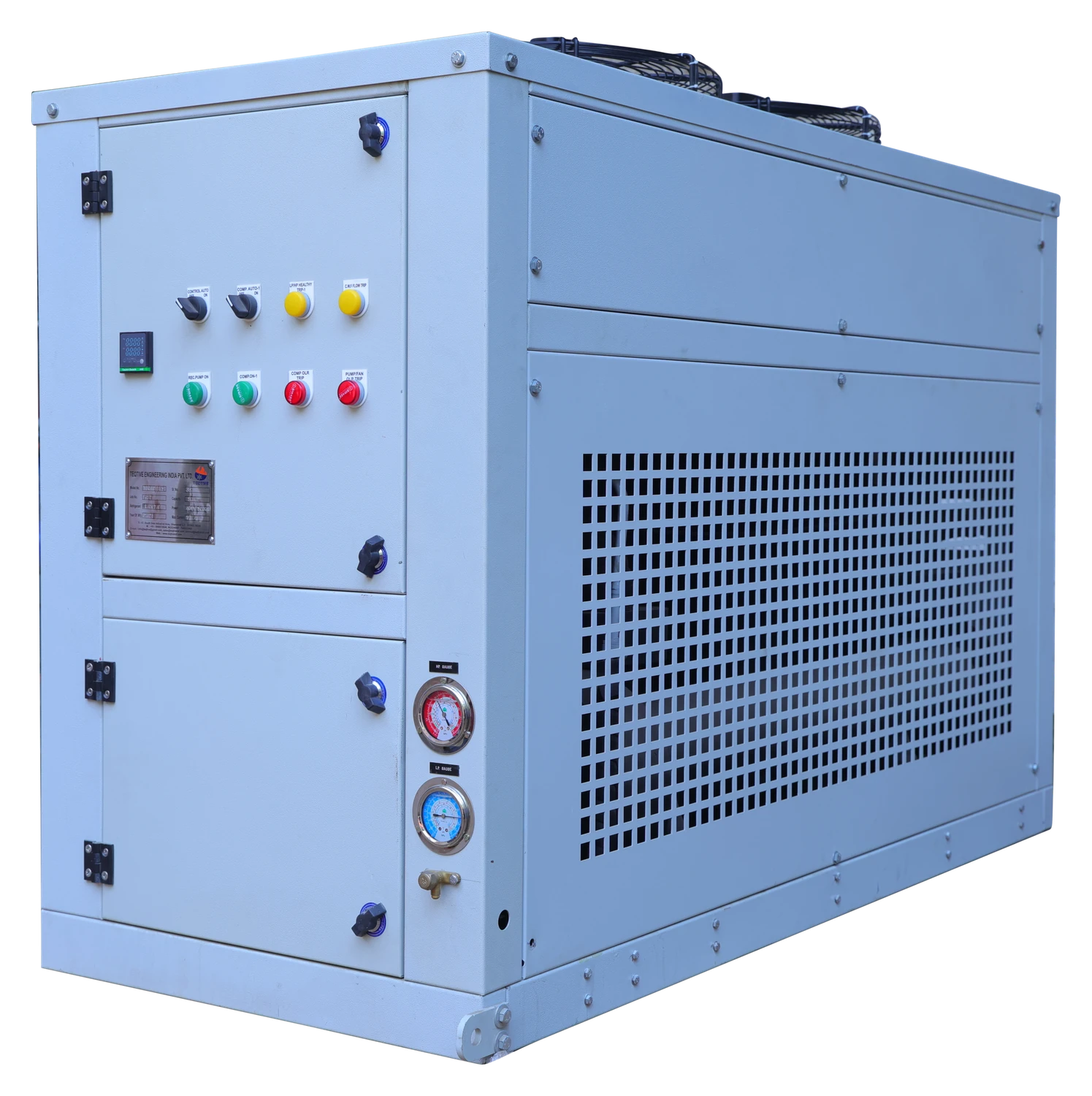
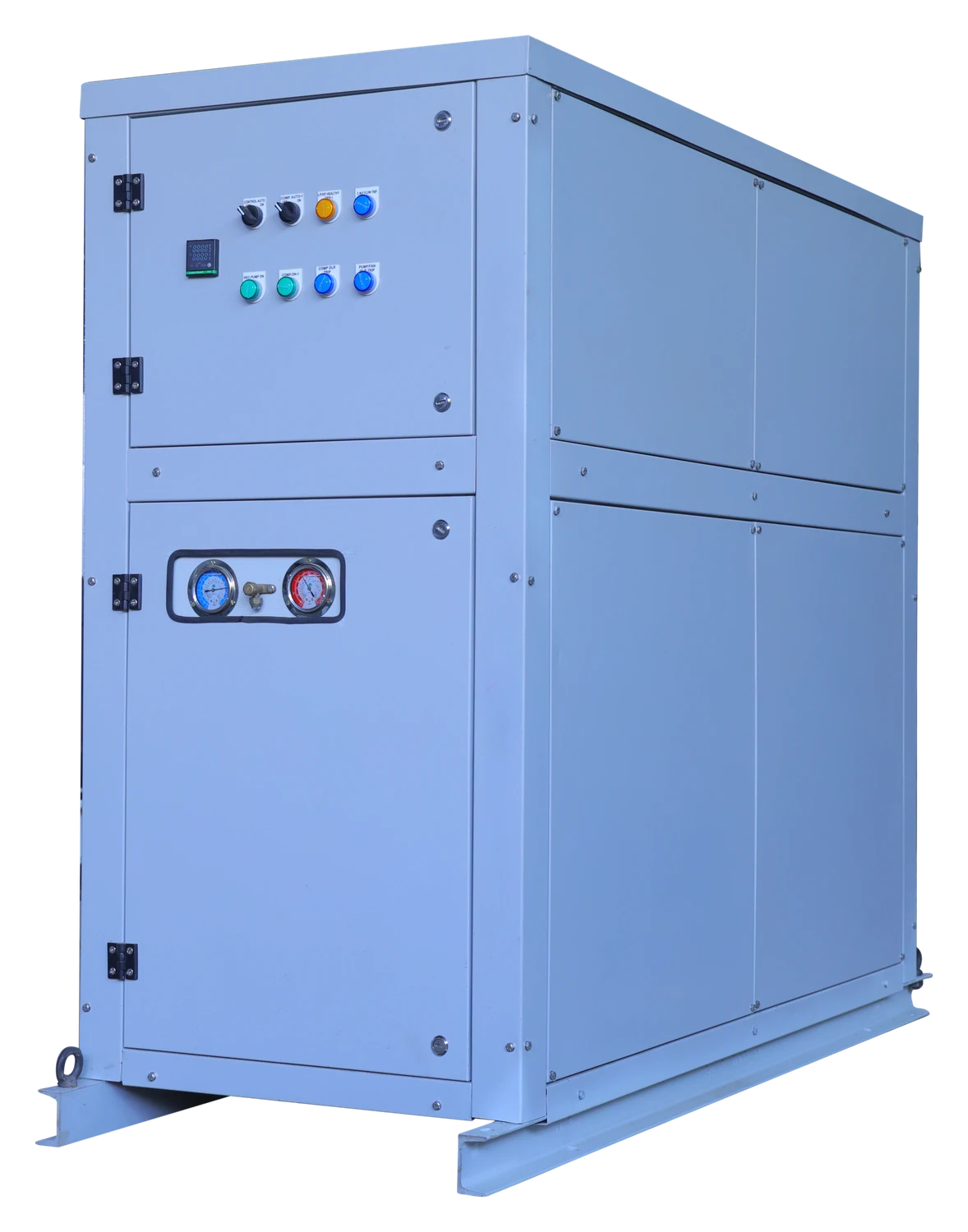
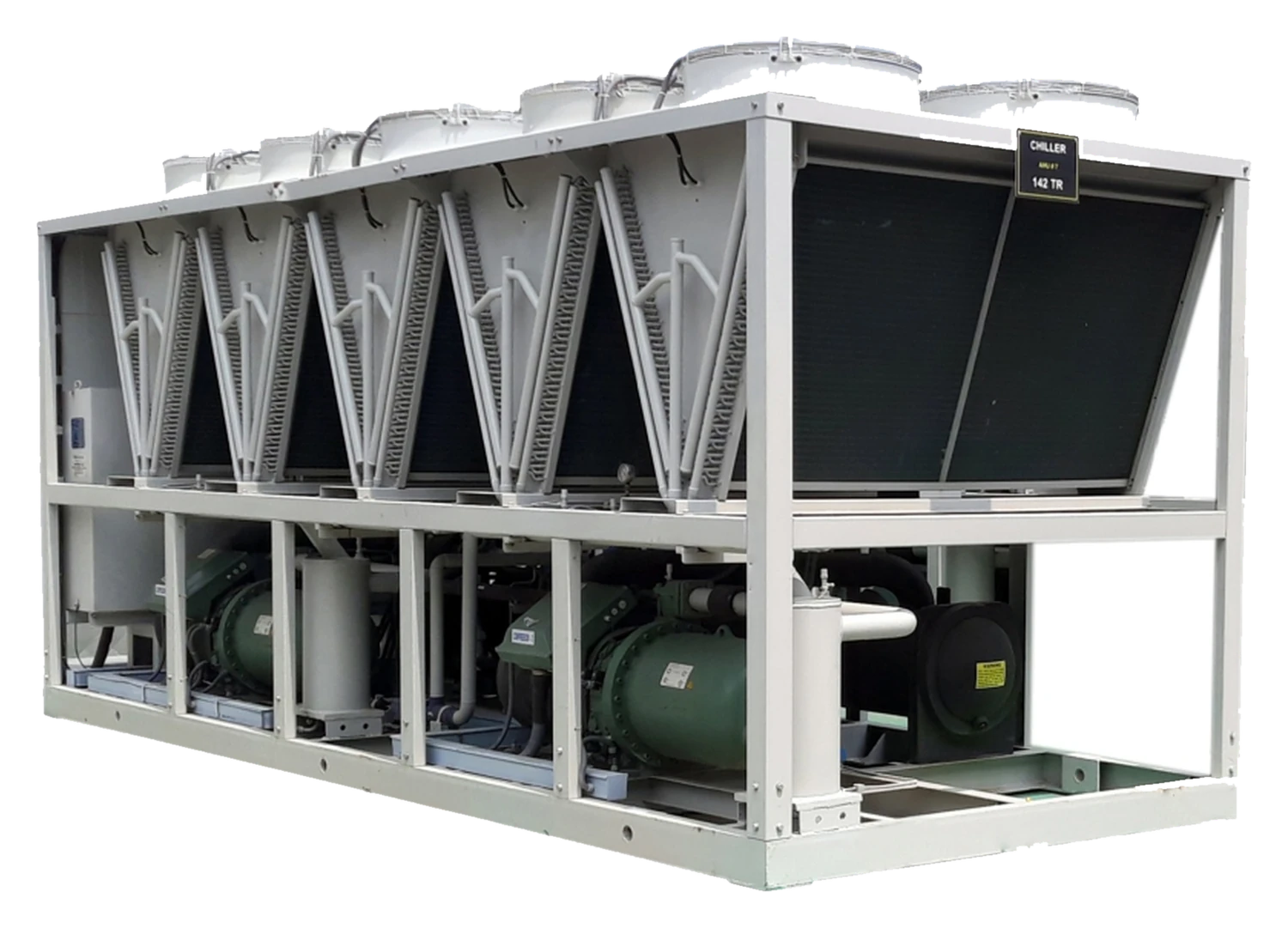
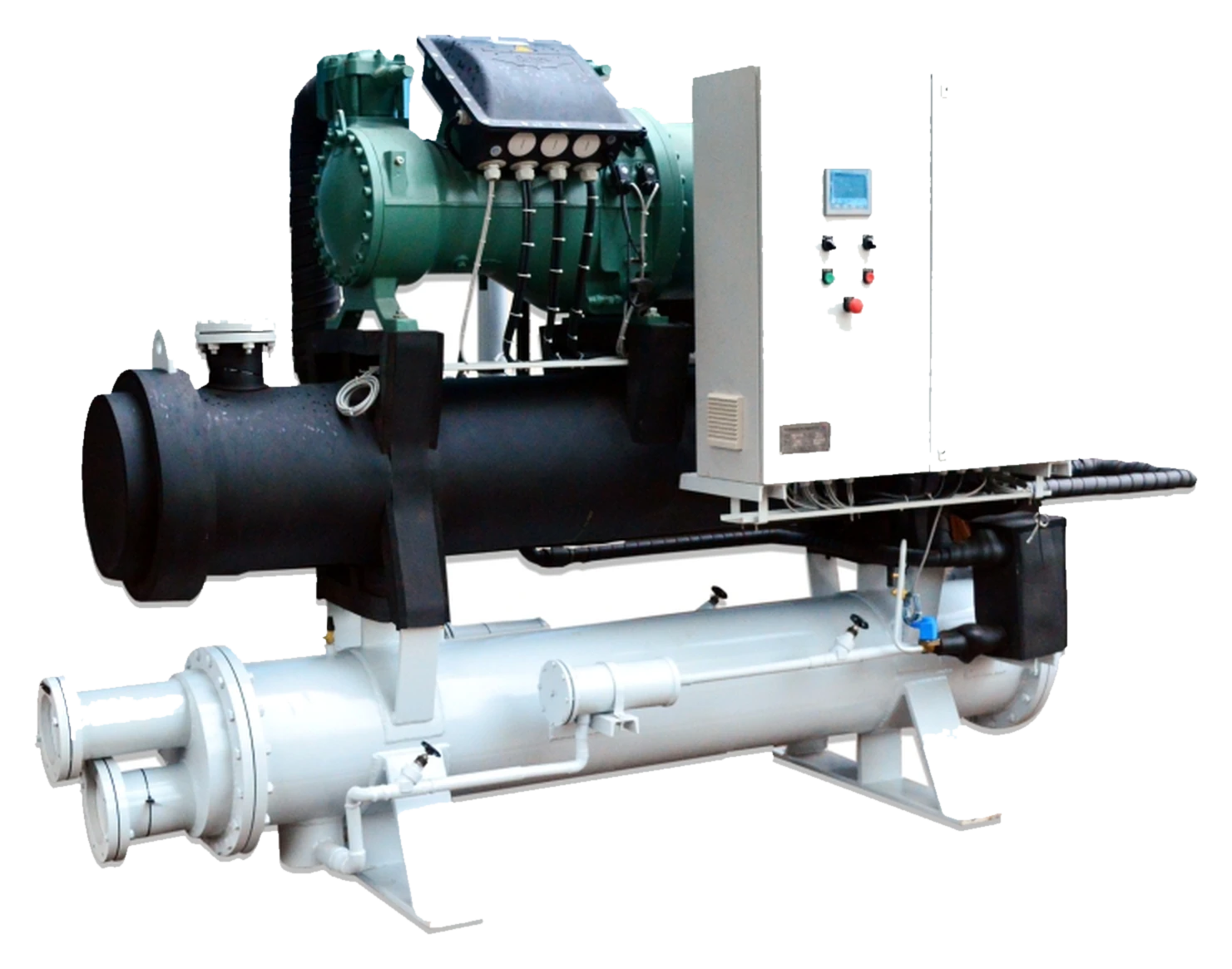
Teqtive manufactures air cooled and water cooled scroll chillers and screw chillers at Ghaziabad. If the superheat or subcooling on your Teqtive chiller is outside the range in its manual, note the pressures, pipe temperatures, water temperatures and ambient, and contact our service team with the readings.
Frequently asked questions
What is superheat and subcooling in a chiller?
Superheat is the number of degrees by which the suction vapour is warmer than its saturation temperature at suction pressure. Subcooling is the number of degrees by which the liquid leaving the condenser is cooler than its saturation temperature at condensing pressure. Superheat protects the compressor from liquid; subcooling ensures solid liquid reaches the expansion valve.
How do you calculate superheat?
Measure the suction pressure and convert it to saturation temperature with the pressure-temperature chart for the refrigerant. Measure the suction pipe temperature at the same point. Superheat = suction line temperature − saturation temperature. Example for R-134a: 1.92 bar gauge corresponds to 0 °C; with the pipe at 6 °C, superheat is 6 K.
What is the normal superheat for a chiller?
For a direct-expansion evaporator with a thermostatic or electronic expansion valve, evaporator outlet superheat is typically 4–7 K, and 5–10 K measured at the compressor suction. Flooded evaporators run close to 0–2 K. These are typical values; always use the figures in the chiller manufacturer's manual.
What is the subcooling formula?
Subcooling = saturation temperature at liquid line pressure − liquid line temperature. Read the pressure at the condenser outlet or liquid line, convert it to saturation temperature, and subtract the measured pipe temperature. For R-134a at 9.15 bar gauge the saturation temperature is 40 °C; with the liquid line at 35 °C, subcooling is 5 K.
What does high superheat and low subcooling mean?
It usually means the system is short of refrigerant. The evaporator is starved, so the vapour picks up extra superheat, and there is too little liquid stored in the condenser to subcool. Find and repair the leak before adding charge. High superheat with high subcooling points to a restriction in the liquid line instead.