To size a chiller for an injection moulding machine, take the plastic throughput in kg/h and divide it by the kg/h that one TR can cool for that polymer, for example about 15.9 kg/h per TR for polypropylene. Add roughly 0.1 TR per HP of hydraulic pump motor if the oil cooler runs on the same chilled water, then add a 10–20 % margin. The result is the chiller capacity in TR at your required water temperature and site ambient.
Where the heat comes from
Molten plastic enters the mould at 200–300 °C and must be cooled until the part is rigid enough to eject. All the heat it gives up, both sensible heat and, for semi-crystalline polymers, the heat of crystallisation, leaves through the mould cooling channels. The governing relation is simple:
Mould heat load = plastic throughput (kg/h) × heat removed per kg
A machine may also put other loads on the chilled water circuit: the hydraulic oil cooler, the feed throat, and sometimes hot runner or auxiliary equipment. These are added to the mould load.
Step 1: find the throughput in kg/h
Throughput (kg/h) = shot weight (g) × 3,600 ÷ cycle time (s) ÷ 1,000. Use the full shot weight including runners unless a hot runner is used. If you do not have shot data, use the actual monthly resin consumption divided by running hours. The rated plasticising capacity of the machine gives an upper limit, but most machines run well below it.
Step 2: apply the rule of thumb for the polymer
The table below converts widely used industry rules of thumb, originally stated in pounds per hour per ton of refrigeration, into metric units. The heat per kg column is simply the figure implied by each rule (3,024 kcal/h ÷ kg/h per TR) and includes the usual allowance for the mould circuit. Treat all of them as approximate and verify with your resin supplier's enthalpy data and the machine maker's cooling requirement.
| Polymer | Rule of thumb (lb/h per TR) | kg/h per TR | TR per 100 kg/h | Implied heat removed (kcal/kg) |
|---|---|---|---|---|
| HDPE | 30 | 13.6 | 7.4 | about 222 |
| LDPE, PP | 35 | 15.9 | 6.3 | about 190 |
| PET | 40 | 18.1 | 5.5 | about 167 |
| PVC | 45 | 20.4 | 4.9 | about 148 |
| PS, ABS | 50 | 22.7 | 4.4 | about 133 |
| Nylon (PA), PU | 20–25 | 9.1–11.3 | 8.8–11.0 | about 270–330 |
Semi-crystalline polymers such as HDPE, PP and nylon need more cooling per kg than amorphous ones such as PS and ABS because they release heat of crystallisation as they solidify. Thin-wall and fast-cycling moulds often justify sizing towards the generous side.
Step 3: add hydraulic oil cooling if it shares the chiller
On a hydraulic machine part of the pump motor's power ends up as heat in the oil. A common rule of thumb is about 0.1 TR per HP of hydraulic pump motor. Servo-hydraulic machines reject noticeably less, and all-electric machines have no hydraulic oil load, though their drives and feed throat may still need some cooling water.
Hydraulic oil is normally kept at about 40–50 °C, so it does not need chilled water. Where a cooling tower is available, running the oil coolers on tower water at 32 °C takes this load off the chiller entirely and saves power. See cooling tower vs chiller. If there is no tower, add the oil load to the chiller or use a separate oil chiller.
Step 4: add a margin and correct for site conditions
- Add 10–20 % for pipe heat gain, pump heat and future mould changes.
- Check that the chiller delivers the required TR at your water temperature and summer ambient. An air cooled unit should be rated at 45 °C ambient for most of India, and capacity at 10 °C leaving water is lower than at 15 °C.
- Do not oversize heavily. A chiller far larger than the load short-cycles and controls temperature poorly.
Worked example
A 350 tonne hydraulic machine moulds polypropylene crates. Shot weight is 500 g and the cycle is 30 s. The hydraulic pump motor is 40 HP.
- Throughput = 500 × 3,600 ÷ 30 ÷ 1,000 = 60 kg/h
- Mould load = 60 ÷ 15.9 = 3.8 TR
- Hydraulic oil load = 40 × 0.1 = 4.0 TR
- Total = 7.8 TR; with a 15 % margin = 7.8 × 1.15 = 8.9 TR
Select a 10 TR chiller rated at site ambient. If the oil cooler is moved to tower water, the chiller only carries the mould: 3.8 × 1.15 = 4.3 TR, so a 5 TR unit is enough. The example shows how much of a hydraulic machine's chiller load can be oil cooling.
Chilled water flow. Mould cooling works best with a small temperature rise, about 2–3 °C, so that the mould surface stays uniform. For the 3.8 TR mould load at a 3 °C rise: 3.8 × 3,024 ÷ 3 = about 3,800 litres per hour. The pump must deliver this at the pressure needed to push water through the mould channels, which is often higher than a standard chiller pump provides. State the mould pressure drop in your enquiry.
Mould water temperature
| Duty | Typical water temperature at mould | Notes |
|---|---|---|
| General moulding: PP, HDPE, LDPE | 10–15 °C | Chiller with built-in tank and pump |
| Thin-wall packaging, caps and closures | About 8–12 °C | Fast cycles; high flow and steady temperature matter |
| PET preforms | About 7–10 °C | Often with dehumidified air around the mould to prevent sweating |
| PS, ABS | Often 20–50 °C at the mould | Chiller or tower supplies a mould temperature controller |
| Nylon, PC and other engineering plastics | Often 60–90 °C or more at the mould | Hot mould held by a temperature controller |
| Hydraulic oil cooler | Tower water at about 32 °C is adequate | Chilled water only if no tower is available |
These are typical ranges. The correct mould temperature comes from the resin data sheet and the part's surface, shrinkage and warpage requirements. Colder is not always better: a mould below the dew point of the shop air sweats, which marks parts and rusts the tool. During the monsoon the dew point in an open shop can exceed 24 °C, which is why cold PET and packaging moulds are often enclosed and fed with dry air.
Central or machine-side chiller?
| Aspect | Machine-side chiller | Central chiller plant |
|---|---|---|
| Typical arrangement | One packaged scroll chiller per machine or pair | Screw or multi-scroll chillers, tank, pumps and ring main |
| Best for | Up to a handful of machines; different mould temperatures | Many machines at a similar water temperature |
| Temperature per machine | Individually set | One supply temperature; local controllers trim it |
| Standby | A failure stops one machine | Standby chiller covers the whole shop |
| Energy use | Higher in total | Lower kW per TR and benefits from load diversity |
| Shop floor | Takes floor space and adds heat if air cooled indoors | Plant is outside the moulding hall |
| Expansion | Add a unit with each machine | Needs headers and plant sized for growth |
When sizing a central plant, add up the loads of all machines and apply a diversity factor only if you are sure they will not all run together. Compare condenser types in air cooled vs water cooled chillers.
Information to send with an enquiry
- Polymer, shot weight and cycle time, or kg/h, for each machine
- Machine type (hydraulic, servo or electric) and pump motor HP
- Required water temperature at the mould and mould pressure drop if known
- Whether oil coolers will run on chilled water or tower water
- Site ambient, availability of cooling tower water, and planned expansion
The general heat load method for any process is in how to calculate chiller tonnage. Blow moulding, extrusion and rubber duties are covered on the chillers for plastic industry page, and budget guidance is in the chiller price guide.
Teqtive chillers for moulding
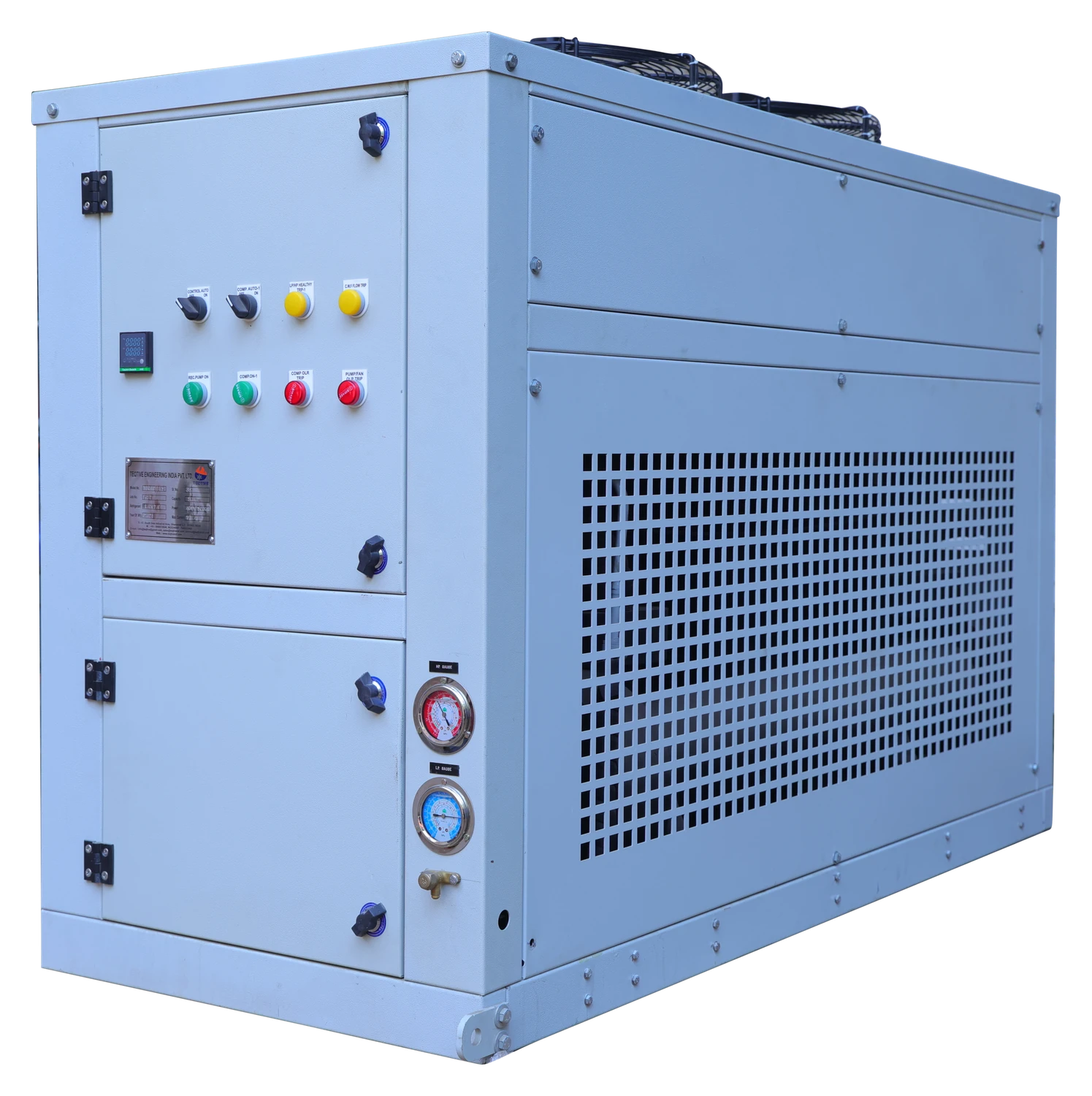
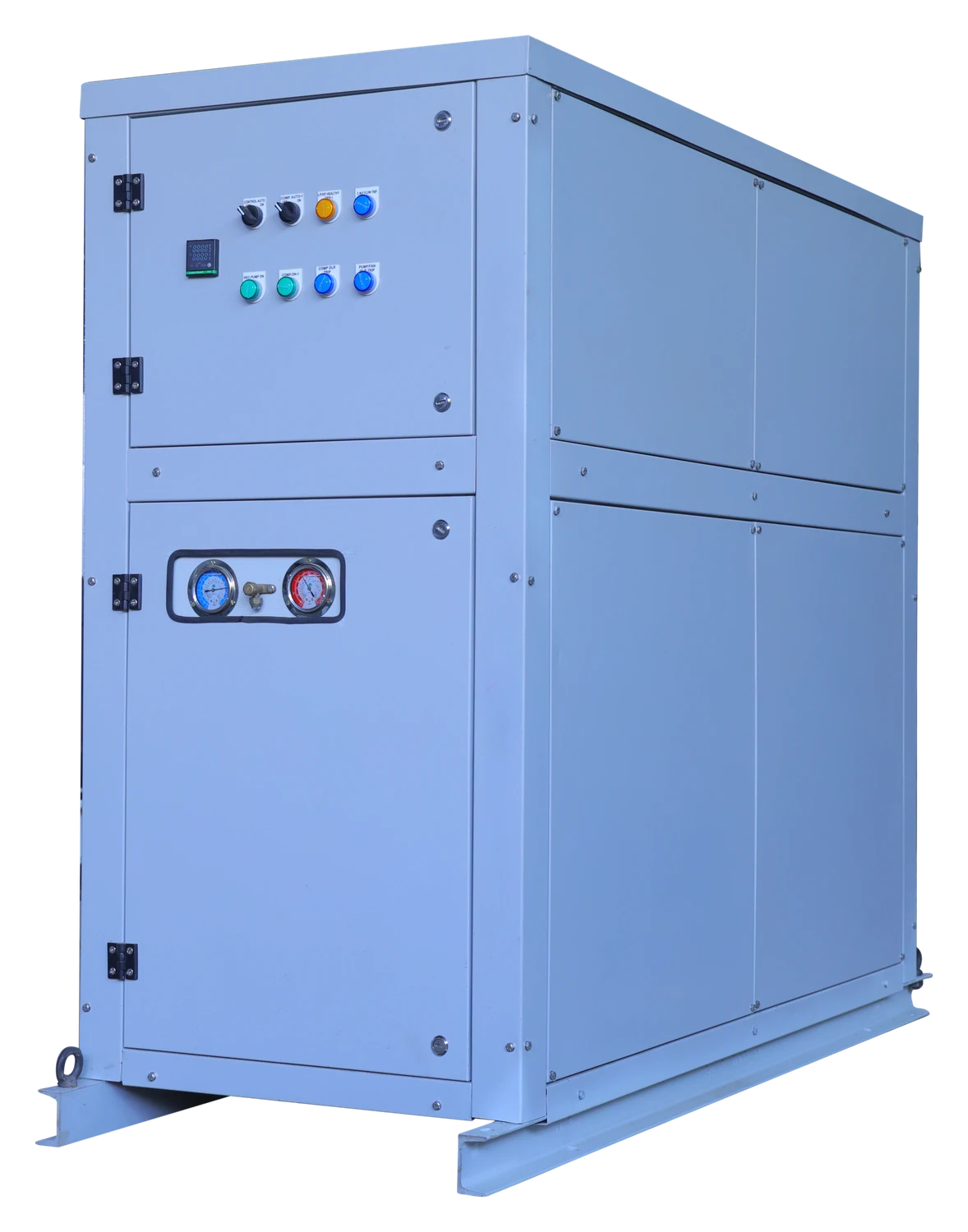
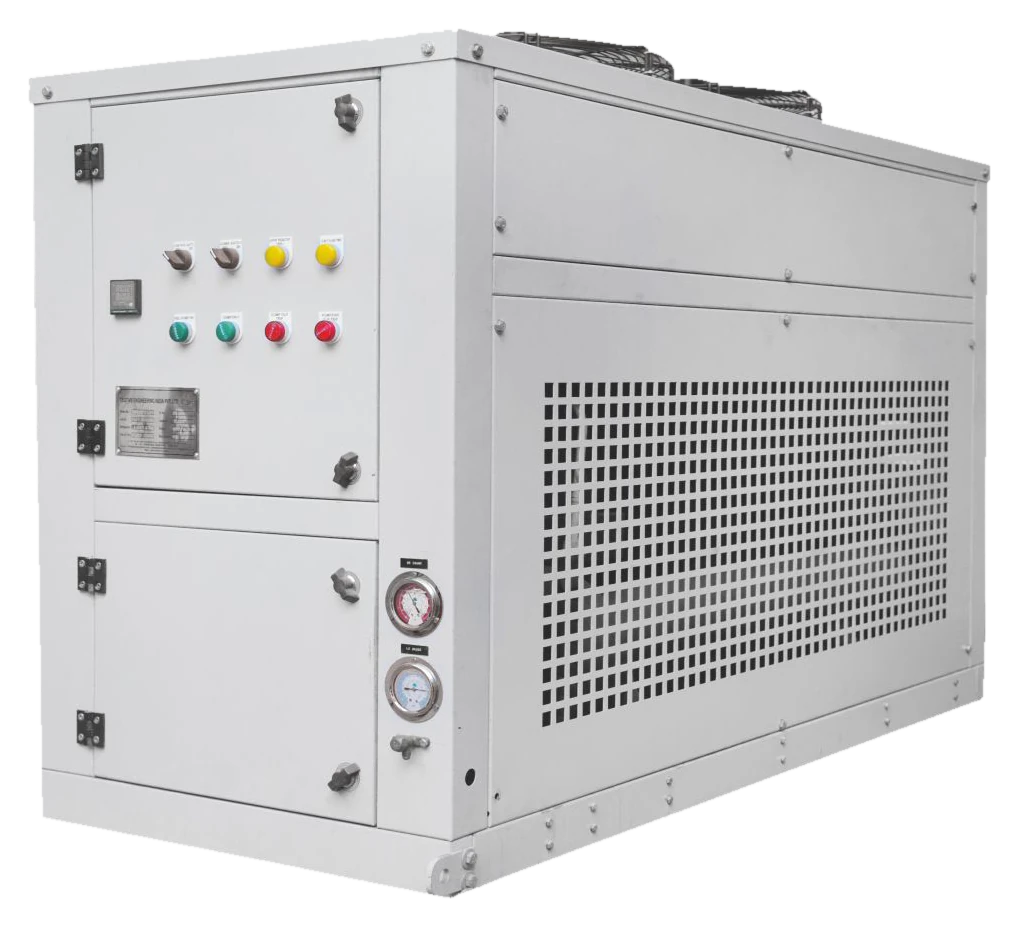
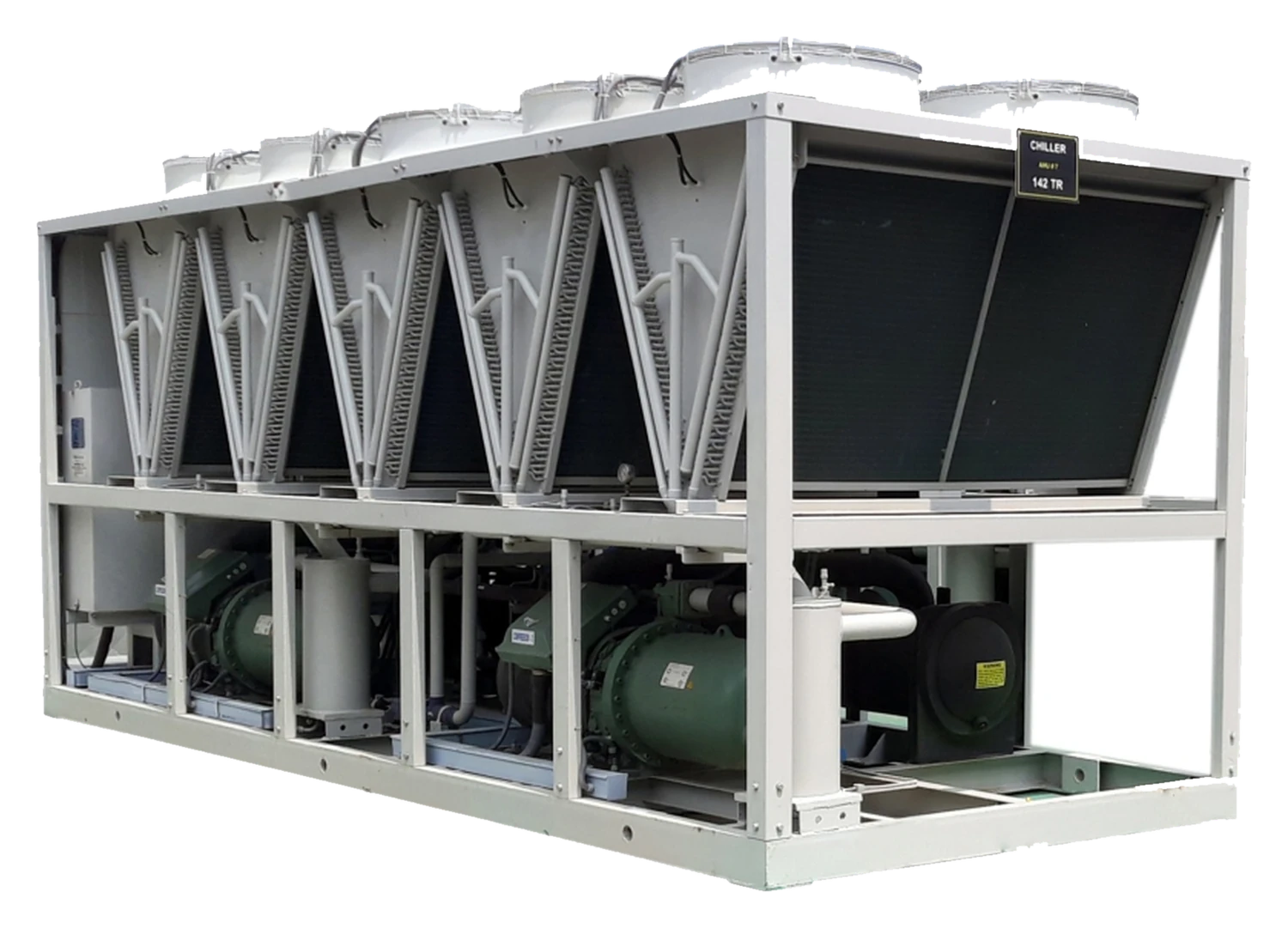
Teqtive builds air cooled scroll chillers from 5 to 78 TR and water cooled scroll chillers from 5 to 90 TR for machine-side duty, screw chillers from 40 to 500 TR for central plants, and oil chillers for hydraulic circuits. Send your machine list with polymers and throughputs through the contact page and we will size the chiller and pump for your shop.
Frequently asked questions
How do I calculate chiller capacity for an injection moulding machine?
Find the plastic throughput in kg/h from shot weight and cycle time, then divide by the kg/h that one TR can cool for that polymer, for example about 15.9 kg/h per TR for polypropylene. Add about 0.1 TR per HP of hydraulic pump motor if the oil cooler is on the same chiller, then add a 10–20 % margin.
How many kg of plastic can 1 TR of chiller cool?
Widely used rules of thumb are about 13.6 kg/h per TR for HDPE, 15.9 kg/h for LDPE and PP, 22.7 kg/h for polystyrene and ABS, 18.1 kg/h for PET, 20.4 kg/h for PVC and 9–11 kg/h for nylon and polyurethane. These are approximate and should be verified against resin data and the machine maker's figures.
What chilled water temperature is needed for injection moulding?
General-purpose moulding of PP and polyethylene typically uses chilled water at 10–15 °C. PET preform moulds run colder, commonly 7–10 °C. Engineering plastics such as nylon and polycarbonate usually need warm moulds, controlled by a mould temperature controller. Water colder than the dew point of the shop air causes condensation on the mould.
Which type of chiller is best for an injection moulding machine?
For one or a few machines, a packaged scroll chiller with built-in tank and pump placed beside the machine is the usual choice. Air cooled units need no cooling tower. For a shop with many machines, a central water cooled or air cooled screw chiller plant with a ring main gives lower running cost and easier standby.
Is chiller size based on the tonnage of the moulding machine?
No. Clamping tonnage describes the force holding the mould closed and says little about heat load. Two 250 tonne machines can differ by a factor of three in throughput. Size the chiller on kg/h of plastic and add the hydraulic oil load if applicable. Clamp tonnage is only a rough cross-check.