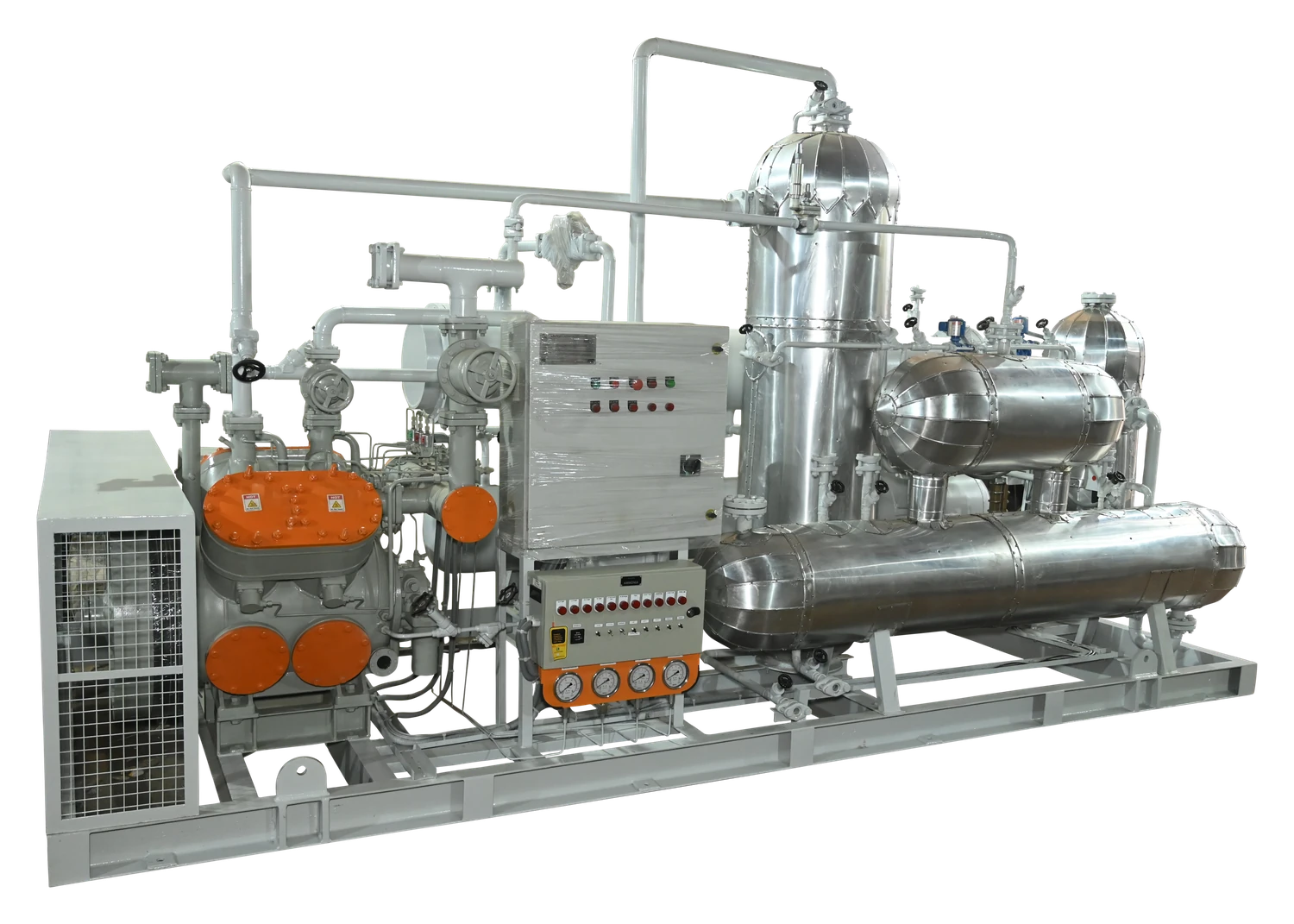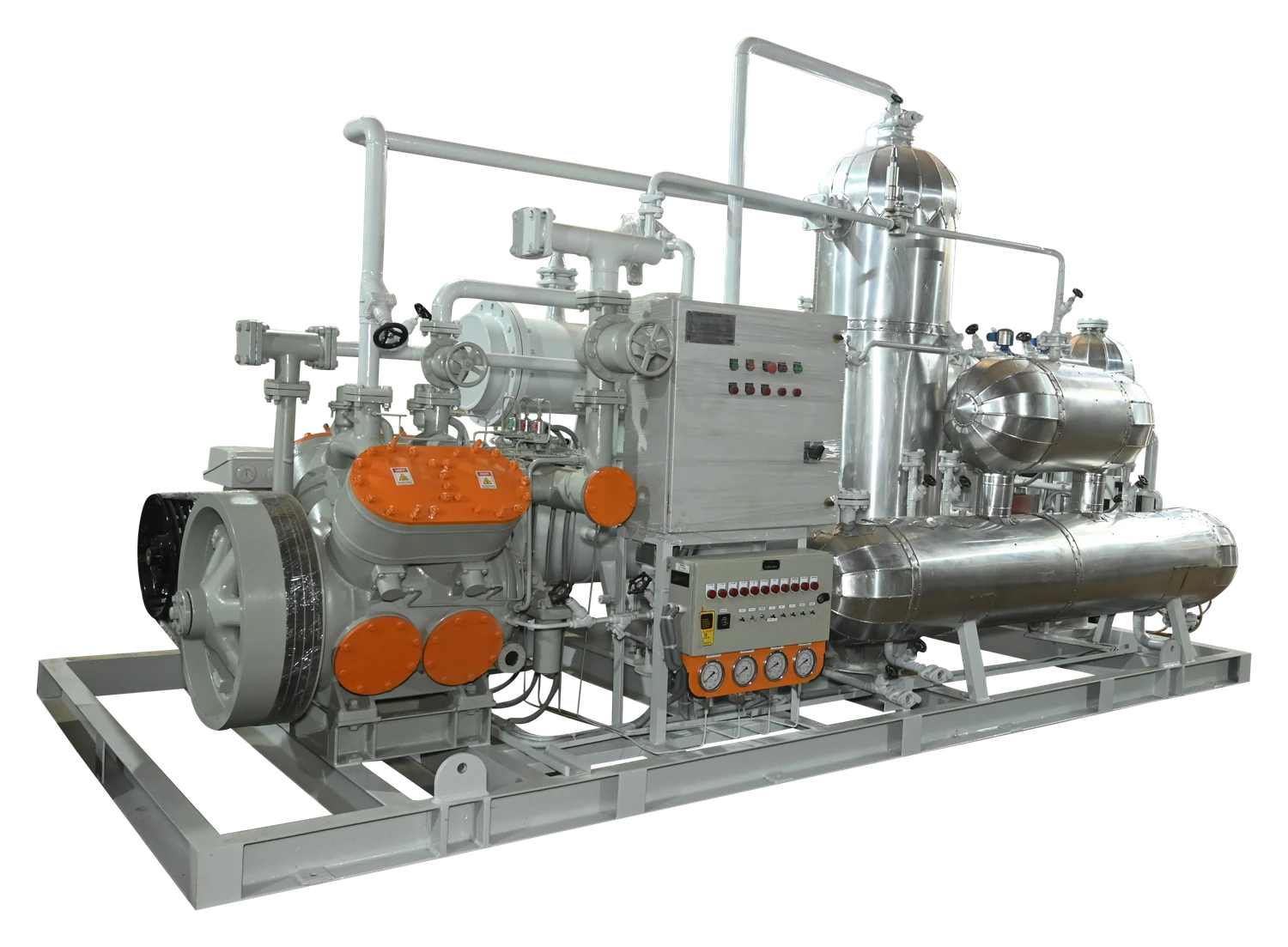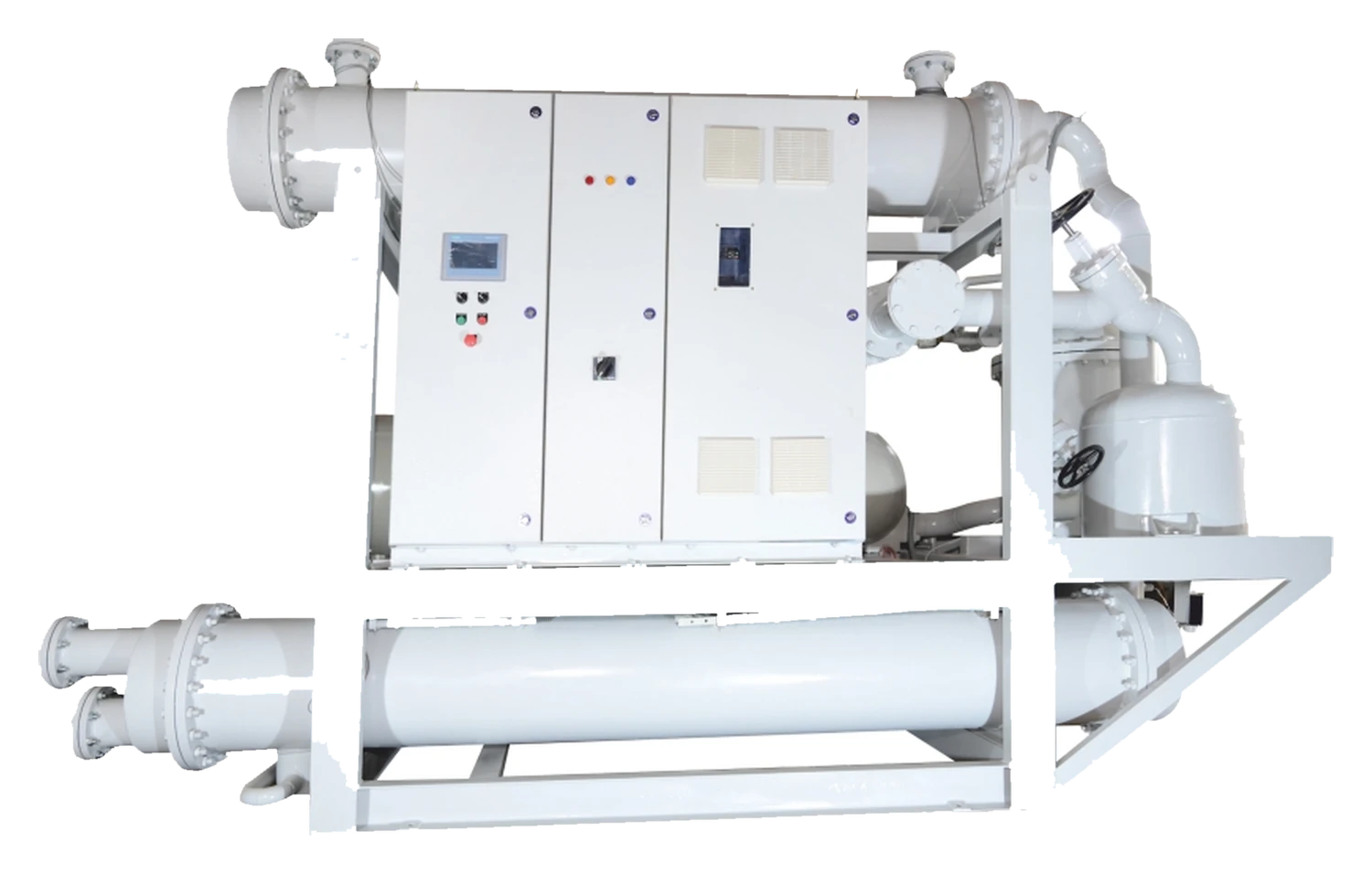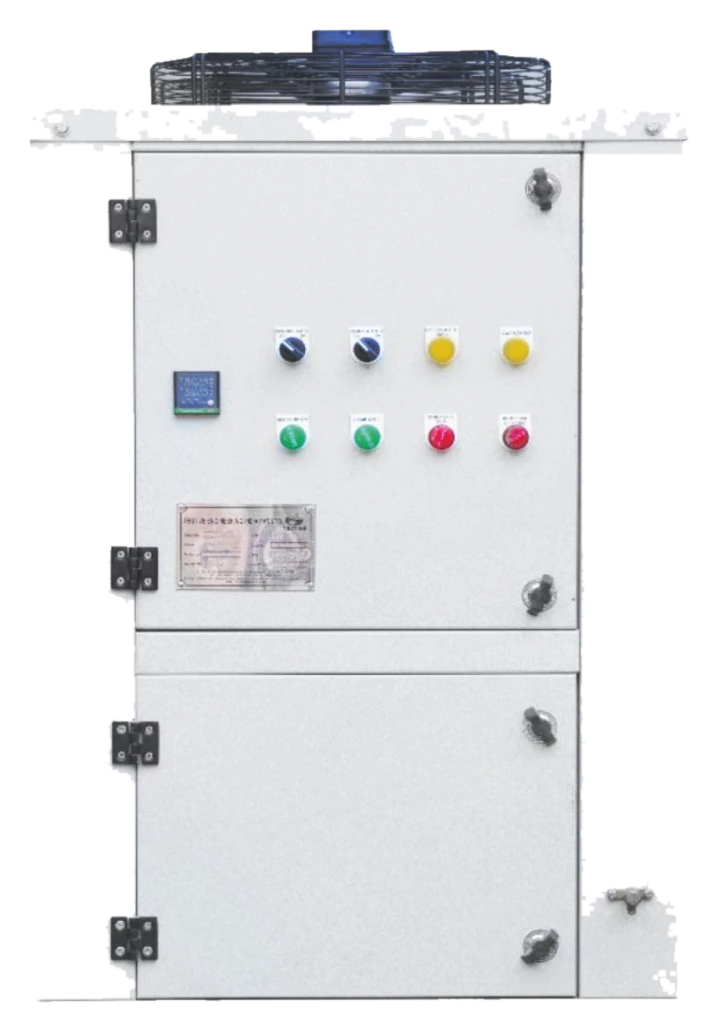
Liquid CO₂ is used in carbonated beverages, food freezing, dry ice, welding, water treatment, fire suppression and pharmaceuticals. Most of it is recovered from a process that already produces CO₂, then compressed, cleaned, dried and condensed by refrigeration. Teqtive builds the refrigeration and liquefaction skids for these plants; this guide explains the full chain.
The phase limits of CO₂
| Point | Temperature | Pressure (absolute) | Meaning |
|---|---|---|---|
| Triple point | −56.6 °C | 5.18 bar | Below this pressure CO₂ goes straight from solid to gas (dry ice sublimes) |
| Typical liquefaction | −20 °C to −30 °C | about 16 – 22 bar | Practical industrial operating window |
| Room-temperature liquid | +20 °C | about 57 bar | Cylinders, no refrigeration |
| Critical point | 31.0 °C | 73.8 bar | Above this CO₂ cannot be liquefied |
Step by step through a CO₂ plant
- Collection and foam trap. Raw gas from fermenters or the absorber is collected in a gas balloon or holder that evens out the flow, with a foam trap to catch liquid carry-over.
- Scrubbing. A water scrubber removes water-soluble impurities such as alcohols and some sulphur compounds; flue-gas plants use amine absorption and stripping to separate CO₂.
- Compression. Usually two-stage reciprocating or screw compression to about 16–22 bar, with intercooling and an aftercooler.
- Purification. Activated carbon beds remove odours and organic traces; potassium permanganate or other stages remove specific impurities depending on the source.
- Drying. Twin-tower dryers, typically molecular sieve or alumina, remove moisture to a very low dew point so ice and hydrates cannot form in the cold section.
- Liquefaction. The dry gas condenses in a liquefier, a shell-and-tube or plate heat exchanger cooled by a refrigeration plant at about −25 °C to −30 °C.
- Stripping / purification column. Non-condensable gases (nitrogen, oxygen, argon) are stripped from the liquid in a column with a reboiler, raising purity to beverage grade where required.
- Storage. Liquid CO₂ is stored in vacuum- or PUF-insulated tanks at about 18–20 bar and −20 °C, with a small refrigeration unit to hold pressure.
The refrigeration plant
The refrigeration system condenses the CO₂ and is the largest single energy user after the compressor. Options:
- Ammonia (R-717) for large plants: high efficiency and natural refrigerant. See ammonia chillers.
- HFC condensing units with direct expansion in the liquefier for small and medium plants. See air cooled and water cooled condensing units.
- Cascade or two-stage systems where the plant also makes very cold liquid, or for N₂O and other gases with lower condensing temperatures. See two-stage vs cascade.
Sizing the refrigeration load
Refrigeration load = mass flow × (sensible heat from aftercooler temperature to condensing temperature + latent heat of condensation + subcooling). Latent heat of CO₂ at around −25 °C is roughly 280–290 kJ/kg; with sensible cooling from about +35 °C the total is in the region of 320–360 kJ/kg. Since 1 TR = 12,660 kJ/h, that works out to about 35–45 kg/h of CO₂ per TR. A 1,000 kg/h plant therefore needs roughly 25–30 TR of refrigeration at the liquefier, plus the storage-tank unit and design margin.
Teqtive gas liquefaction systems
Teqtive builds skid-mounted CO₂, N₂O and industrial gas liquefaction systems from 10 kg/h to 10,000 kg/h with condensing temperatures from −25 °C to −70 °C, using screw or reciprocating compressors and shell-and-tube evaporators. Send your gas source, flow and purity for a proposal.
Frequently asked questions
At what temperature and pressure does CO₂ liquefy?
CO₂ can only exist as a liquid between its triple point (−56.6 °C, 5.18 bar absolute) and its critical point (31.0 °C, 73.8 bar absolute). Industrial plants usually liquefy at about 16 to 22 bar and −20 °C to −30 °C, which allows storage in insulated tanks at moderate pressure.
Why not liquefy CO₂ by pressure alone at room temperature?
At room temperature CO₂ needs over 60 bar to liquefy and cannot be liquefied at all above 31 °C. Combining moderate pressure (about 18–20 bar) with refrigeration at −25 °C to −30 °C uses less energy and much cheaper storage tanks.
How much refrigeration does a CO₂ liquefaction plant need?
As a rough guide about 1 TR for every 35 to 45 kg/h of CO₂ liquefied, covering sensible cooling of the gas, latent heat of condensation and some subcooling. The exact figure depends on gas temperature after the aftercooler, condensing pressure and purity steps.
Where does CO₂ for liquefaction come from?
Common sources are fermentation in breweries and distilleries, ammonia and hydrogen plants, natural CO₂ wells, and flue gas from boilers, recovered with amine absorption.