"Industrial chiller" covers everything from a 2 TR unit under a laser cutter to a 1000 TR ammonia plant. To compare quotes sensibly you need to know which type is being offered on each of four axes. This guide walks through all four and ends with a quick selector.
1. By condenser: air cooled vs water cooled
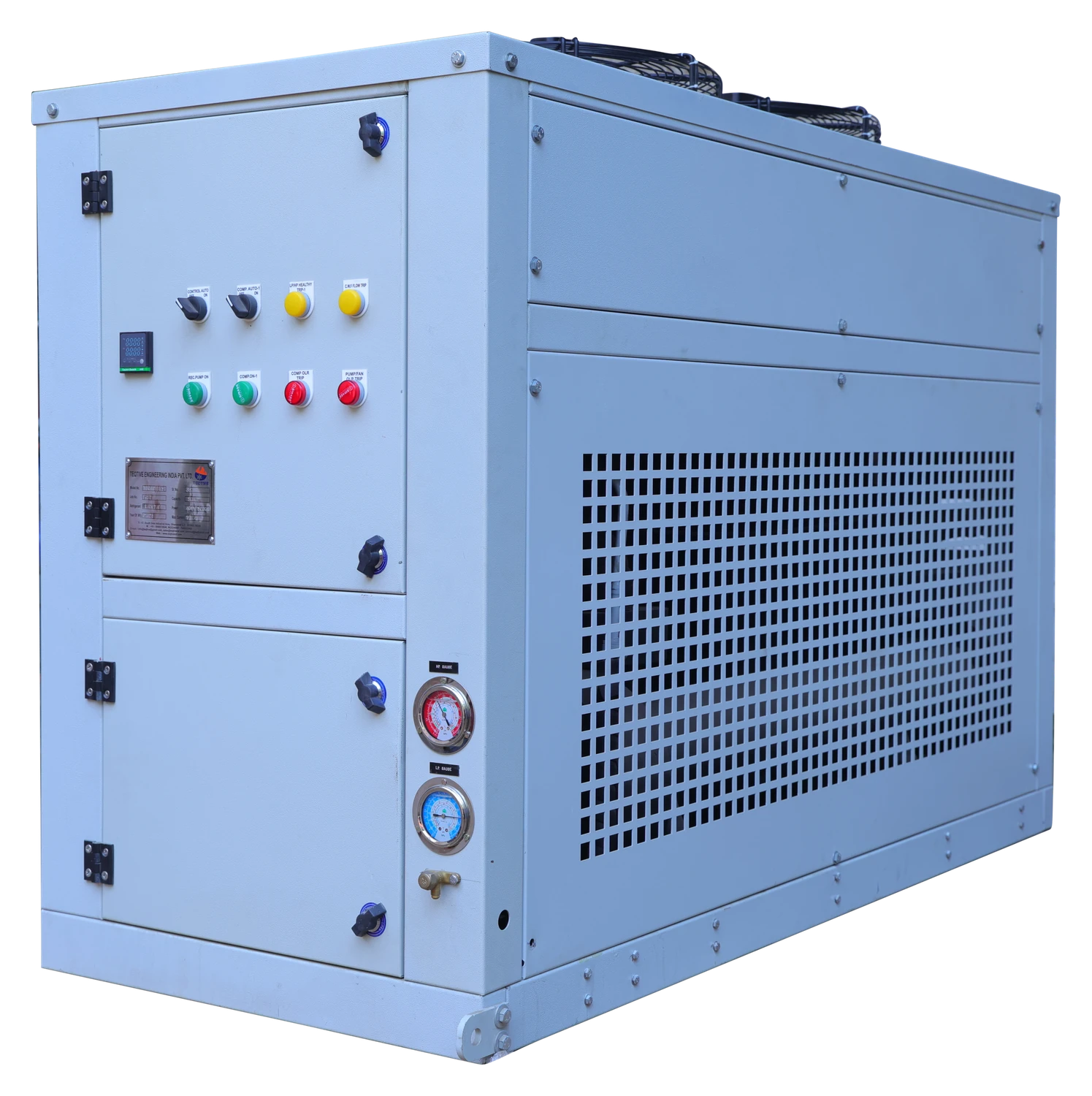
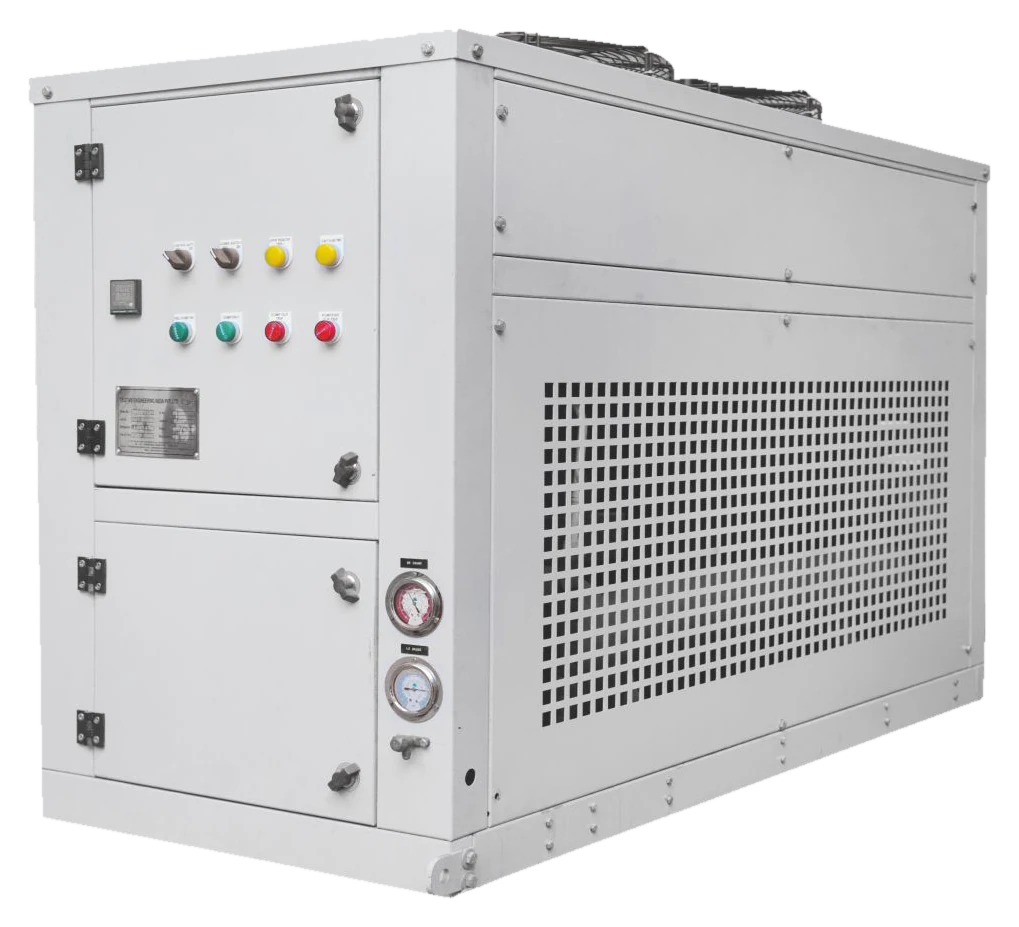
- Air-cooled chillers reject heat to ambient air through finned coils and fans. Self-contained, no cooling tower, no water treatment. Capacity drops on hot days. Typical range 1–200 TR. See air cooled screw, scroll and reciprocating chillers.
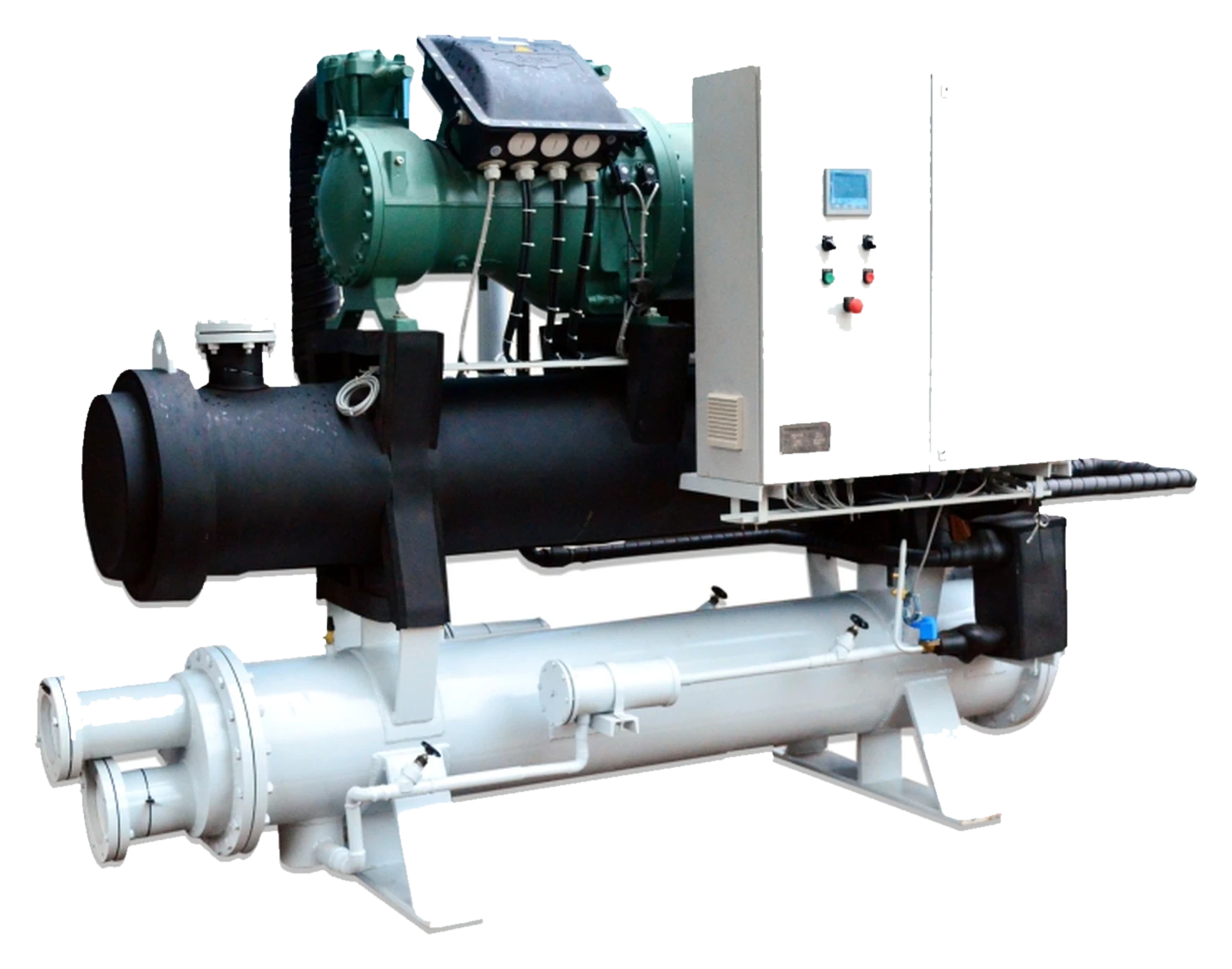
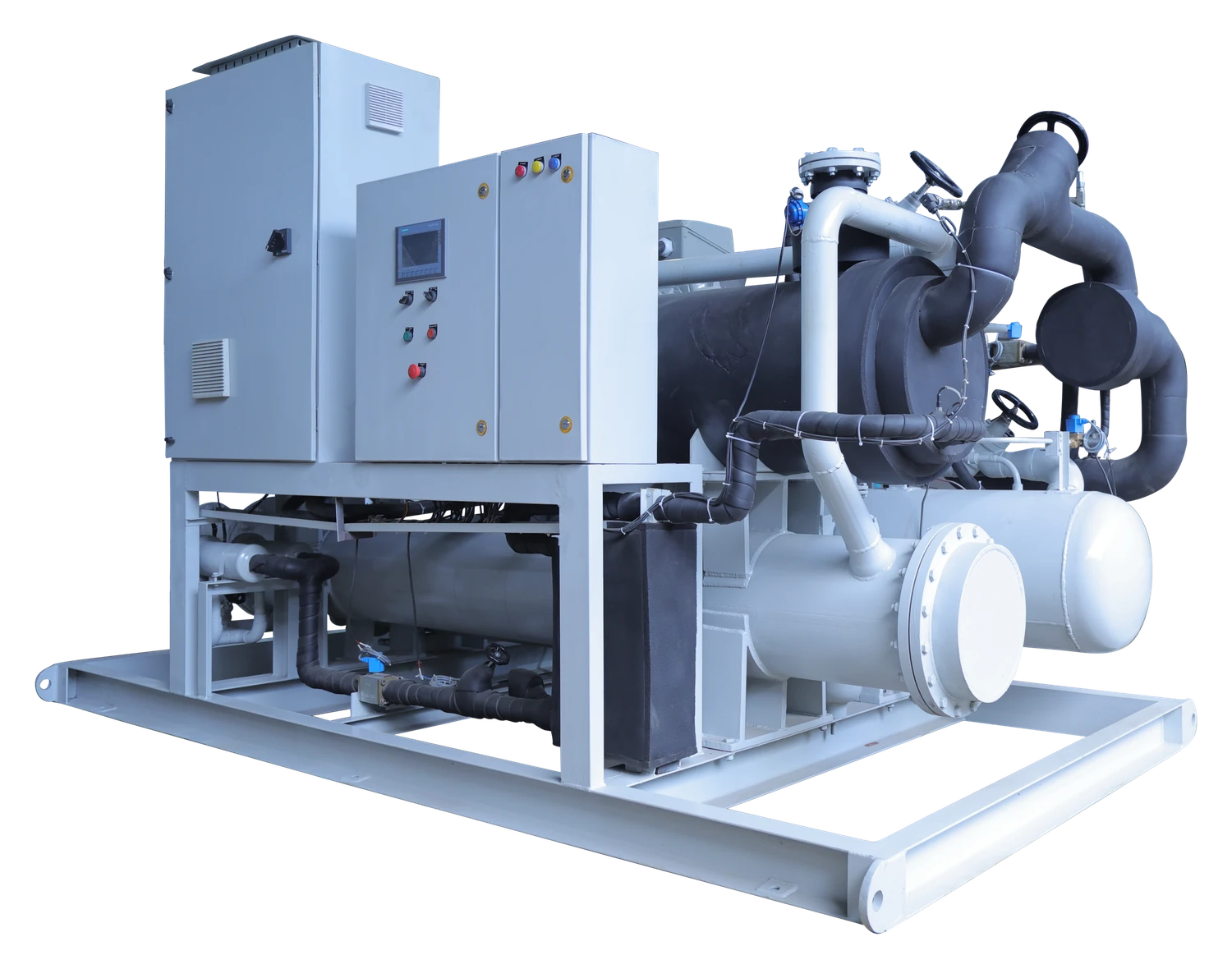
- Water-cooled chillers reject heat to cooling-tower water through a shell-and-tube condenser. Roughly 20–30 % lower power consumption, quieter, more compact, and the right choice above about 100 TR or in hot climates — but they need a tower, pumps and water treatment. See water cooled screw, scroll and reciprocating chillers.
Full comparison: air cooled vs water cooled chiller.
2. By compressor
| Compressor | Typical range per compressor | Best at | Notes |
|---|---|---|---|
| Scroll | 1–30 TR | Small and medium water chillers, +5 °C and above | Hermetic, few moving parts, staged for capacity control |
| Reciprocating | 5–120 TR | Low-temperature brine and glycol duty | Open or semi-hermetic; cylinder unloading; easy to service in the field |
| Screw | 40–500 TR | Continuous medium and large loads | Smooth 25–100 % slide-valve modulation; best efficiency at steady load |
| Centrifugal | 300 TR and up | Very large comfort-cooling plants | Rare in process duty; not suited to low temperatures |
Detail on the two most common choices: screw vs scroll chiller.
3. By the fluid being cooled
- Water chillers — chilled water at +5 °C to +20 °C for moulds, extruders, welders, lasers, HVAC and general utilities.
- Brine chillers — salt brine, glycol or methanol for 0 °C to −40 °C. Brine chillers are the workhorse of pharma, chemical, dairy and cold-chain plants.
- Glycol chillers — a glycol chiller is a brine chiller set up for ethylene or propylene glycol; food-grade PEG is used where the coolant could touch product.
- Methanol chillers — methanol brine stays thin at −30 °C to −40 °C and below, so pharma API plants prefer it for deep-freeze reactor duty.
- Oil chillers — an oil chiller cools hydraulic, spindle or quench oil directly, typically to +20 °C to +40 °C, protecting machine-tool accuracy and oil life.
Coolant selection: brine vs glycol chiller.
4. By temperature range
| Class | Outlet temperature | Refrigeration circuit | Teqtive product |
|---|---|---|---|
| Standard process chiller | +5 °C to +25 °C | Single stage | Water chillers |
| Low-temperature brine chiller | 0 °C to −40 °C | Single stage | Brine chiller |
| Two-stage chiller | −25 °C to −45 °C | Two-stage compression with intercooler | Two-stage brine chiller |
| Cascade chiller | −35 °C to −70 °C | Two refrigerants in cascaded circuits | Cascade brine chiller |
| Falling-film chiller | +0.5 °C water, near freezing | Single stage, film evaporator | Falling film chiller |
Special-purpose chillers and related equipment
- Ammonia chillers for large cold stores and ice plants
- Batching chillers for concrete and RMC plants
- Falling film chillers for bakeries and dairies
- Industrial heat pumps for hot water up to 90 °C
- Refrigerated air dryers for compressed air
- Flake and block ice machines
- Air chillers and dehumidifiers
- Gas liquefaction units
Quick selector
- Fix the outlet temperature. It decides whether you need a water chiller, a brine chiller, or a two-stage or cascade machine.
- Size the load in TR at that temperature, on the actual coolant — use the tonnage calculator.
- Pick the condenser. Below about 100 TR, or where water is scarce, go air cooled; above that, or in hot plants, water cooled.
- Pick the compressor. Scroll for small steady loads, reciprocating for low temperature and field serviceability, screw for large continuous duty.
- Budget. Indicative ranges by TR are in our chiller price guide.
Still unsure? Send your process data to Teqtive's process team and we will recommend a type and size.
Frequently asked questions
What are the main types of industrial chillers?
Industrial chillers are grouped by condenser type (air cooled or water cooled), by compressor (scroll, screw, reciprocating, centrifugal), by the fluid they cool (water, brine, glycol, methanol, oil) and by temperature range (standard process chillers at +5 to +20 °C, low-temperature brine chillers to −40 °C, two-stage to −45 °C and cascade chillers to −70 °C).
Which chiller type is best for a small factory?
For loads up to about 30–40 TR at +7 °C to +15 °C, a packaged air-cooled scroll chiller is usually the simplest and cheapest to own: no cooling tower, no water treatment, and plug-and-run installation.
What is a process chiller?
A process chiller is any chiller sized and controlled for an industrial process — moulds, reactors, lasers, extruders, heat exchangers — rather than for comfort air-conditioning. It typically holds a tighter temperature band and runs continuously.
What chiller is used in pharmaceutical plants?
Pharmaceutical plants mostly use brine, glycol and methanol chillers at −10 °C to −40 °C for reactor jackets and condensers, plus standard +7 °C water chillers for HVAC and utilities. Deep-freeze duty uses cascade chillers down to −70 °C.