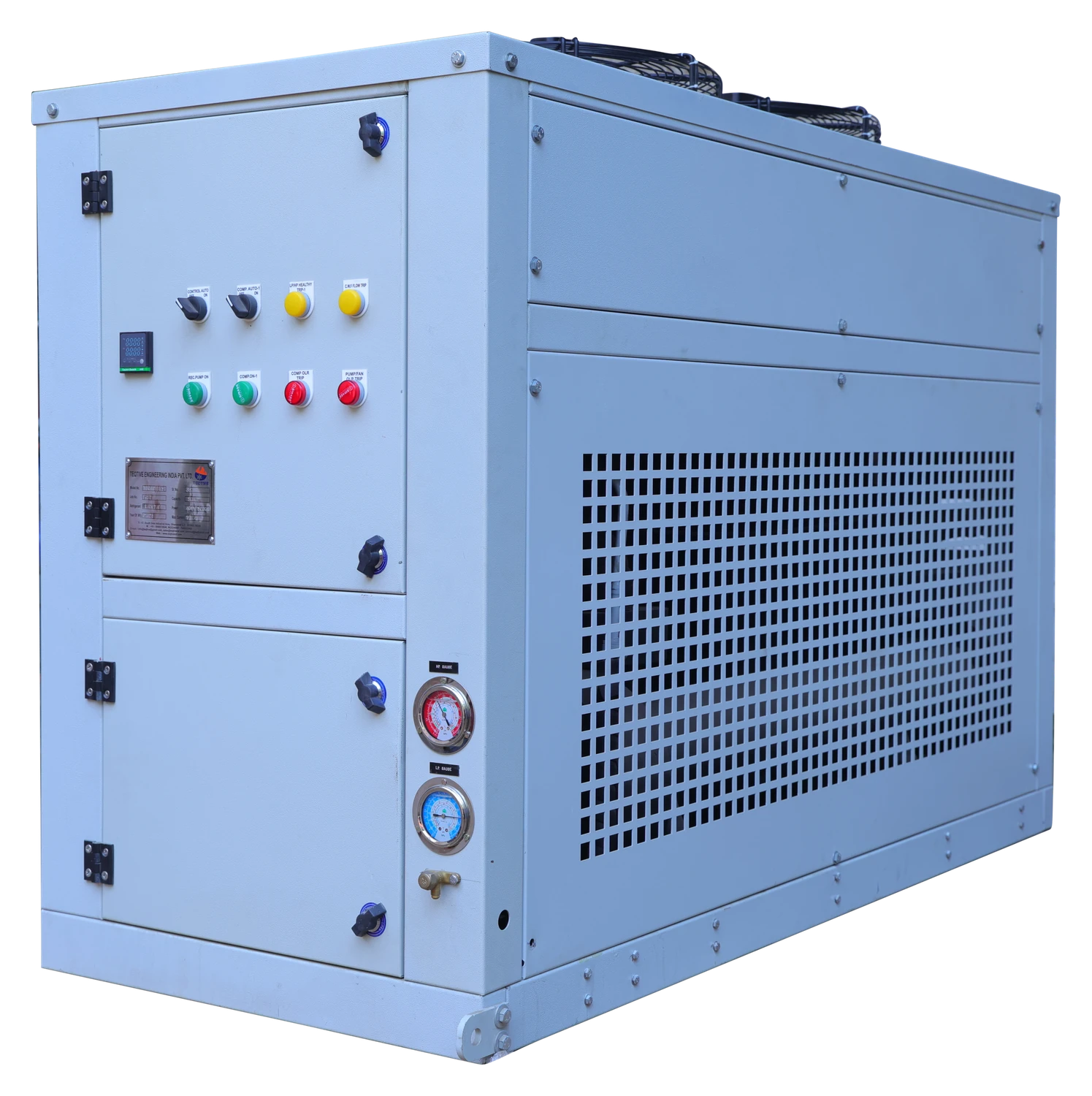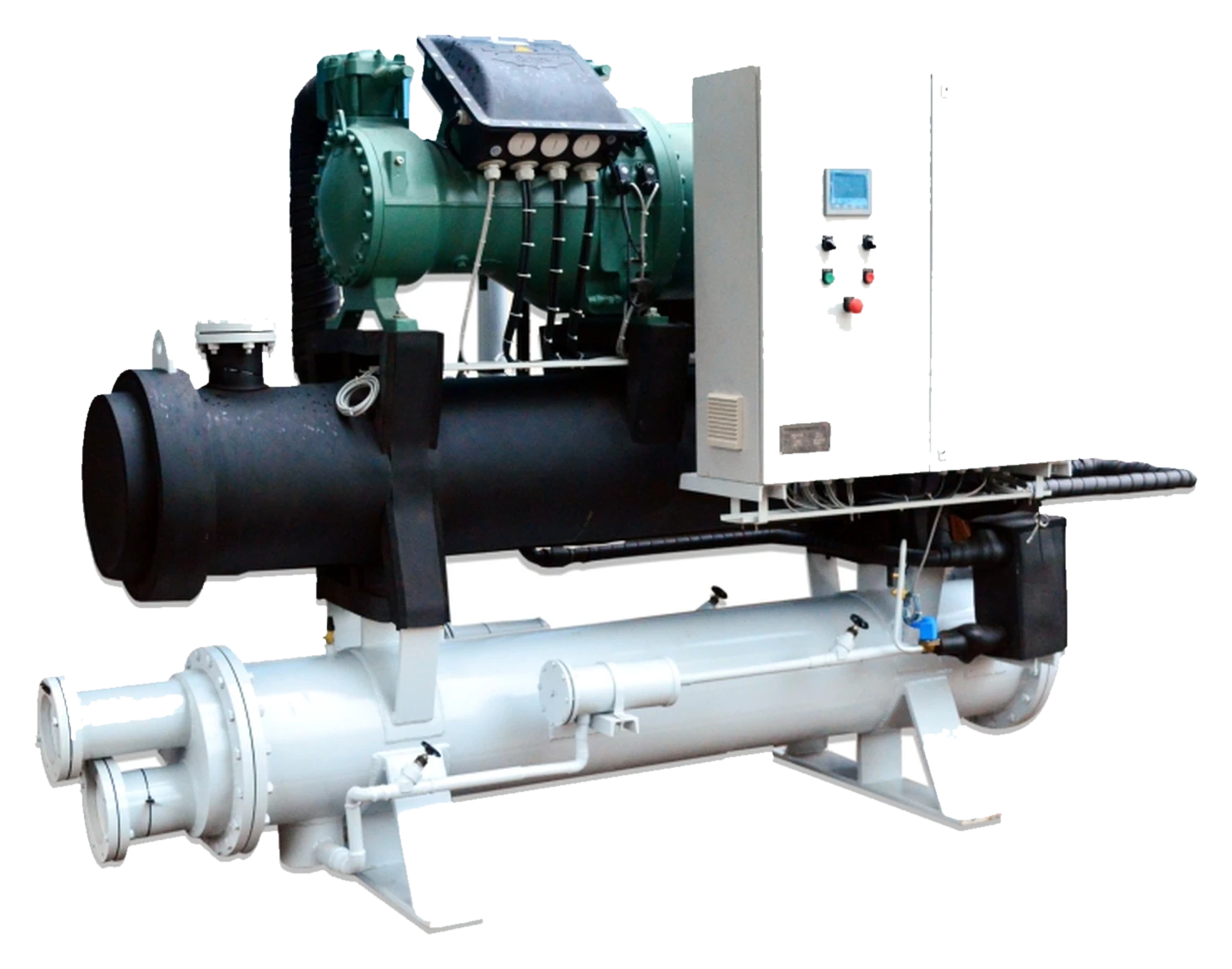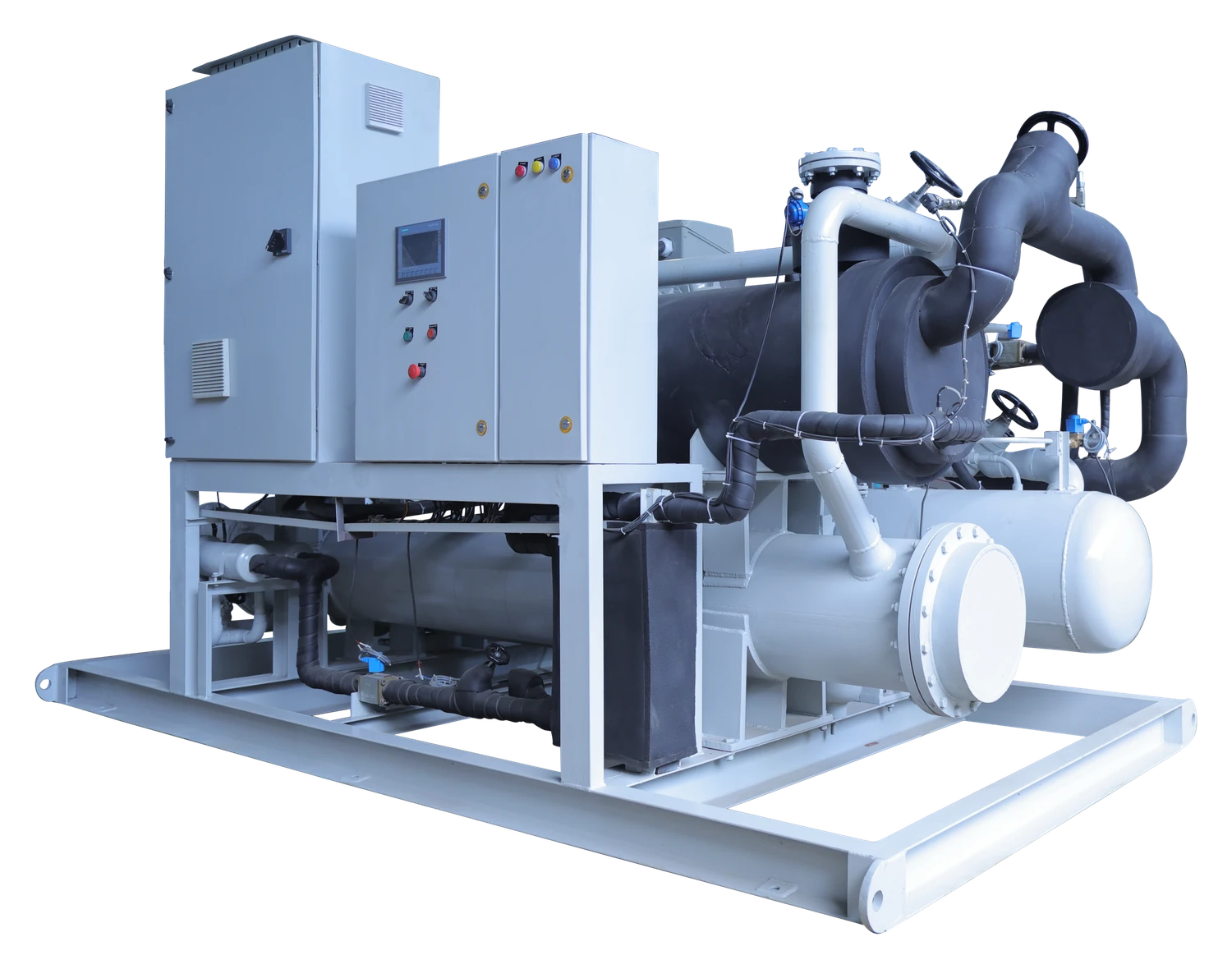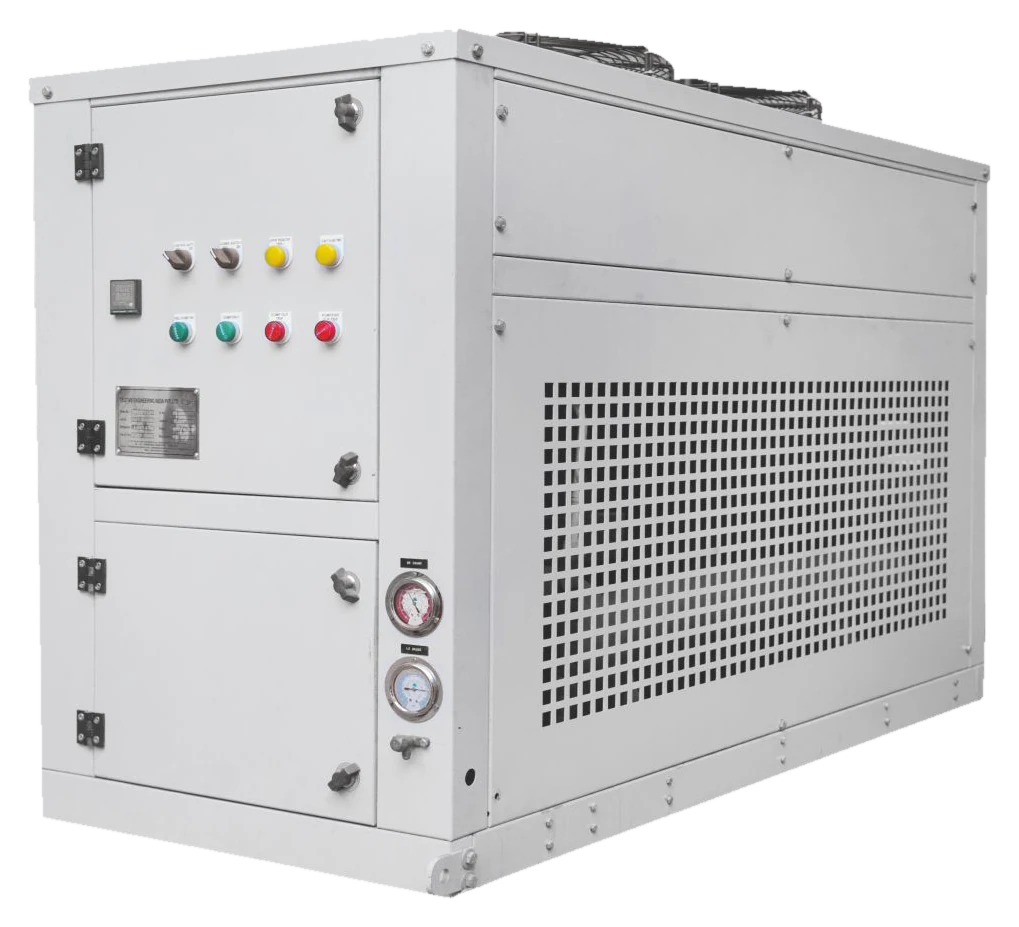
Buyers often ask for "a chiller" and receive an air-conditioning machine that struggles from day one. Both types use the vapour-compression cycle explained in how an industrial chiller works, but they are specified, built and controlled for different jobs.
Side-by-side
| Aspect | HVAC / comfort chiller | Process chiller |
|---|---|---|
| Purpose | Cool air for people in buildings | Remove heat from a machine, product or reaction |
| Supply temperature | +6 °C to +12 °C water | +25 °C down to −70 °C |
| Fluid | Water | Water, glycol, brine, methanol, oil |
| Control accuracy | ±2–3 °C is fine; building has thermal mass | ±0.5–1 °C, often tighter for lasers and extruders |
| Load profile | Seasonal, peaks in summer afternoons | Constant or process-driven, often 24 × 7 × 365 |
| Tank and pump | Usually external, by the HVAC contractor | Integrated insulated tank and process pump |
| Compressor | Scroll, screw or centrifugal selected for +7 °C | Scroll, reciprocating or screw selected for the actual evaporating temperature |
| Evaporator | Sized for clean water | Sized for the fluid's viscosity, fouling and corrosion |
| Condensing design | 35 °C ambient / 30 °C tower water | Site conditions, often 45 °C ambient |
| Safeties | Standard | Antifreeze, flow switch, low-suction, often hazardous-area electricals |
| Service life | 15–20 years at ≈ 2,000 h/year | 15–20 years at ≈ 8,000 h/year — built heavier |
Why the differences matter
Temperature. A comfort chiller's evaporator and controls are set up for water at +7 °C. Ask it for +2 °C and the antifreeze protection trips; ask it for −10 °C glycol and it simply cannot do it. A process chiller is selected for its real evaporating temperature with the right coolant, as explained in brine vs glycol chiller.
Stability. An injection-moulding machine, a laser, an extruder or a crystalliser needs the same temperature every cycle, not an average. Process chillers add a buffer tank so the compressor does not short-cycle, and modulate capacity to hold a tight band. Comfort chillers rely on the building's thermal mass instead.
Duty. A comfort chiller might run 2,000 hours a year, mostly at part load. A process chiller runs 8,000 hours, often at full load, in a dusty plant at 45 °C. Everything from condenser sizing to bearing selection is heavier on a process machine, and maintenance is scheduled by run hours.
Sizing. HVAC chillers are sized from building cooling loads in TR at standard conditions. Process chillers are sized from the actual heat to be removed, the fluid, the flow and the outlet temperature — see how to calculate chiller tonnage — and the catalogue TR at +7 °C can be two to three times the real TR at −20 °C.
Where each belongs
- HVAC chiller: offices, hospitals, malls, hotels, data-centre comfort cooling, clean-room air handling.
- Process chiller: plastics and rubber moulding, extrusion, lasers and welders, machine-tool and hydraulic oil (oil chillers), pharma reactors and condensers (brine chillers), chemical plants, dairy, breweries and food (glycol chillers), concrete batching (batching chillers), cold storage (ammonia chillers), freeze drying (cascade chillers).
- Both on one site: a pharma plant will typically run a comfort chiller for the HVAC and separate process chillers for utilities and reactors. Combining them on one chilled-water loop usually compromises both.
Specifying a process chiller
Give the supplier the heat load or process description, the fluid, the outlet temperature and allowed variation, the flow rate, the running hours, the site ambient and the available condenser water. Teqtive has built process chillers in Ghaziabad since its founding — from 1 TR scroll units to 1000 TR ammonia plants, +90 °C heat pumps to −70 °C cascade systems. Browse the product range or send us your process data.
Frequently asked questions
What is the difference between a process chiller and an HVAC chiller?
An HVAC chiller supplies +6 °C to +12 °C chilled water for air-conditioning and is designed around seasonal, slowly varying load and a building's comfort band. A process chiller is built for a specific industrial duty: a wider temperature range (+25 °C down to −70 °C), tighter control (±0.5–1 °C), continuous 24-hour operation, fluids other than water, and heavier-duty construction.
Can I use an air-conditioning chiller for an industrial process?
Sometimes, for +7 °C to +12 °C water at a steady load. But comfort chillers cannot go below about +4 °C, are not rated for glycol or brine, usually lack a buffer tank and pump, and are controlled to a loose band. For moulding, lasers, reactors, food and pharma duties a process chiller is the correct choice.
What temperature does a process chiller provide?
Anywhere from +25 °C (oil cooling) through +5 °C to +15 °C (water for moulds, lasers, extruders) down to 0 °C to −40 °C (brine and glycol) and −70 °C with cascade systems.
What is the difference between a chiller and a cooling tower?
A cooling tower cools water only to a few degrees above the ambient wet-bulb temperature, typically 28–32 °C in India, by evaporation. A chiller uses a refrigeration cycle to cool water or brine far below ambient, and often uses a cooling tower to reject its own heat.